

Retatrutide: Why Your Waist and Weight Can Tell Different Stories
Everyday guidesPublished 5 min readhow to

Understand changes in waist and weight with consistent measurements, worked examples and a practical review table.
Illustrative licensed stock photograph. · Photo: Michael Wysmierski · pexels.com
The short answer
Weight and waist describe different aspects of change. Compare repeated measurements under similar conditions instead of treating one flat reading as failure.
Table of Contents
- What each number tells you
- First, remove the measurement mismatch
- A worked example: flat weight, smaller waist
- When weight falls but waist barely changes
- Build a small record you will actually keep
- Bring the pattern, not a verdict
- Sources
- Explore this topic
Your waist can change while your weight appears flat, and your weight can fall without a clear change in waist size. The two measurements describe different things. Neither can confirm how much visceral fat, muscle or liver fat you have lost, or prove that a product is working.
For someone following retatrutide research or discussing weight management with a clinician, the useful approach is to keep both measurements comparable. Look at a sequence rather than deciding what happened from one morning on the scale.
What each number tells you
Body weight is the combined weight of many tissues, body water and the contents of the digestive tract. A tape measures circumference at the place where you put it. It does not distinguish fat under the skin from fat inside the abdomen.
That makes a waist record helpful, but narrower than the phrase “belly-fat measurement” suggests. A looser waistband is an observation worth noting; it is not an imaging result. Equally, an unchanged waistband does not prove that nothing beneficial has happened elsewhere.
Retatrutide trials have reported changes in weight and waist circumference, but population averages do not provide a personal weekly schedule. Retatrutide is still an investigational molecule. Monitoring advice here is about making observations useful, not confirming the safety or effectiveness of a retail preparation.
First, remove the measurement mismatch
Use the same scale, on the same firm surface, at a similar time and in similar clothing. NHS England's weighing guidance emphasizes consistent conditions and regular measurements. A hotel scale in the evening is a poor comparison with your home scale before breakfast.
For waist measurement, NICE describes the midpoint between the bottom of the ribs and the top of the hips. Take the reading after breathing out naturally. Keep the tape level and use the same location each time; a trouser waistband may sit somewhere else.
If a number looks surprising, check your method once. Do not keep pulling the tape tighter or stepping on different scales until a preferred result appears. Record a changed method, scale or location in the notes rather than quietly combining incompatible readings.
A worked example: flat weight, smaller waist
Imagine this four-week record. The values are invented to demonstrate interpretation, not to show an expected retatrutide response.
| Week | Weight under the same conditions | Waist using the same method | Notes |
|---|---|---|---|
| 1 | 90.2 kg | 101 cm | Home measurements |
| 2 | 90.0 kg | 100.5 cm | Home measurements |
| 3 | 90.3 kg | 100 cm | Late meal the previous evening |
| 4 | 89.9 kg | 99.5 cm | Home measurements |
The accurate description is that weight varied within a small range while the recorded waist became smaller. It would be an overstatement to calculate an exact amount of visceral-fat loss, declare muscle gain, or conclude that a dose needs changing.
This record is more useful than “nothing is happening” because it shows what was measured, over how long and under which conditions. If the pattern persists, a clinician or dietitian can interpret it alongside health, food intake, activity and the purpose of treatment.
When weight falls but waist barely changes
Illustrative licensed stock photograph. · Photo: Pixabay · pexels.com
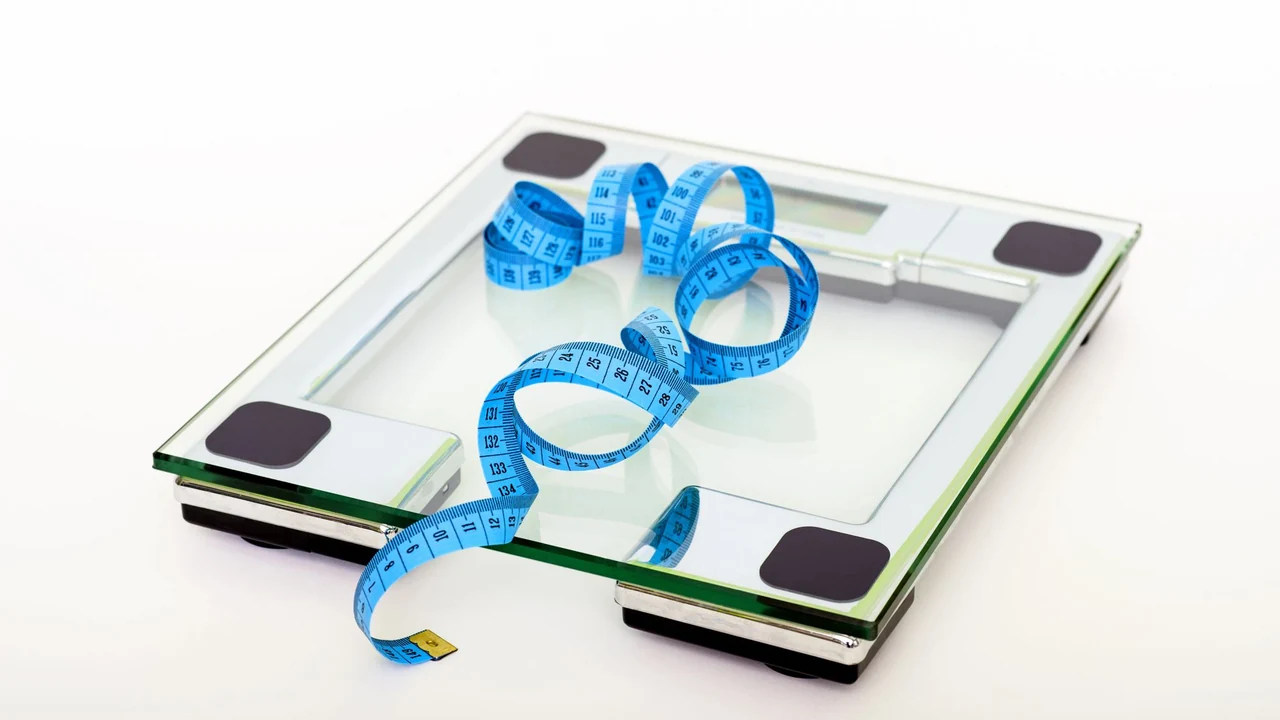
View full size ↗Start with the same method check. Then broaden the review: how are eating, hydration, energy and everyday strength? Are you recovering from illness? Was the initial weight taken on a different scale? Has the tape position moved?
Avoid using one reassuring number to dismiss a separate concern. For example, a lower scale reading does not make ongoing weakness or difficulty eating irrelevant. Our guide to lean tissue and retatrutide explains why scale weight is an incomplete account of body composition.
You also do not need to buy a body-composition scan to settle every small disagreement between the tape and the scale. Before ordering a test, ask what decision its result would change. Consistent basic observations may be the more useful first step.
Build a small record you will actually keep
Choose a repeatable measurement day and retain the original readings. Add a short note only when something relevant differs: another scale, travel, unusual meal timing, illness or a change in your established activity. Keep the record short enough that maintaining it does not become a second job.
A separate line for function can add useful context: whether your usual walk, stairs or routine strength session feels comparable. This is not a validated muscle test and should not be converted into an invented body-fat score. It simply preserves information that the scale cannot supply.
If weighing or measuring becomes distressing or compulsive, discuss a less frequent or clinician-led approach. More measurements are not automatically more useful.
Bring the pattern, not a verdict
At a follow-up, show the dates and readings together. Ask whether the observed change is meaningful for your goal and whether the plan needs review. Do not use a flat week as an instruction to increase an amount, combine compounds or stop prescribed care.
For a longer stall, use the separate plateau review. For this record, the task is simpler: keep conditions consistent, distinguish measurements from interpretations, and give yourself enough context to have a useful conversation.
Instructions & useful references
- Retatrutide development statuswww.lilly.com · Current developer page checked October 11: retatrutide remains investigational; phase 3 results exist. No retail-product equivalence or approved personal regimen is inferred.
- Recording body weightwww.england.nhs.uk · Use consistent equipment, timing and conditions for comparable weight observations.
- Assessing central adipositywww.nice.org.uk · Waist measurement method and waist-to-height ratio context; measurement is not a direct liver-fat or body-composition test.
Sources checked on October 11, 2026. This guide provides general information, with practical planning suggestions. It is not an individual treatment plan.