

GHK-Cu vs Copper Supplements: A Bali Guide
Bali & IndonesiaPublished 4 min readcomparison
Compare GHK-Cu pens and copper supplements in Bali. Separate peptide research, nutritional copper and the questions behind skin or deficiency concerns.
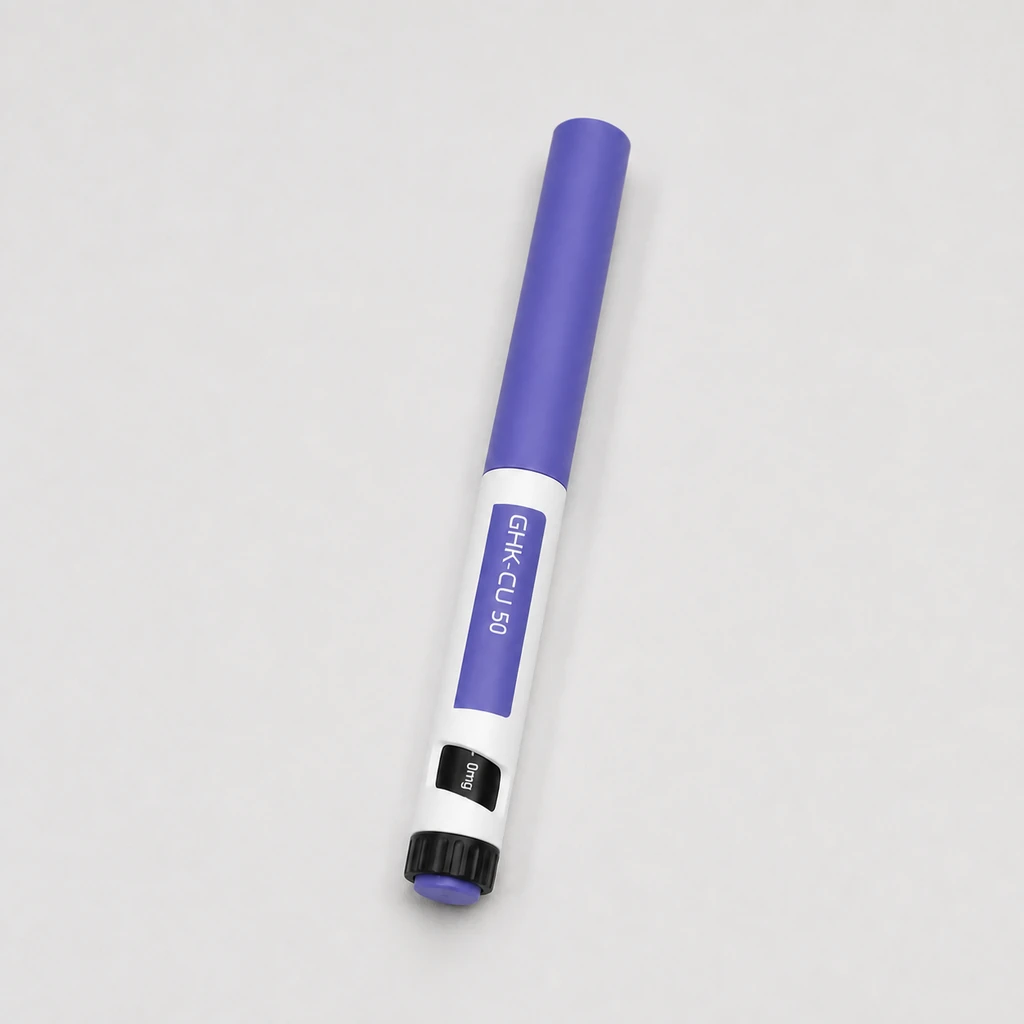
Existing catalogue image of the listed product; not a clinical-result photograph. · Photo: Peptides in Bali catalogue
The short answer
GHK-Cu is a copper-binding peptide complex, whereas a copper supplement is intended to supply a nutrient. Their names share copper, but that does not make them substitutes or make their labelled milligrams directly comparable.
Table of Contents
- Start with the question behind the search
- What nutritional copper evidence tells you
- What GHK-Cu research tells you instead
- Why the amounts cannot be swapped
- A useful conversation while you are in Bali
- Frequently asked questions
- Sources
- Explore this topic
GHK-Cu and a copper supplement are different products with different purposes. GHK-Cu is a copper-binding peptide complex discussed in skin and tissue research. A nutritional supplement supplies copper as a nutrient. The shared word “copper” does not establish equivalent effects or an interchangeable amount.
For someone comparing GHK-Cu in Bali, the most useful first distinction is whether the question concerns a diagnosed nutritional problem, a cosmetic goal or evidence about a peptide preparation.
Start with the question behind the search
A person told to investigate possible copper deficiency needs a clinical assessment of nutrient status. Someone comparing a cosmetic serum is asking about a finished topical formulation. Someone looking at a pen is considering another preparation and route again.
These questions can all lead to the same search results, but one product category cannot silently answer the others. If a professional suggested copper supplementation, bring the exact recommendation into the discussion before substituting anything with “Cu” in its name.
| Feature | Nutritional copper | GHK-Cu |
|---|---|---|
| What the name describes | An essential trace nutrient | A peptide complex involving copper |
| Typical comparison question | Nutrient intake or a diagnosed deficiency | Research involving the specific peptide/preparation |
| Relevant amount | Copper supplied by that supplement | Labelled amount of the specified complex |
| Common mistake | Assuming extra copper automatically improves appearance | Treating peptide contents as a nutritional replacement dose |
What nutritional copper evidence tells you
The NIH Office of Dietary Supplements explains copper's roles in the body and the contexts in which deficiency or excessive intake matters. That nutritional framework does not provide an injectable GHK-Cu protocol or establish that a peptide pen corrects a diagnosed deficiency. Read the NIH copper fact sheet.
This is why a deficiency concern belongs with a clinician who can interpret the relevant history and tests. It is not resolved by choosing the product with the largest copper-related number.
What GHK-Cu research tells you instead
A foundational study examined collagen synthesis in fibroblast cultures exposed to GHK-Cu. It is a specific laboratory finding about a peptide complex and a cellular endpoint. It is not a clinical comparison between nutritional copper tablets and a GHK-Cu pen. Read the original study.
That finding helps explain interest in the compound. It does not allow every skin, hair or “glow” claim to be inferred from the ingredient name alone. The preparation and outcome still need to match the claim.
The GHK-Cu product page identifies the store's pen format. For discussion of the skin-research question, see the GHK-Cu skin guide.
Why the amounts cannot be swapped
A supplement label and a peptide label may both use milligrams while measuring different things. One may declare the nutrient amount; the other may declare a named complex. Matching the numerals without resolving that distinction creates a false equivalence.
Do not calculate a nutritional replacement amount from a GHK-Cu pen label. It would require assumptions about identity, chemical form and intended route that the shared unit does not establish.
The same issue appears when a serum lists a percentage. A percentage, an amount per serving and a total amount in a device answer different questions. More information about those formats is in the serum-percentage guide.
A useful conversation while you are in Bali
Imagine you are staying in Pererenan and receive two recommendations: a skin product from a friend and a nutrient supplement mentioned after a consultation. Keep them as separate questions rather than trying to solve both with one pen.
Tell the clinician what prompted the supplement discussion, and separately explain the skin concern. If you have a report, keep the complete report rather than only a highlighted number. This helps avoid a product substitution based on incomplete information.
For a cosmetic goal, define what you actually want to assess: the appearance of a particular area, irritation from an existing routine, or a hair concern. The more specific the question, the less likely a broad “copper is good for skin” explanation is to be mistaken for evidence.
Frequently asked questions
Is GHK-Cu just a stronger form of dietary copper?
No. “Stronger” is not a meaningful conversion between a nutrient and a peptide complex.
Does the copper in GHK-Cu mean it treats deficiency?
The name alone does not establish that use. Nutritional deficiency requires its own assessment and treatment decision.
Can a copper supplement reproduce the GHK-Cu study?
The cited experiment tested GHK-Cu in cells. It did not test whether taking a copper supplement reproduces that experiment in a person.
What should I compare when browsing products?
Compare the exact ingredient, preparation and question the evidence addresses. Keep nutrient replacement and peptide-related cosmetic claims separate.
Instructions & useful references
- Copper: Health Professional Fact SheetNIH ODS · Nutritional copper, distinct from injectable copper peptide.
- GHK-Cu and collagen synthesis in fibroblastsMaquart et al., FEBS Letters · Cell-culture endpoint, not patient outcomes.
Sources checked on October 19, 2026. This guide provides general information, with practical planning suggestions. It is not an individual treatment plan.