

GHK-Cu Serum Percentages: How Much of the Bottle Is Actually Copper Peptide?
Everyday guidesPublished 4 min readhow to
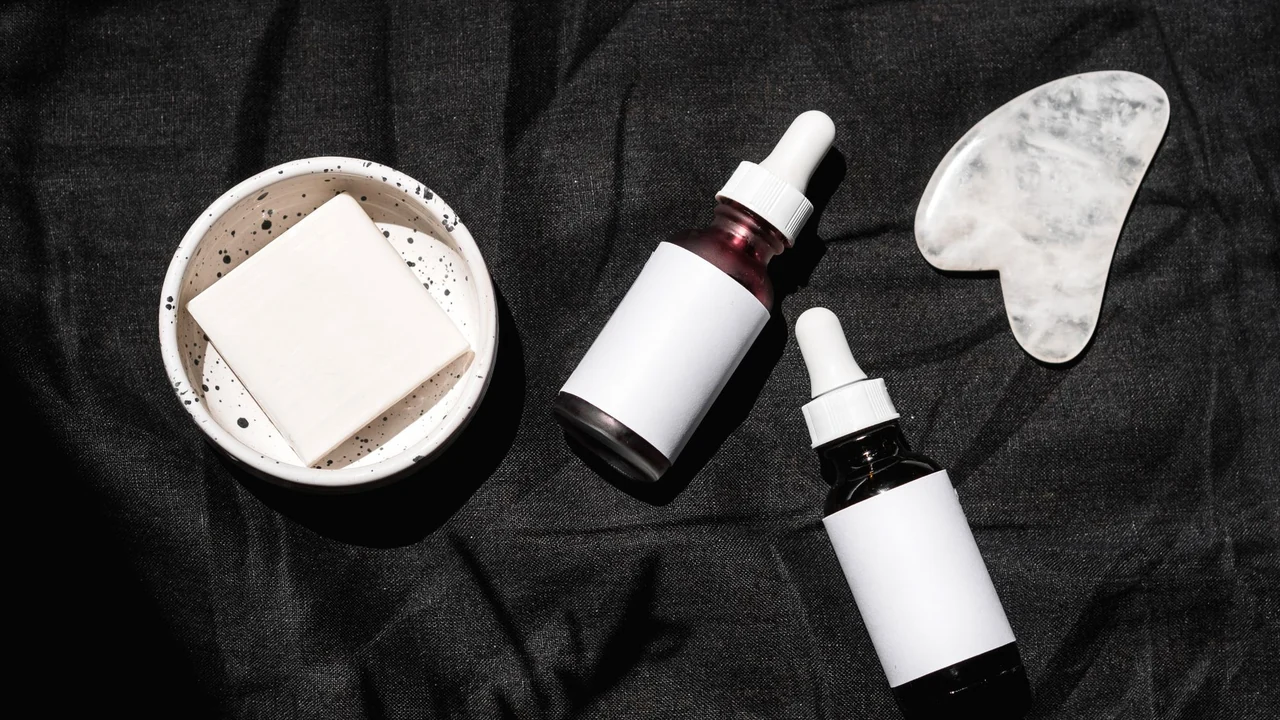
Decode copper peptide serum percentages with a blend calculation, ingredient-list checks and a product shortlist.
Illustrative licensed stock photograph. · Photo: Polina ⠀ · pexels.com
The short answer
A percentage may refer to a supplier blend rather than pure GHK-Cu in the finished serum. Ask what the number measures before ranking products.
Table of Contents
- A simple calculation that changes the comparison
- What the ingredient list can tell you
- Ask three precise questions before comparing prices
- Give a new formula a fair, readable trial
- Keep the comparison about the whole bottle
- Sources
- Explore this topic
A bottle described as “2% copper peptide complex” does not necessarily contain 2% pure GHK-Cu. The percentage may refer to a blend added to the formula, and that blend may itself contain a much smaller proportion of the named peptide. Before comparing serums, find out what the number measures.
This is a label-reading problem you can solve without a laboratory. Separate the finished product, the supplied ingredient blend and the active substance within that blend. Then compare like with like, while remembering that concentration alone does not establish how a complete skincare formula performs.
A simple calculation that changes the comparison
Imagine a fictional serum containing 2% of a supplier's solution. Suppose that solution contains 1% GHK-Cu by mass. The finished serum would contain:
0.02 × 0.01 = 0.0002, or 0.02% GHK-Cu by mass.
That is not 2% pure GHK-Cu. The calculation is valid only because both percentages use the same mass basis and the hypothetical blend composition is known. If the brand does not disclose what its “complex” contains, the result cannot be calculated from the front label alone.
| Label wording | What you know | What remains to ask |
|---|---|---|
| “2% peptide complex” | A named blend is advertised at 2% | Which peptides, and what share of each? |
| “Contains copper peptides” | A class of ingredient is claimed | Exact ingredient and finished concentration, if disclosed |
| “0.02% GHK-Cu in the finished formula, w/w” | A more specific concentration statement | Formula testing, stability and intended use |
| “High strength” | A marketing description | The numerical basis for the comparison |
The example is a reading tool, not a recommended serum concentration or a formula for mixing your own product.
What the ingredient list can tell you
Read the full ingredient list and look for the exact name used for the copper peptide, rather than relying on a blue liquid or a photograph of a molecule. Keep the original packaging photograph, because online product descriptions can omit qualifiers that appear on the box.
For cosmetics sold in the United States, FDA guidance generally requires ingredients in descending order of predominance, with exceptions including ingredients at 1% or less, which may appear in any order. That means position near the end does not reveal an exact percentage. It also means you cannot reliably calculate concentration from where one ingredient sits relative to another. This is US labelling guidance; do not assume every market uses identical presentation rules. FDA labelling summary.
Ask three precise questions before comparing prices
Illustrative licensed stock photograph. · Photo: Mikhail Nilov · pexels.com
View full size ↗First: does the advertised percentage refer to the finished product or a supplier blend? Second: is it a mass percentage, another stated basis or simply an unexplained marketing number? Third: what testing supports the finished formula's specific claim?
A useful manufacturer response might explain that a blend is included at a specified level but decline to disclose its proprietary composition. That still tells you something: you cannot compare it numerically with a product giving a pure-ingredient concentration. Record “not directly comparable” rather than assuming the larger printed number wins.
Price per millilitre remains useful for budgeting once you know bottle volume. For example, a fictional 30 mL bottle costing 300,000 IDR is 10,000 IDR per mL. It is not automatically a better or worse value than another serum until you consider its formulation, tolerability and the claim you actually care about.
Give a new formula a fair, readable trial
Introducing several new products at once makes it difficult to identify which one caused a reaction or changed how your skin feels. Keep a short record of the product name, introduction date and the rest of your routine. Use consistent lighting for photographs if you choose to track appearance; changing exposure or makeup can overwhelm a small difference.
The American Academy of Dermatology advises testing a new skincare product on a small area before routine use, following its seven-to-ten-day testing guidance. Stop using a product that causes a reaction; persistent or severe reactions warrant professional assessment. Home testing does not guarantee future tolerance and is different from medical patch testing. AAD product-testing guide.
Keep the comparison about the whole bottle
The most informative shortlist has five fields: exact ingredient name, meaning of the percentage, full ingredient list, evidence for the finished product and your experience of tolerability. It need not contain a winner in every column.
A clear 0.02% statement can be more useful than an unexplained 2% headline without proving that the lower-numbered product works better. Clarity helps you ask the right questions. It cannot turn a concentration figure into a guaranteed skin result.
Instructions & useful references
- US cosmetic ingredient labellingwww.fda.gov · Descending order has exceptions including ingredients at one percent or less; list position does not reveal exact concentration. US scope is explicit.
- Testing a new skincare productwww.aad.org · AAD recommends small-area home product testing over seven to ten days; not a guarantee or substitute for medical patch testing.
Sources checked on October 11, 2026. This guide provides general information, with practical planning suggestions. It is not an individual treatment plan.