

GHK-Cu vs Collagen Peptides: Why They Are Different Products
Everyday guidesPublished 5 min readcomparison
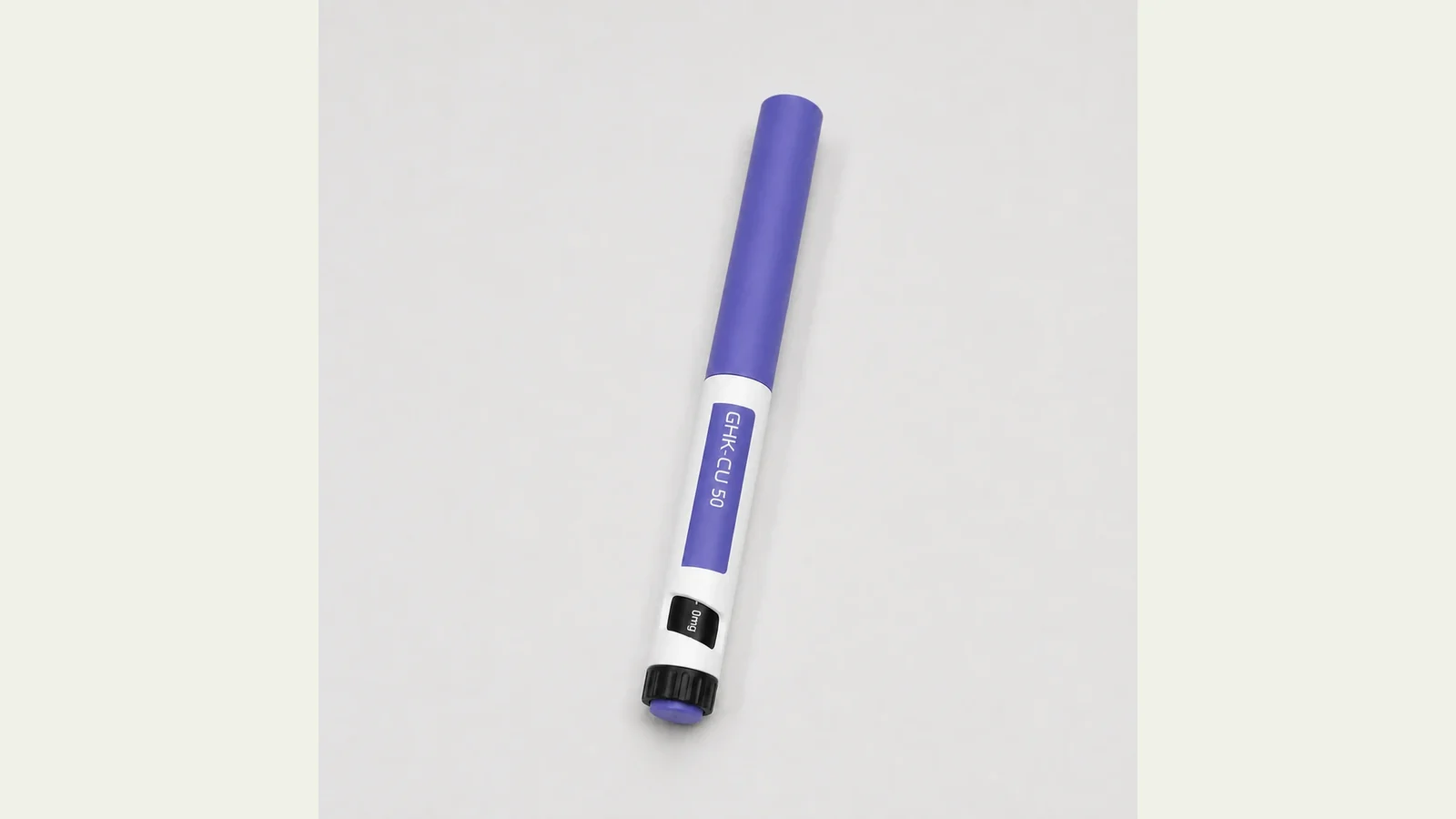
Separate GHK-Cu from collagen peptides by identity, route and label quantities. A shared ingredient category does not make a pen a nutrition substitute.
Photo: Peptides in Bali catalogue
The short answer
GHK-Cu and collagen peptides are not two versions of the same ingredient. GHK-Cu is a defined copper-peptide complex. Collagen-peptide powders contain fragments derived from collagen and are sold as oral products. Sharing the word “peptide” does not make their formats, quantities or evidence interchangeable.
Table of Contents
- GHK-Cu vs collagen peptides at a glance
- The word peptide is too broad to choose a product
- Route changes the question
- Why grams and milligrams do not show strength
- Read skin claims with the product attached
- What the label should tell you
- Match the comparison to your actual goal
- Questions that make the offers clearer
- Sources
- Explore this topic
GHK-Cu and collagen peptides are not two versions of the same ingredient. GHK-Cu is a defined copper-peptide complex. Collagen-peptide powders contain fragments derived from collagen and are sold as oral products. Sharing the word “peptide” does not make their formats, quantities or evidence interchangeable.
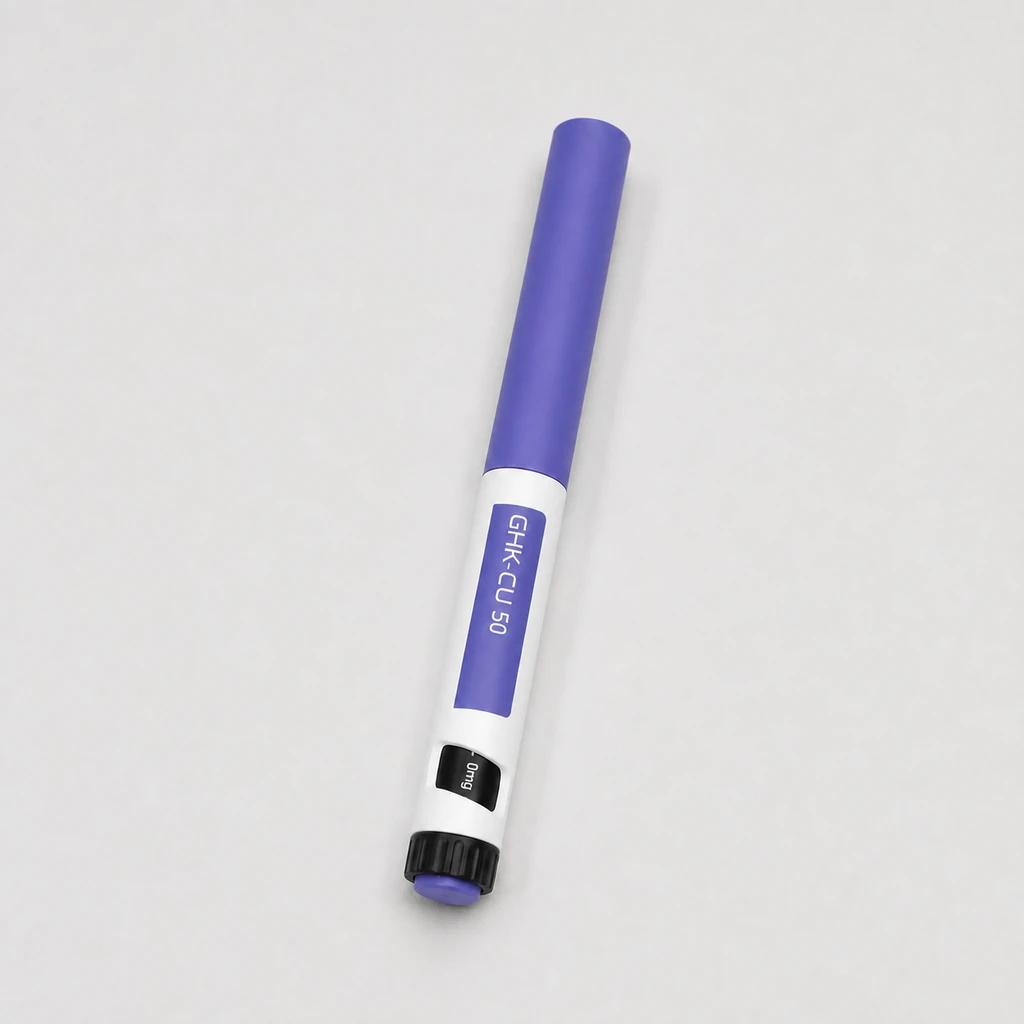
Peptides in Bali lists GHK-Cu as a 50 mg pen. It does not currently list a collagen powder. This comparison is about identifying unlike products, not claiming that a pen replaces a food or supplement. [1]
In this guide: names, routes, label quantities, skin claims and a practical product-category check.
GHK-Cu vs collagen peptides at a glance
| Detail | GHK-Cu | Collagen peptides |
|---|---|---|
| Identity | A specified copper-peptide complex | Collagen-derived peptide material |
| Common comparison context | Skin-related research and products | Oral nutrition or supplement products |
| Current store offering | 50 mg pen | Not listed |
| Essential distinction | Formulation and route must be identified | Ingredient source and complete oral-product label matter |
The National Library of Medicine's compound record identifies the copper tripeptide complex. As a concrete first-party example of the other category, Vital Proteins lists bovine collagen peptides in its oral-product information. That example does not describe every collagen product or establish that all sources are identical. [2] [3]
The word peptide is too broad to choose a product
Peptides are linked amino-acid structures, but their sequences, size, formulation and purpose can differ substantially. A category name is not a clinical equivalence statement.
Do not assume that a collagen powder “contains GHK-Cu” simply because both product descriptions mention skin. Likewise, a GHK-Cu pen is not a substitute for dietary protein.
If a comparison uses the word collagen in two ways, separate them. Collagen can be the material in an oral product or an outcome-related term in a skin-research claim. Those are not the same statement.
Route changes the question
A topical cosmetic, an oral powder and a pen are different presentations. Evidence about one should not be silently transferred to another.
For GHK-Cu, FDA's current compounding-safety information specifically discusses injectable use and limitations in human safety information. It does not establish that every topical product has the same profile, nor does topical research validate a pen. [4]
For an oral collagen product, read the actual ingredient list, serving information and allergen statements. Do not assume its source or other ingredients from the words “collagen peptides” alone.
A useful first decision is therefore: which product category and route are being discussed? That prevents a comparison from sliding between cosmetic, dietary and injectable claims.
Why grams and milligrams do not show strength
An oral powder may list ingredient quantities in grams, while the store's GHK-Cu pen lists milligrams. Converting units mathematically does not create a meaningful potency comparison between different substances.
A larger mass of collagen-derived material is not automatically stronger than a smaller mass of a defined peptide complex. Nor does a smaller number prove that a product is more concentrated in a clinically useful sense.
Keep the quantities attached to their identities and formulations. Do not calculate a replacement ratio or use a powder serving to infer a pen setting.
Read skin claims with the product attached
Ask whether the source studied a topical formulation, an oral preparation, a cell experiment or a different route. Then identify the outcome: an instrument measurement, an appearance rating, a symptom or a laboratory process.
A result involving cultured cells is not automatically a demonstrated cosmetic result in people. A study of one branded formulation is not a certificate for every product sharing part of its ingredient name.
For a fuller discussion of the skin topic, read GHK-Cu for skin. The current comparison stays narrower: it explains why an oral collagen product and a GHK-Cu pen should not be ranked as interchangeable alternatives.
What the label should tell you
For a collagen product, collect the full ingredient list, collagen source, oral-product format and any relevant allergen information. The manufacturer's label is the starting record, not a shortened marketplace title.
For the GHK-Cu pen, collect the exact supplied identity, labelled amount, formulation, device information, storage requirements and relevant batch documents. A product photograph can help identify the pack but cannot establish every quality attribute.
The COA guide explains what a report can support. Do not treat a report on a raw ingredient as proof of an unrelated finished formulation.
Match the comparison to your actual goal
If the question is about protein intake, a nutrition comparison is more relevant than a comparison with a pen. Our collagen peptides vs whey protein guide addresses that topic.
If the question is about a persistent skin concern, an appropriate clinician can assess the cause and suitable options. If it is about a topical routine, keep the specific cosmetic products and their instructions in view; peptides and retinol covers a different topical question.
The shared word peptide should not pull these separate decisions into one shopping category.
Questions that make the offers clearer
Ask each seller what the exact product contains, how it is supplied and which source supports the specific claim being made. For oral products, ask about the complete label rather than just the featured ingredient. For the pen, ask about the actual pack and batch.
Do not request a “stronger collagen option” and assume the seller understands whether you mean food, a supplement, a cosmetic or a defined compound. Name the category explicitly.
The practical answer is that GHK-Cu and collagen peptides require different comparisons. Start with identity and route, then evaluate the product-specific evidence. There is no useful milligram shortcut between them.
Instructions & useful references
- Peptides in Bali product catalogPeptides in Bali · Product names, listed pack totals, prices, accessory pack; outcome claims deliberately excluded.
- Prezatide copper / Copper tripeptide-1 compound recordNational Library of Medicine, PubChem · Compound identity and copper-tripeptide synonym from indexed official record; full interactive page requires JavaScript. No clinical claims derived.
- Vital Proteins single-ingredient product comparisonVital Proteins · Bovine hide collagen peptides and hydrolysis/ingredient description as an example oral product; benefit/certification claims not reused.
- Certain bulk substances that may present significant safety risksUS Food and Drug Administration · GHK-Cu injectable and other peptide-specific evidence limits; distinction between currently listed and withdrawn nominations retained.
Sources checked on September 24, 2026. This guide provides general information, with practical planning suggestions. It is not an individual treatment plan.