

Visceral vs Subcutaneous Fat: Understanding Belly Fat
Everyday guidesPublished 6 min readcomparison
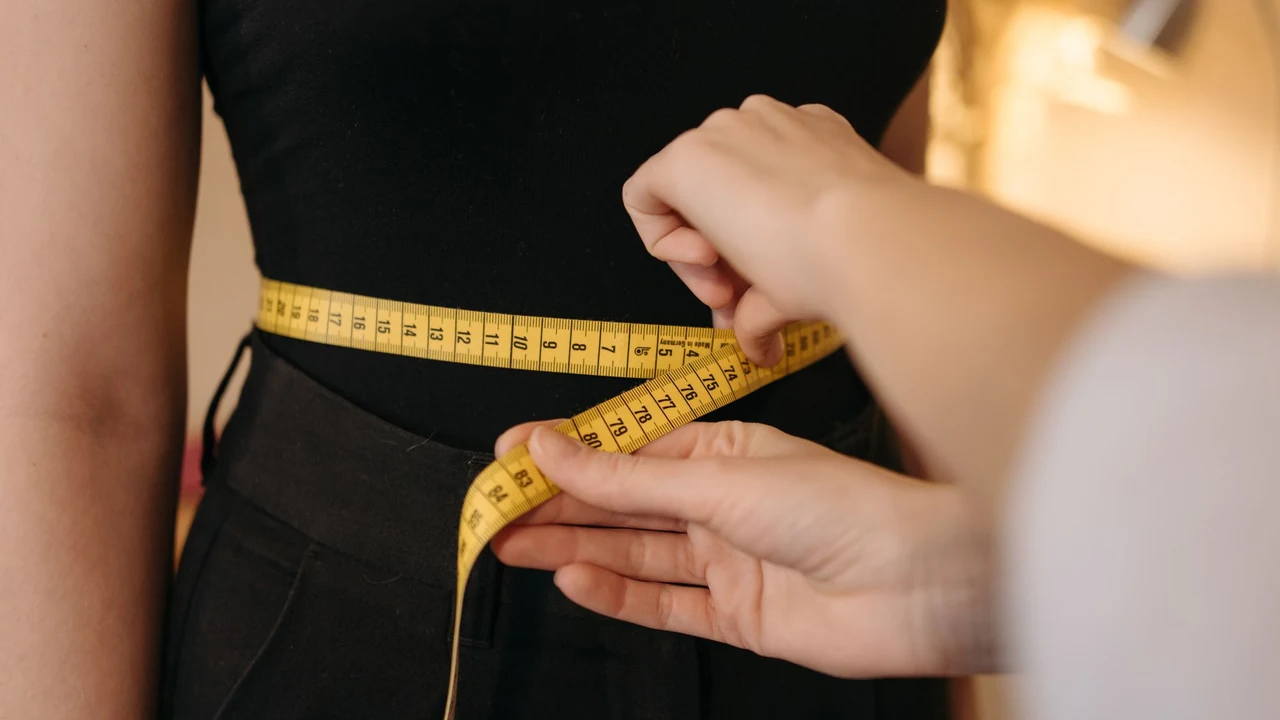
Understand visceral and subcutaneous belly fat, what waist measurements and smart scales can show, and how to make body-composition tracking more useful.
Illustrative licensed stock photograph. · Photo: Pavel Danilyuk · pexels.com
The short answer
Subcutaneous fat is beneath the skin; visceral fat is deeper around abdominal organs. A pinch, photograph or consumer scale cannot directly quantify both compartments. Interpret waist and weight alongside a broader health assessment.
Table of Contents
- Two locations, different information
- Why a hard or soft stomach is not a diagnosis
- What a tape measure can tell you
- How much should you trust a smart-scale visceral-fat score?
- Build a record that answers a real question
- Turn the information into a workable plan
- Sources
- Explore this topic
Subcutaneous fat sits beneath the skin. Visceral fat lies deeper within the abdomen, around internal organs. Both can contribute to the size of your waist, and you can have both at the same time. Looking at your stomach, pinching a fold or reading a smart-scale score cannot reliably tell you how much of each you have.
The useful question is not simply “Which belly-fat type am I?” It is what your measurements and overall health say, and whether the next step would change your care.
Two locations, different information
The terms describe location. They are not competing body types or labels for a person's fitness. The NIH's description of fat tissue distinguishes fat under the skin from fat around internal organs. A soft fold you can hold is superficial tissue; the deeper compartment is out of reach of that pinch.
| Question | Subcutaneous fat | Visceral fat |
|---|---|---|
| Where is it? | Under the skin, including around the waist | Deeper in the abdominal cavity, around organs |
| Can I assess it by pinching? | A pinch includes skin and underlying superficial tissue | A pinch does not measure this compartment |
| Does waist size identify it precisely? | It contributes to waist size | It can also contribute, but a tape cannot separate the two |
| Can a photo quantify it? | No; lighting and pose are not a body-composition assessment | No; appearance does not show the internal compartment |
| What is the practical next step? | Consider measurements and health in context | Assess cardiometabolic risk rather than guessing from appearance |
Fat tissue has ordinary functions, including energy storage and hormone signalling. The concern is not that all body fat is inherently harmful. NHLBI guidance explains that abdominal visceral fat is associated with metabolic complications, and that a person can have a normal BMI alongside a relatively large waist. This is why weight alone does not answer every health question.
Why a hard or soft stomach is not a diagnosis
Online descriptions often turn “soft belly” into subcutaneous fat and “hard belly” into visceral fat. The distinction is too simple to use as a personal test. The location of a fat compartment cannot be established from how the outside feels, and the abdomen contains much more than fat.
A photograph is even less informative. Posture, camera angle and whether someone is bracing can change the outline you see. Do not use another person's transformation photo to estimate your own internal fat or to decide which treatment you need.
An unexpected change in abdominal size, pain or persistent bloating deserves its own assessment rather than being automatically labelled “stubborn fat.” NICE explicitly advises clinicians to avoid attributing every symptom to weight. That is a useful principle when you are deciding what to ask about at an appointment.
What a tape measure can tell you
A waist measurement is inexpensive and repeatable, but it measures circumference. It does not produce a separate reading for visceral fat.
NICE recommends waist-to-height ratio alongside BMI as a practical estimate of central adiposity in adults with BMI below 35. An increased result is a reason to consider further assessment, not a diagnosis made by the tape itself. We explain the method and interpretation in the waist-to-height ratio guide.
For follow-up, consistency matters more than repeated checks throughout the day. Write down your method and keep it the same. A clinician can help decide how often a measurement is useful and interpret it alongside blood pressure, relevant blood tests, medical history and other findings.
Here is an illustrative comparison. Two people both report losing three centimetres from their waist. That does not establish that they lost equal amounts of visceral fat. The measurement describes a change around the abdomen; it cannot identify every tissue responsible for it.
How much should you trust a smart-scale visceral-fat score?

Illustrative licensed stock photograph. · Photo: Andres Ayrton · pexels.com
View full size ↗First ask what the number represents. A consumer scale's labelled “visceral fat” score is an estimate produced by the device, not a direct image of the tissue around your organs. Check the manufacturer's method, scale and instructions before treating the number as a meaningful change.
A 2026 study comparing DXA, bioimpedance and body measurements with MRI examined 18,622 White UK Biobank participants. It compared how different measures related to internal fat compartments. Results from that population do not validate every consumer device, every proprietary score or the accuracy of small day-to-day changes in an individual.
An estimate may still be useful to discuss. Keep the device name, the actual readings and the measurement conditions. Avoid switching between brands and treating their scores as interchangeable. If a scan or additional assessment is being proposed, ask what it would clarify and how the result would change the plan.
Build a record that answers a real question
You do not need to assemble a personal laboratory before making progress. Start with the question you want the information to answer: “Is my health risk changing?”, “Is my current plan manageable?” or “Does this new symptom need investigating?” Those require different evidence.
| Bring to the conversation | Why it helps |
|---|---|
| Comparable weight and waist records | Shows the pattern you are concerned about |
| Device name and exact score, if used | Allows the estimate to be interpreted properly |
| Changes in eating, activity and medicines | Adds context to changes in measurements |
| Symptoms and when they started | Keeps a new health concern separate from appearance |
| Your main goal | Clarifies whether the priority is risk, function or body composition |
For example, someone whose waist is stable but whose training has become more consistent has a different review question from someone with a rapidly enlarging abdomen and discomfort. Putting both situations under “belly fat” would hide the important difference.
Turn the information into a workable plan
Choose a plan around your health needs rather than buying a promise to target one hidden compartment. The body-recomposition guide explains how to think about fat and muscle together; the strength-training guide for a calorie deficit covers keeping training manageable when losing weight.
You can make a consultation more useful by asking: “Which measurements should we follow, what change would matter, and when should we review?” If a product is described as specifically removing visceral fat, ask for evidence in people with your clinical situation and for that exact intervention. A mechanism or a marketing label does not establish the outcome for you.
Can I have visceral fat if I am not overweight?
Yes. BMI does not describe fat distribution completely. Waist measurements and a broader health assessment can provide information that body weight alone misses.
Will losing belly size prove that visceral fat has gone?
No. A smaller waist is a measurement change, not a scan of an internal compartment. Follow it alongside the other outcomes agreed with your clinician.
Do I need an MRI before starting healthier habits?
Do not assume that you do. Ask whether additional testing has a specific clinical purpose. A test is most useful when its answer would change what happens next.
Instructions & useful references
- The Quest To Make Visceral Fat Burn ItselfNIDDK · Anatomical distinction only; experimental treatment findings not used.
- Overweight and Obesity: Symptoms and DiagnosisNHLBI · Body-fat distribution, BMI limitations and abdominal-fat risk.
- Identifying and assessing overweight, obesity and central adiposityNICE · Adult recommendations 1.9.1, 1.9.5–1.9.9; BMI below 35 limitation and additional assessment.
- Comparison of DXA, BIA, and anthropometry for assessing fat measured by MRIDiabetes, Obesity and Metabolism · Abstract read in topic research; 18,622 White UK Biobank participants; bibliography reconfirmed through UK Biobank DOI 10.1111/dom.70456. Full paywalled paper not claimed read.
Sources checked on October 7, 2026. This guide provides general information, with practical planning suggestions. It is not an individual treatment plan.