

Retatrutide vs Tesamorelin for Belly Fat: Comparing the Right Outcomes
Everyday guidesPublished 3 min readcomparison

Compare retatrutide and tesamorelin belly-fat research by population, measurement and duration. Understand why their percentages cannot be ranked directly.
Illustrative licensed stock photograph. · Photo: Annushka Ahuja · pexels.com
The short answer
The cited retatrutide study measured body-weight change in obesity, while the tesamorelin study measured visceral fat in people with HIV-associated abdominal adiposity. Different populations and endpoints prevent a direct percentage ranking.
Table of Contents
- Put the two studies in their own context
- A comparison table needs more than percentages
- Define what you mean by belly fat
- Check the product indication as well
- Two products together create another unanswered question
- Leave the comparison with a measurable question
- Sources
- Explore this topic
Retatrutide and tesamorelin are often compared under the phrase “belly fat,” but that phrase hides different measurements and different study populations. A percentage change in body weight is not the same outcome as a percentage change in visceral fat measured on a scan.
Before deciding that one result is larger or more relevant, identify what the researchers actually counted.
Put the two studies in their own context
The 2026 TRIUMPH-1 retatrutide trial enrolled 2,339 adults with obesity without diabetes and followed treatment for 80 weeks. Its weight outcome concerned percentage change in total body weight, using a placebo comparison.
An earlier tesamorelin trial enrolled 412 people with HIV and abdominal fat accumulation over 26 weeks. It measured visceral adipose tissue: this decreased by 15.2% with tesamorelin and increased by 5.0% with placebo.
That 15.2% is not a claim of 15.2% total body-weight loss. Keeping the denominator attached to the number changes the comparison immediately.
A comparison table needs more than percentages
| Feature | Retatrutide TRIUMPH-1 | Tesamorelin trial cited here |
|---|---|---|
| Population | Adults with obesity without diabetes | People with HIV and abdominal fat accumulation |
| Duration | 80 weeks | 26 weeks |
| Outcome discussed | Total body-weight change | Visceral adipose tissue change |
| Comparator | Placebo | Placebo |
| Direct comparison between these medicines? | No | No |
Neither study was designed to determine which option is better for a healthy person seeking a flatter stomach. Differences in population, duration and outcome prevent a simple ranking.
This is also why a graph that places the percentages side by side can look persuasive while answering the wrong question.
Define what you mean by belly fat
Our guide to visceral and subcutaneous fat explains the anatomical distinction. A visible abdominal outline can reflect more than one tissue compartment, and a photograph cannot reproduce a scan measurement.
For a clinical discussion, explain whether your concern is overall weight, waist size, a documented metabolic issue or a finding on imaging. Bring the actual report if you have one. Do not turn a consumer device’s “visceral fat” score into the same endpoint used by an imaging study without checking how it was obtained.
Check the product indication as well

Illustrative licensed stock photograph. · Photo: Spencer Stone · pexels.com
View full size ↗The EGRIFTA WR label describes treatment of excess abdominal fat in adults with HIV-associated lipodystrophy and states that it is not indicated for weight-loss management. It concerns that specific tesamorelin medicine.
The developer’s September 2026 retatrutide update describes retatrutide as investigational. A trial publication and an approved product indication are different kinds of information; both belong in an informed comparison.
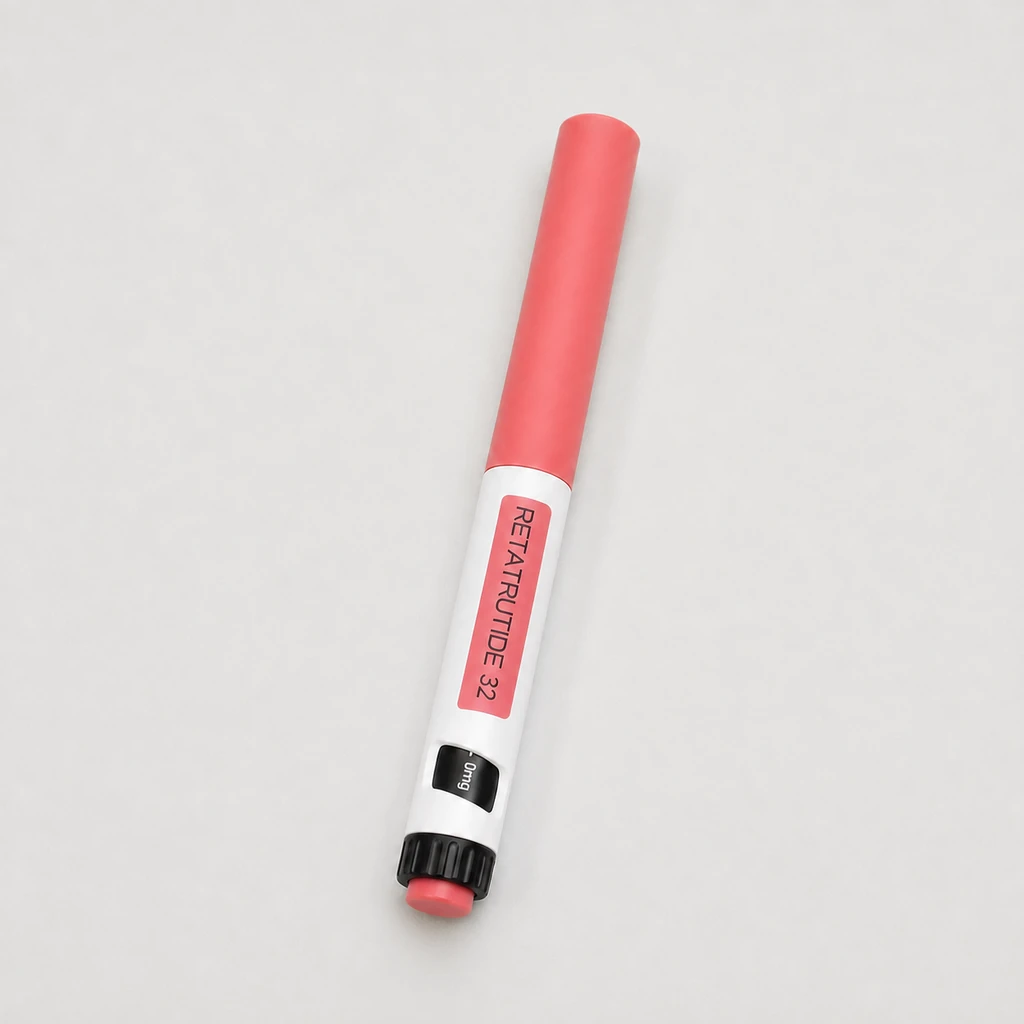
The names on our retatrutide and tesamorelin catalog pages identify offers. They do not make the two study populations interchangeable.
Two products together create another unanswered question
Separate trials of each ingredient do not establish the benefit or safety of combining them. A bundle can show a commercial saving, but that saving is not clinical evidence of an additive effect.
If someone proposes a combination, ask for research on that exact combination, in a relevant population, measuring the result you care about. Adding two percentages from separate trials is not a substitute.
Leave the comparison with a measurable question
Ask the clinician what outcome would matter in your situation, how it would be measured, and what evidence supports the proposed approach. A well-defined question—such as interpreting an existing scan result—is more useful than trying to select a molecule from two unrelated “belly fat” headlines.
Instructions & useful references
- Retatrutide for treatment of obesity: TRIUMPH-1New England Journal of Medicine; NCBI primary-study abstract · 2339 adults with obesity without diabetes; 80-week placebo comparison. Not a switching trial or tesamorelin comparison. OSA abstract sign inconsistency not used.
- Metabolic effects of a growth hormone-releasing factor in patients with HIVNew England Journal of Medicine · Abstract: 412 patients with HIV and abdominal adiposity, 26 weeks; visceral fat -15.2% versus +5.0%. Full text inaccessible; abstract only; not body-weight change.
- EGRIFTA WR prescribing informationDailyMed / FDA-submitted label · IGF-1 monitoring and persistent elevations; indication HIV-associated lipodystrophy and not weight-loss management. Label formulation not transferred to catalog pen.
- What to know about retatrutideEli Lilly and Company · Developer September 2026 update describes investigational status and absence of FDA approval; not an independent efficacy source.
Sources checked on October 8, 2026. This guide provides general information, with practical planning suggestions. It is not an individual treatment plan.