

Can You Absorb More Than 30 Grams of Protein at Once?
Everyday guidesPublished 4 min readhow to
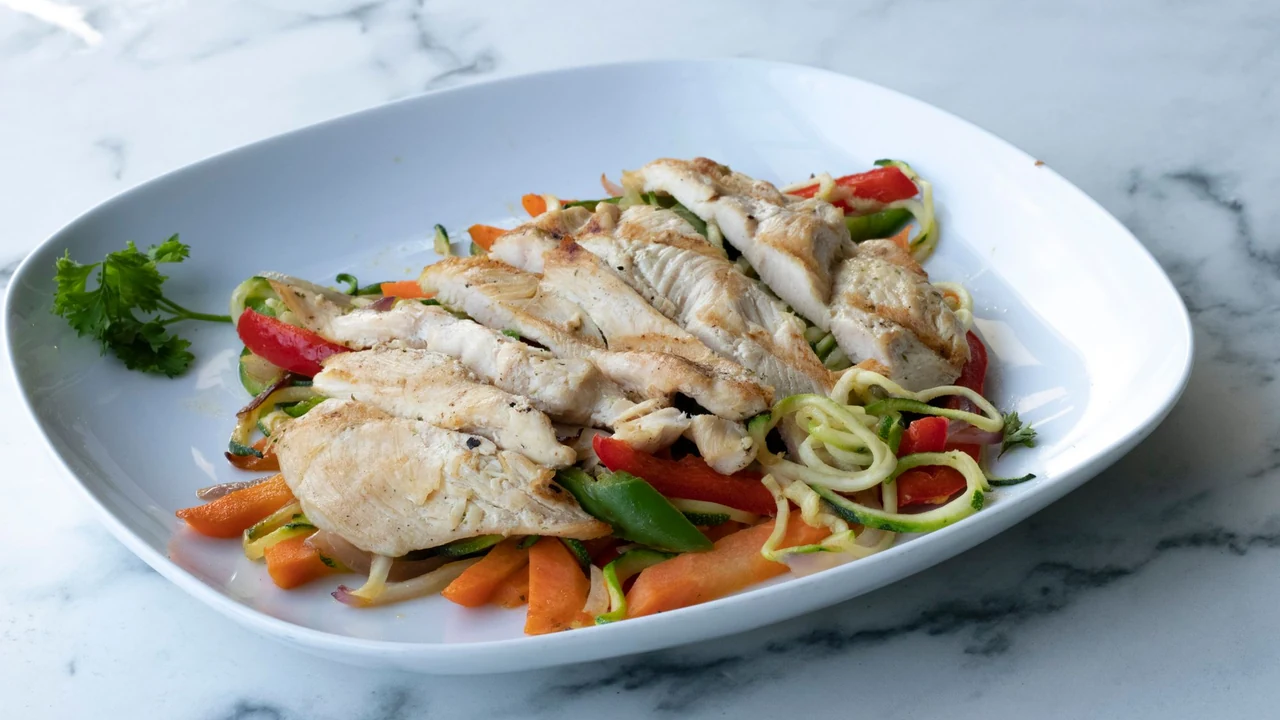
What the 30 g rule gets wrong, what the 100 g study really measured, and how to plan meals without deleting protein from your food log.
Illustrative licensed stock photograph. · Photo: Biel Heinrich · pexels.com
The short answer
Protein above 30 grams in a meal is not automatically wasted. Absorption, short-term anabolic responses and long-term muscle growth are different questions; a useful meal target is not a universal digestive ceiling.
Table of Contents
- Four meanings of “use”
- What the 100 g study changes—and what it does not
- Stop rounding your meal down
- Plan the day before perfecting the meal
- When a big shake is solving the wrong problem
- The answer to keep
- Sources
- Explore this topic
Protein above 30 grams in a meal is not automatically wasted. The familiar “30 g limit” confuses digestion, absorption, short-term muscle protein synthesis and long-term muscle growth. These are different processes with different measurements.
That does not mean you should pack all your protein into the largest possible shake. It means that 30 g is not a switch beyond which the rest of a normal meal disappears.
Four meanings of “use”
| Meaning | What the question really asks |
|---|---|
| Digest and absorb | Can dietary protein be broken down and its components enter the body? |
| Support muscle protein synthesis | How does muscle-building activity respond over the measured hours? |
| Support the whole body | What happens to amino acids outside skeletal muscle? |
| Build more muscle over months | Does an eating pattern improve a training outcome over time? |
An experiment answering the second question cannot settle the fourth on its own. Likewise, a recommended meal target is a planning tool, not necessarily a digestive ceiling.
The Schoenfeld and Aragon review discusses the distinction and proposes distributing intake using body mass rather than treating one fixed serving as suitable for everyone. Its per-meal recommendation should not be relabelled as the most protein a body can absorb.
What the 100 g study changes—and what it does not
A 2023 human tracer study compared protein servings after exercise, including 25 g and 100 g. The larger amount produced a greater, more prolonged anabolic response during the observation period, extending beyond twelve hours.
This challenges a simple claim that anything above a small meal dose is necessarily discarded. It does not test every possible quantity, establish an unlimited practical benefit, or demonstrate that a daily 100 g shake builds more muscle than distributing an equal daily total.
The word “unlimited” in a headline is especially easy to overread. A study with specific amounts, participants and observation times still has boundaries.
Stop rounding your meal down
Consider this fictional meal record:
- Main food: 32 g protein.
- Yogurt on the side: 12 g.
- Bread and other ingredients: 6 g.
- Recorded meal total: 50 g.
If those estimates are appropriate for the portions eaten, record 50 g. Do not log 30 g and delete the other 20 because of an assumed absorption cap.
Food tracking estimates still have ordinary measurement uncertainty. Raw and cooked weights, serving sizes and recipe ingredients matter. Our raw versus cooked food weight guide explains one common source of error.
The point is accurate arithmetic, not a requirement to design a 50 g meal.
Plan the day before perfecting the meal
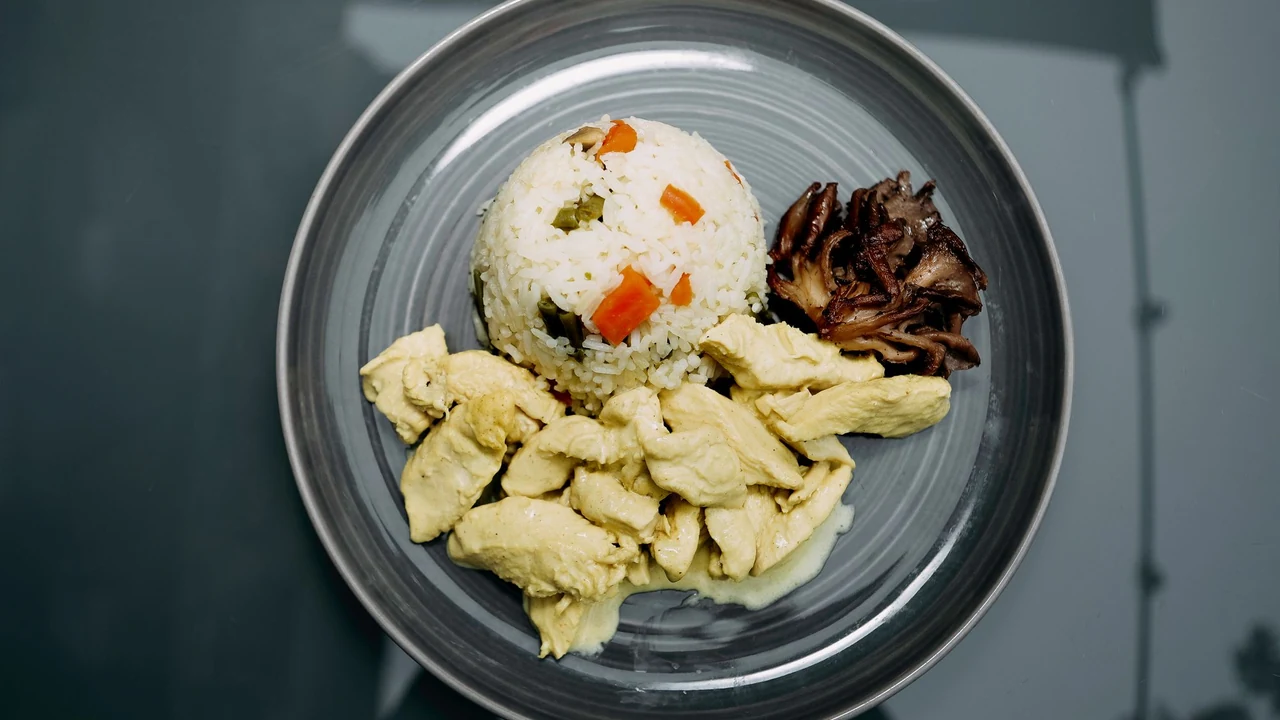
Illustrative licensed stock photograph. · Photo: Zola PALMER · pexels.com
View full size ↗Use a daily intake appropriate to your needs, then see whether your usual meals can supply it. Our separate daily protein guide addresses that starting question.
Here is an invented scheduling example, not an individual prescription:
| Eating occasion | Current plan | Alternative plan |
|---|---|---|
| Breakfast | 10 g | 25 g |
| Lunch | 25 g | 35 g |
| Dinner | 65 g | 40 g |
| Snack | 20 g | 20 g |
| Total | 120 g | 120 g |
The second arrangement moves food earlier without increasing the daily amount. It may suit someone who dislikes a very large dinner. The first does not prove that the evening portion is wasted. Neither row guarantees a training result.
Choose a pattern you can actually eat, afford and repeat. If a shake replaces a meal you enjoy or crowds out other foods, that practical cost belongs in the decision too.
When a big shake is solving the wrong problem
A large shake may be unnecessary if you already reach your intended intake with meals. Conversely, splitting a substantial lunch into tiny servings purely to stay under 30 g can make a normal day needlessly complicated.
Before buying more powder, ask:
- Is my daily total genuinely low, or am I discarding recorded protein above an imaginary cap?
- Are my estimates based on the food and portion I actually ate?
- Does my current pattern leave me hungry at one time and uncomfortably full at another?
- Is a convenient food substitution enough to improve the pattern?
People with a prescribed protein restriction or relevant medical condition should follow their clinical plan; a muscle-building experiment does not override it.
The answer to keep
Count the protein you eat. Treat per-meal recommendations as context-dependent guidance, not as evidence that the rest of a meal is useless. Use daily intake, meal practicality and a consistent training programme to make decisions, while keeping short-term laboratory findings separate from promises about long-term growth.
Instructions & useful references
- How much protein can the body use in a single meal for muscle-building?Journal of the International Society of Sports Nutrition / PubMed · Absorption versus anabolic response; body-mass-dependent meal distribution; no fixed 30 g digestive ceiling.
- The anabolic response to protein ingestion during recovery from exerciseCell Reports Medicine / PubMed · Postexercise 0, 25 and 100 g protein; response over twelve hours; not a longitudinal hypertrophy comparison or test of every dose.
Sources checked on September 28, 2026. This guide provides general information, with practical planning suggestions. It is not an individual treatment plan.