

Machines vs Free Weights: Choose for the Task You Want to Improve
Everyday guidesPublished 5 min readhow to
1:31 · English narration Continue reading the article ↓
Video chapters
Read the video transcript
Choose equipment for the task you need to practise. Muscle growth, a barbell skill and a repeatable hotel-gym session are different reasons for choosing an exercise.
Machines or free weights? First decide what the exercise needs to do. Practising a particular barbell lift and fitting a useful session into a hotel gym are different tasks, even when they involve similar muscles.
Research has not found a consistent muscle-growth winner between the two categories. Strength tests can favour the equipment used in training. That is a reason to match practice to the goal, not to dismiss either option.
Ask whether the setup fits you, whether you can repeat it, and whether you can progress appropriately. A familiar machine may answer those questions well. A free-weight exercise may be better for a specific skill.
Forty kilograms on one machine is not automatically equivalent to another machine or a dumbbell exercise. Record the station and settings. Establish a new baseline when the equipment changes instead of copying the number blindly.
A machine still needs correct adjustment. Free weights still need control and appropriate safety arrangements. Ask for instruction when the start, stop or safety features are unclear. Persistent pain needs assessment, not a category switch.
A programme can include both machines and free weights. Choose exercises you can perform and repeat consistently. The full guide includes a decision table for travel, skill practice and tracking progress in an unfamiliar gym.
Download transcript · English captions · Footage and production credits
Illustrative Pexels footage, original explanatory graphics and music, with synthetic English narration. People shown do not endorse products.
Choose equipment for the task you need to practise. Muscle growth, a barbell skill and a repeatable hotel-gym session are different reasons for choosing an exercise.
The short answer
Both machines and free weights can support effective resistance training. Research has not established a consistent muscle-growth winner, while strength gains are influenced by the movements used in training and testing. Choose according to your goal, fit, skill, available equipment and ability to progress consistently.
Table of Contents
- What the research actually compares
- Separate a muscle goal from a movement goal
- Fit matters more than the badge on the frame
- You cannot convert the numbers directly
- A sensible substitution has a reason
- Combining both is a normal option
- Decide using your next month, not one spectacular workout
- Sources
- Explore this topic
A hotel gym has a leg press and a cable station. A friend insists you need a barbell for the workout to count. Another says machines are always safer and better for isolating muscles.
Neither equipment category wins every useful question. Start with the task you need the exercise to do: build or maintain a training habit, practise a specific lift, train a muscle with a repeatable setup, or work within the equipment and skills you have.
What the research actually compares
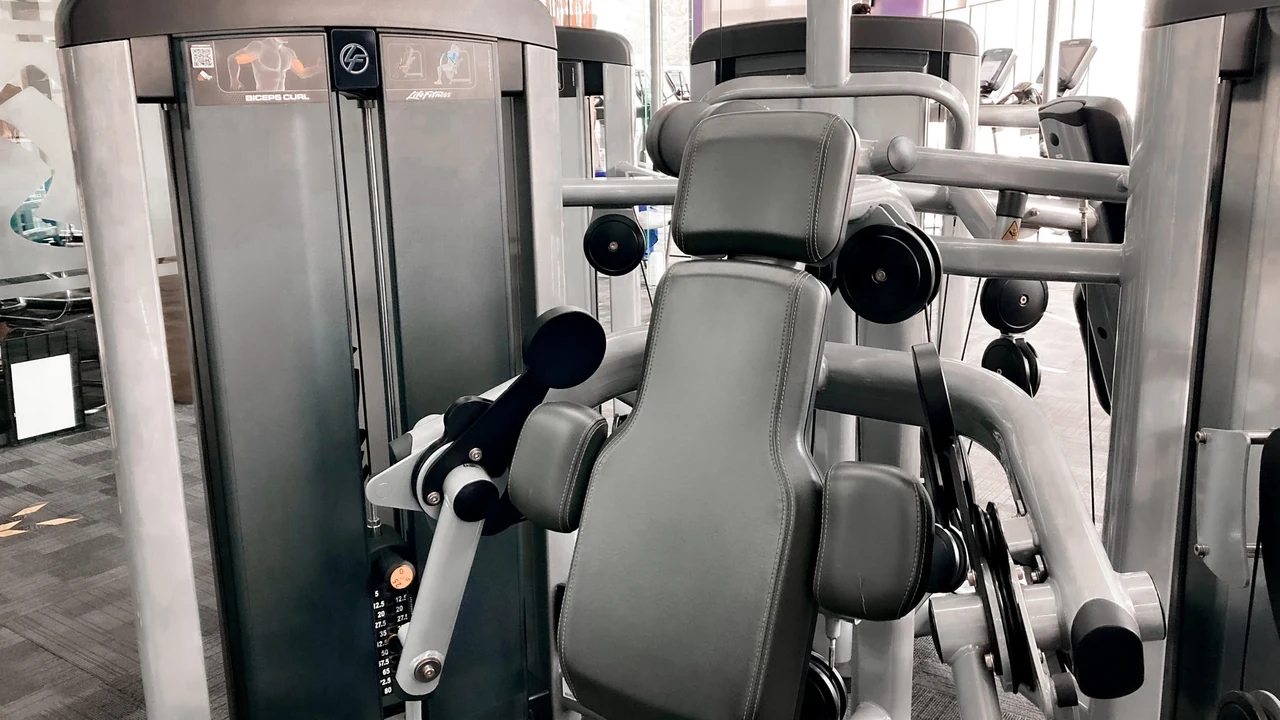
Illustrative licensed stock photograph. · Photo: Vegan Liftz · pexels.com
View full size ↗A 2023 systematic review and meta-analysis included 13 studies comparing machine and free-weight training. Five assessed muscle hypertrophy. It did not detect a difference in muscle growth between the approaches.
Strength results depended partly on the test: practising free-weight movements favoured free-weight strength tests, while machine training tended to favour machine tests. A 2021 review also found similar gains when strength was assessed with a neutral device.
These findings support choice, not a guarantee that every exercise is interchangeable. A small set of studies failing to detect a difference does not establish that all equipment produces exactly identical outcomes for every person.
Separate a muscle goal from a movement goal
If your goal is to improve a specific barbell lift, practising that lift or an appropriate progression is a different task from simply working the same broad muscle group.
If your goal is a practical resistance-training session while travelling, the absence of that exact barbell does not make the available equipment useless. You may be able to use a different movement that fits your current skills and plan.
| Main goal | Question to ask | Useful implication |
|---|---|---|
| Improve a particular lift | Does this practise the skill I will test? | Keep relevant practice in the programme |
| Train consistently while travelling | Can I set up and repeat this well? | Familiar machines may be a practical option |
| Track progression | Will the same equipment be available? | Keep a clear baseline for that setup |
| Work around a limitation | Does this movement suit my assessed needs? | Seek individual guidance rather than guessing from the category |
| Save session time | How long do setup and waiting take? | Consider the actual gym, not a theoretical winner |
Fit matters more than the badge on the frame
A machine's fixed path can simplify some parts of an exercise, but the seat, handles and range still need to fit the person using it. “Machine” does not mean “requires no instruction.”
Free weights allow many possible movement paths, which also means the user must manage the setup and control. “Functional” on a sales page does not tell you whether a particular exercise is appropriate for your current ability.
Before making a movement a main exercise, establish how it is set up, how to start and stop, and how to use the relevant safety features. Ask gym staff or a qualified coach if these are unclear.
Do not use this comparison to diagnose or work around persistent pain by trial and error. Equipment choice does not replace an assessment when a problem needs one.
You cannot convert the numbers directly
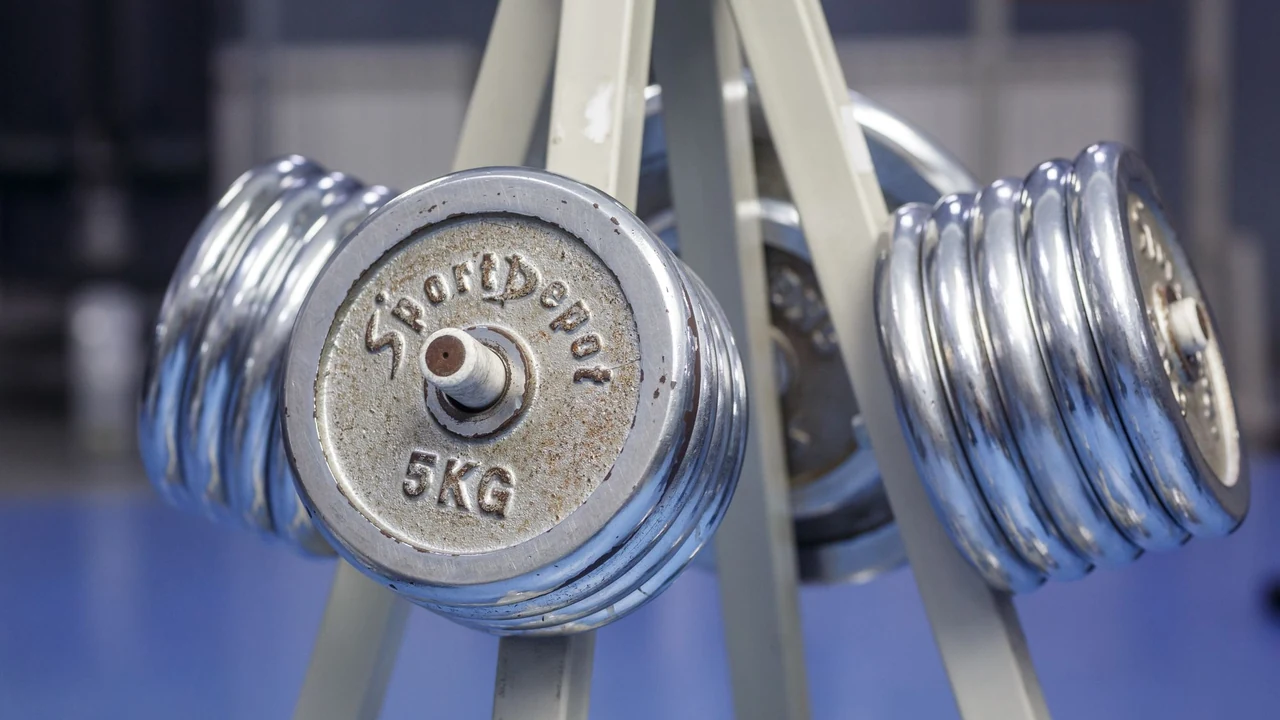
Illustrative licensed stock photograph. · Photo: Kristijan Furstner · pexels.com
View full size ↗A 40 kg stack on one cable machine is not a promise that another machine or a pair of dumbbells will feel equivalent. Mechanisms, lever arms, paths and setup differ.
Treat a new device as a new entry in your log. Record the machine or station, seat position, handle, displayed load and repetitions. Those details help you reproduce the exercise when you return.
A fictional note might be: “Seated row, station beside window, seat three, neutral handle, displayed load four, ten repetitions.” It is less elegant than a single kilogram number, but much more useful in an unfamiliar gym.
Never test a heavy replacement load only because its label matches the old one.
A sensible substitution has a reason
Suppose a programme includes a dumbbell chest press and the benches are unavailable. A chest-press machine might offer a practical alternative for that session if you know how to use it and it suits you. It is still a changed exercise, so establish a suitable starting point.
A substitution does not need to reproduce every feature of the original to be useful. It does need to fit the purpose of that part of the session.
For a travel routine with minimal equipment, see the resistance-band workout guide. For a schedule built around limited training days, use strength training twice a week.
Combining both is a normal option
You do not have to choose an identity as a machine person or a free-weight person. A programme can use one for a particular skill and the other for a practical training task.
For example, a lifter might practise a familiar free-weight movement first, then use a machine whose setup is easy to repeat. Another person may prefer a mostly machine-based routine while learning the gym. These are examples of organisation, not universal templates.
What matters is whether the exercises form a coherent programme with manageable effort and progression, not whether every implement belongs to the same category.
Decide using your next month, not one spectacular workout
Choose equipment you can use well and access often enough to compare sessions. Keep the baseline honest when the equipment changes. Review technique, effort and recovery along with the displayed load.
Use the strength-training warm-up guide to prepare for the session, whichever equipment you select.
The useful winner is the option that performs the intended job in your programme. A category name alone cannot make that decision.
Instructions & useful references
- Effect of free-weight vs. machine-based strength training on maximal strength, hypertrophy and jump performanceBMC Sports Science, Medicine and Rehabilitation · 13studies overall,5hypertrophy; no detectable growthdifference; modality/test specificity.
- Machines and free weight exercises: changes in muscle size, strength, and powerJournal of Sports Medicine and Physical Fitness / PubMed · Similar strength gains in neutral testing; task-specific versus general outcomes.
Sources checked on September 28, 2026. This guide provides general information, with practical planning suggestions. It is not an individual treatment plan.