

Incline Walking vs Running: Which Fits Your Next Session?
Everyday guidesPublished 4 min readhow to
1:31 · English narration Continue reading the article ↓
Video chapters
Read the video transcript
Choose using effort, available time, impact tolerance and your training goal—not a treadmill calorie leaderboard.
Incline walking and running can both provide useful cardio. Start with the purpose of today's session: building a habit, practising running or keeping activity easier. The right choice depends on that job and your current tolerance.
A steep slow walk can feel harder than a relaxed jog. Speed, slope and duration all change the task. Compare manageable effort rather than treating every walk as easy and every run as the same workout.
Running practice fits a running goal. Walking can fit a general activity goal. Either may become too hard at the wrong setting. Look at how the session fits your week, including strength training and recovery.
Incline walking is not automatically gentle on every joint or tendon. Unfamiliar steep walking may challenge your calves and feet. If you need to hang on to maintain the setting, lower it and reassess your comfort.
Try the two options on different days at an effort you can control. Note breathing, comfort and how you feel the next morning. Change one variable at a time rather than increasing speed, slope and duration together.
The calorie display cannot predict your long-term fat loss. Choose the mode you can repeat around sleep, meals and the rest of your training. In Bali's heat, adjust effort instead of copying a familiar cool-weather pace.
Download transcript · English captions · Footage and production credits
Illustrative Pexels footage, original explanatory graphics and music, with synthetic English narration. People shown do not endorse products.
Choose using effort, available time, impact tolerance and your training goal—not a treadmill calorie leaderboard.
The short answer
Incline walking and running can both provide cardiovascular exercise. Choose the session that delivers an appropriate effort you can repeat comfortably. Neither mode automatically burns more fat, and a steep treadmill setting does not make every walk easy on every joint.
Table of Contents
- Decide what the session is for
- Match effort before comparing minutes
- Incline changes the load; it does not erase it
- Try a fair, modest comparison
- Fat loss is not a treadmill setting
- Adjust for Bali's conditions
- Sources
- Explore this topic
Choose incline walking if it gives you a manageable cardiovascular challenge; choose running if it fits your goal, time and current tolerance. Both can be useful. Neither deserves an automatic “best for fat loss” label, and the treadmill's calorie display cannot make the decision for you.
A slow steep walk may feel harder than an easy flat jog. A faster run may be a much bigger load than either. Without describing speed, incline, duration and the person doing it, the comparison is incomplete.
Decide what the session is for
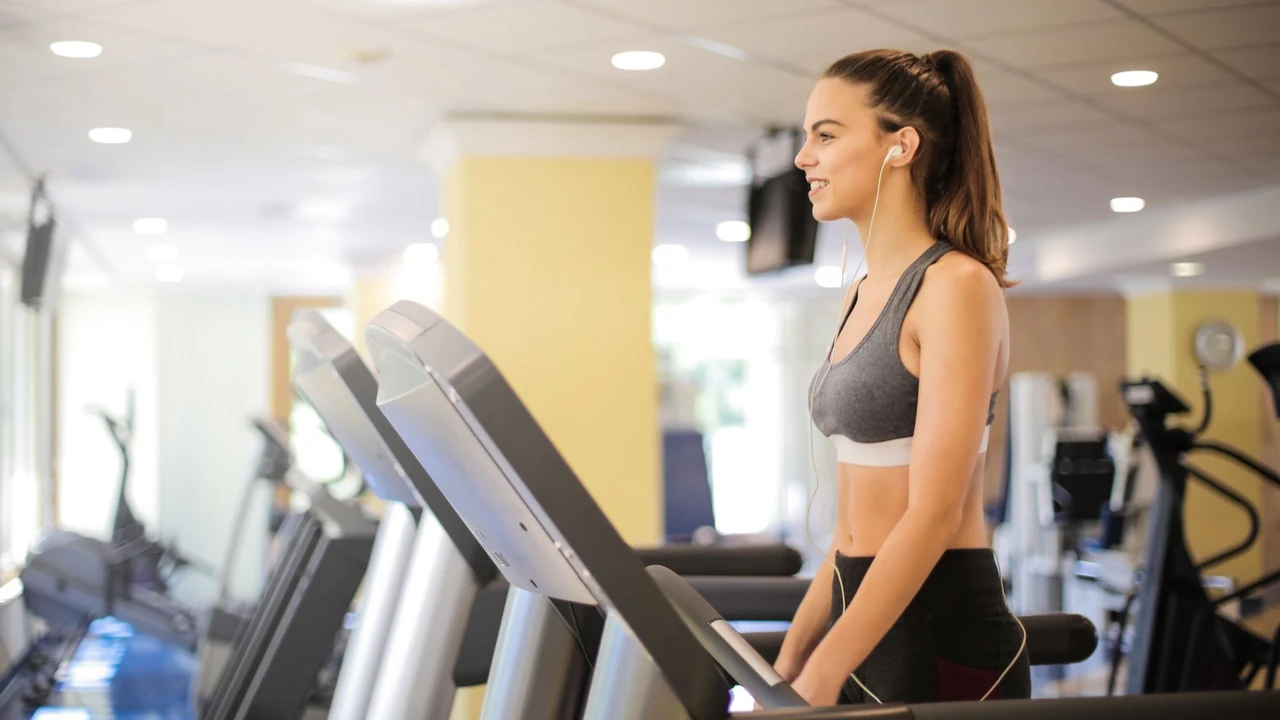
Illustrative licensed stock photograph. · Photo: Andrea Piacquadio · pexels.com
View full size ↗Before selecting a treadmill mode, write down the job of today's session. Is it an easy movement day, preparation for a running event, a brief cardiovascular workout or a way to build a habit after a long break?
If your goal is to improve running, some appropriately progressed running practice is relevant. If you simply want regular aerobic activity, running is not compulsory. An option you can repeat without dreading it may be more useful than one that looks more intense on paper.
The CDC's adult activity guidance includes aerobic activity and muscle strengthening. A treadmill decision sits inside that broader week; it does not replace strength work or make recovery irrelevant.
Match effort before comparing minutes
Comparing thirty minutes of relaxed walking with thirty minutes of hard running tells you little about two sessions at similar effort. Notice your breathing and whether the pace is sustainable. If the walking setting leaves you gasping, it is not an easy recovery session merely because one foot remains on the belt.
Use the talk-test guide to put breathing into context. Heart-rate readings and machine estimates can be helpful observations, but they are not exact measurements of personal calorie expenditure.
| Your priority | A reasonable starting choice | What to watch |
|---|---|---|
| Establish a repeatable routine | Comfortable walking, adding slope gradually | Whether you can repeat it next time |
| Practise for a running event | Running matched to your current plan | Progression rather than sudden pace jumps |
| Keep the session easier | Lower speed or slope as needed | Breathing, not the exercise label |
| Fit cardio around leg training | The mode you recover from adequately | The next day's training quality |
There is no need to win all four rows in a single workout.
Incline changes the load; it does not erase it
A study of graded walking in adults with obesity examined how speed and slope affected energy cost and knee mechanics. It is useful evidence that changing the setting changes the task. It is not proof that every incline routine prevents injury or is easier on every person's knees.
Calves, feet and the Achilles area may notice a steep walking session that you were not used to doing. Running brings its own repeated loading. Your response depends on the activity you are accustomed to, the size of the change and any existing problem.
If you need the handrails to stay at the selected setting, reduce the setting. Holding on continuously also makes the displayed workout a poor description of the task your body is actually doing. Use the rails for balance when necessary, not to preserve an impressive incline number.
Try a fair, modest comparison
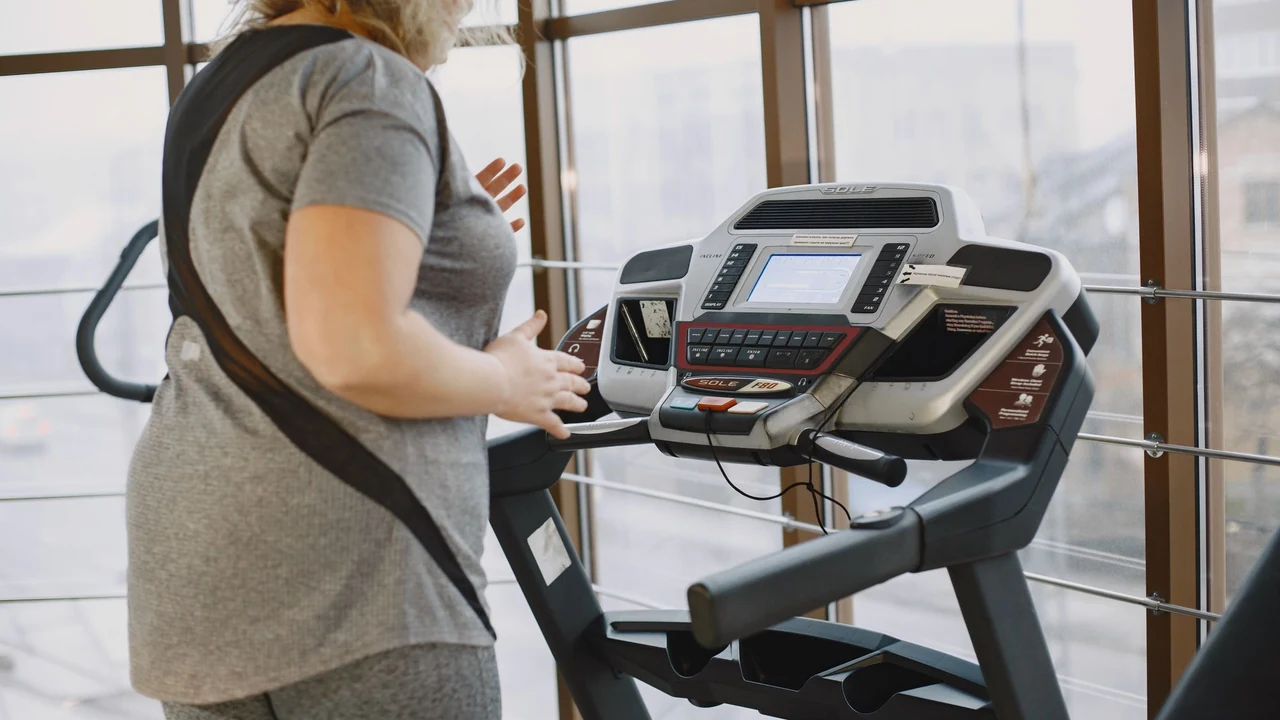
Illustrative licensed stock photograph. · Photo: Gustavo Fring · pexels.com
View full size ↗On separate days, try a short session of each mode at a manageable effort. Keep the comparison simple:
- Begin with a gentle warm-up.
- Choose a pace you can control without hanging on.
- Note breathing and comfort during the session.
- Note how you feel later and the next morning.
- Repeat the better-fitting option before increasing it.
Change one variable at a time. Adding speed, incline and duration together makes a poor experiment, particularly when the activity is new.
Persistent or sharp pain is a reason to stop and get the problem assessed. It is not a score showing that the workout is especially effective.
Fat loss is not a treadmill setting
A session's immediate fuel mix does not tell you how body weight will change over weeks. Neither “walking burns fat” nor “running burns more calories” settles the practical question of food intake, weekly activity and consistency.
Pick a session you can fit around meals, sleep and other training. If an aggressive incline routine leaves you unable to complete your usual week, its impressive display may have little practical value.
Adjust for Bali's conditions
Outdoors, heat and humidity can make a familiar pace feel harder. Indoors, consider ventilation and whether the treadmill setup is comfortable. Do not copy your cool-weather pace without considering the conditions.
Our guide to running in heat and humidity covers that adjustment. For the next session, the useful choice is the one that fits today's purpose and leaves you able to train again, rather than whichever mode a headline calls superior.
Instructions & useful references
- Energetics and biomechanics of inclined treadmill walking in obese adultsMedicine & Science in Sports & Exercise · Specific slope and speed comparison in adults with obesity; do not generalize all gradients to joint safety.
- Adult Activity: An OverviewCDC · Aerobic activity and muscle strengthening; activities and relative intensity.
Sources checked on October 1, 2026. This guide provides general information, with practical planning suggestions. It is not an individual treatment plan.