

Hair Loss After Weight Loss: Shedding, Timing and Next Steps
Everyday guidesPublished 6 min readhow to
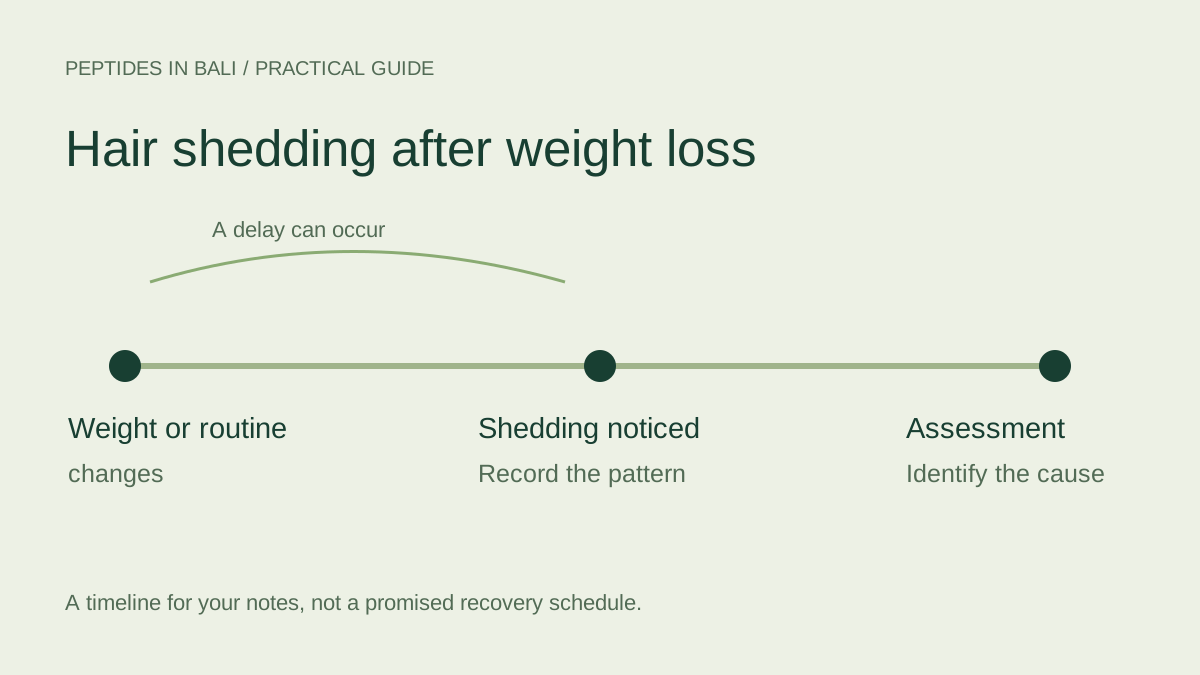
Hair loss after weight loss? Understand delayed shedding, food intake, scalp changes and the information to bring to an appointment before buying treatments.
Original explanatory illustration; not a patient result.
The short answer
Shedding can follow significant weight loss with a delay of months, but other causes exist. Record the timing and pattern and assess the cause before choosing supplements or hair treatments.
Table of Contents
- Why can shedding start after the weight has already changed?
- Shedding, breakage or a changing hairline?
- What should you check about your eating pattern?
- Does weight-loss medication cause the hair loss?
- How long does hair shedding after weight loss last?
- A useful hair-shedding appointment note
- Should you try a peptide serum or hair supplement?
- What can you change while arranging an assessment?
- Sources
- Explore this topic
Hair shedding can occur a few months after significant weight loss or another physical stressor. One possible explanation is telogen effluvium, a shift in the hair cycle that causes more hairs to shed. It is not the only cause of thinning hair, so the pattern and timing matter before you choose a supplement, serum or treatment. [1]
Start by writing down when weight loss began, when you first noticed shedding and whether the change is diffuse or concentrated in one area. That timeline is more useful than trying to identify the cause from the amount of hair left in one shower.
Why can shedding start after the weight has already changed?
Hair does not respond to every trigger immediately. With stress-related shedding, the visible change can appear months after the event. The American Academy of Dermatology lists significant weight loss, illness, surgery, childbirth and prolonged stress among possible triggers. [1]
This delay makes it easy to blame whichever shampoo or supplement you started most recently. Look back across the preceding months instead. Include changes in food intake, illness, medicines and other major events, rather than assuming the last change must explain everything.
Shedding, breakage or a changing hairline?
| What you notice | Useful detail to record |
|---|---|
| More full-length hairs coming out across the scalp | When it started and whether it followed a major event |
| Short snapped hairs or damage along the hair shaft | Heat, chemical treatments, brushing and styling changes |
| A widening part or gradually receding hairline | Where the change is concentrated and how it progresses |
| A distinct patch, scalp pain, redness or scaling | The location and symptoms, with a timely examination |
These observations cannot diagnose the cause. Different problems can coexist, and a dermatologist may need to examine the scalp and hair to distinguish them. The AAD describes examination, medical history and selected tests as parts of an assessment when indicated. [2]
Use the table to describe what is happening, not to select a treatment from a photograph on the internet.
What should you check about your eating pattern?
If you have been eating much less, look at the whole day rather than only the supplement cupboard. Write down the meals you actually manage, not the meals you intended to eat. Include skipped meals and days when appetite is particularly low.
A clinician or dietitian may consider overall intake, protein and possible deficiencies. The AAD advises using supplements such as iron, zinc or biotin when a deficiency is identified, rather than treating them as a universal answer to hair loss. Taking more without knowing whether you need it can be unhelpful or harmful. [2]
For practical meal ideas when appetite is smaller, see what to eat on tirzepatide. That guide helps organize food; it does not establish that a particular medicine caused the shedding or that more protein will solve every case.
Does weight-loss medication cause the hair loss?
A timeline can show that two things happened together without proving why. Weight change, reduced food intake, a medicine, illness and an existing hair condition may all need to be considered. Bring the full medicine name, dose history and timing to the prescribing clinician if the change began during treatment.
Do not stop a prescribed medicine or change the dose on the basis of a hair-loss article. If a medicine may be involved, the prescriber can weigh that question alongside the reason it was prescribed and other possible causes. The AAD makes the same distinction when advising people who suspect medication-related hair loss. [1]
How long does hair shedding after weight loss last?
It depends on the cause and whether the trigger has resolved. In typical temporary stress-related shedding, fullness can recover over months. Continuing triggers or a separate hair condition can change that course. A fixed deadline such as “back to normal in six weeks” is not a useful promise for an individual reader. [3]
The practical aim is to establish the cause and watch the direction of change over an appropriate period. Taking daily close-up pictures under different lighting often makes that harder. Use a consistent photo setup and agree a review interval with the professional managing the issue.
A useful hair-shedding appointment note
Bring one page with these details:
- Timing: when weight change, dieting or another major event began, followed by the first noticeable shedding.
- Pattern: diffuse shedding, a changing part, a receding hairline, patches or apparent breakage.
- Scalp symptoms: discomfort, redness, itching or scaling, if present.
- Food intake: a realistic account of a few ordinary days and any substantial restriction.
- Medicines and supplements: exact names and when they were started or changed.
- Photos: a small number taken with a consistent part, angle and lighting.
Ask what the likely diagnosis is, whether any tests are appropriate and what change should prompt earlier review. The answer may be different from the treatment you expected when you first searched for a hair serum.
Should you try a peptide serum or hair supplement?
First establish what problem you are treating. A cosmetic scalp product, a nutritional deficiency and hereditary hair loss are different questions. Product names that contain “peptide” do not make every formula interchangeable, and a skin-serum claim does not automatically establish a hair-growth effect.
Our GHK-Cu guide explains why the formula and route of use matter. Use it to understand the label, not to substitute an injectable product for topical skincare or a diagnosed hair-loss treatment.
For hereditary thinning, early assessment can be useful because treatment choices and expectations differ from temporary shedding. The AAD recommends an accurate diagnosis rather than assuming all increased hair fall is the same condition. [4]
What can you change while arranging an assessment?
Keep hair care gentle and avoid styles that pull tightly on the hair. Take a break from avoidable damage caused by harsh handling or repeated heat and chemical treatments if those are part of your routine. These steps address preventable stress on the hair; they do not correct every cause of shedding. [5]
Try not to add several products at once. If you later notice irritation or a change, having one clearly recorded change is easier to interpret than a completely new routine.
Is every extra hair a sign of permanent loss?
No. Some shedding is normal, and temporary shedding is different from permanent loss. What matters is the pattern, persistence and cause, rather than counting every hair individually.
When should I arrange an appointment sooner?
Arrange assessment for a distinct bald patch, a rapidly changing pattern, painful or inflamed scalp, or persistent unexplained shedding. A gradual improvement can be reassuring, but it does not replace an examination when the pattern is unclear. [2]
Instructions & useful references
- Hair loss or hair shedding?American Academy of Dermatology · Weight-loss and stress-related shedding with delayed onset; discuss suspected medicine effects without independently stopping treatment.
- Hair loss diagnosis and treatmentAmerican Academy of Dermatology · History, scalp examination, selected tests and supplement use for identified deficiencies.
- Telogen effluvium patient leafletBritish Association of Dermatologists · Course varies with trigger; recovery over months, not a guaranteed date.
- Finding treatments for genetic hair lossAmerican Academy of Dermatology · Early accurate diagnosis and distinction from temporary shedding.
- Hair loss: tips for managingAmerican Academy of Dermatology · Gentle handling and avoiding traction, harsh styling and repeated high heat.
Sources checked on September 18, 2026. This guide provides general information, with practical planning suggestions. It is not an individual treatment plan.