

Does Sweating More Mean You Are Burning More Fat?
Everyday guidesPublished 4 min readhow to
1:22 · English narration Continue reading the article ↓
Video chapters
Read the video transcript
Separate a hot workout, temporary fluid loss and a useful training result. A wet shirt is not a calorie counter.
A soaked shirt can feel like proof of a harder workout. It is not a calorie counter. Sweat mainly helps your body manage heat, and the amount depends on conditions as well as the activity.
Compare the exercise, duration, load or pace. A cool gym and a hot outdoor session create different cooling demands. More visible sweat does not establish that more fat was lost.
In this invented example, the scale falls from seventy kilograms to sixty-nine point four after a hot session. That is a change in body mass. It does not show that six hundred grams of fat disappeared.
Wearing more layers or staying hot longer to lower the scale is not a useful fat-loss test. If you become dizzy, weak or nauseated, stop and cool down. Serious symptoms need urgent help.
For weight tracking, compare repeated measurements under similar conditions. For training, track the work and its quality. Keep a note about the weather, but do not turn that note into a calorie calculation.
A workout log tracks training. A longer weight trend helps you assess weight change. Symptoms guide action when you feel unwell. The full article shows how to keep those questions separate.
Download transcript · English captions · Footage and production credits
Illustrative Pexels footage, original explanatory graphics and music, with synthetic English narration. People shown do not endorse products.
Separate a hot workout, temporary fluid loss and a useful training result. A wet shirt is not a calorie counter.
The short answer
More sweat does not reliably mean more calories burned or more fat lost. Sweat primarily helps regulate temperature, and an immediate scale drop after sweating is largely a fluid change—not a direct measurement of fat loss.
Table of Contents
- What sweat is doing
- A scale example that should not become a fat-loss claim
- Compare the work, not the wet shirt
- Why trying to sweat more can backfire
- What to track for the question you actually have
- Do you need to sweat for exercise to count?
- A better question after the workout
- Sources
- Explore this topic
Sweating more does not reliably mean you are burning more fat. A hot room can leave you drenched during a modest workout, while a demanding session in a cool room may leave your shirt comparatively dry.
The sweat tells you something about cooling and conditions. It does not provide a calorie total or a direct measure of body-fat change.
What sweat is doing

Illustrative licensed stock photograph. · Photo: Annushka Ahuja · pexels.com
View full size ↗Cleveland Clinic explains that sweating helps the body manage heat. Energy expenditure and sweating often happen together during exercise, but sweat production is not the reason the exercise uses substantial energy.
Temperature, humidity, clothing and individual differences affect how much you sweat. A sauna-related scale drop is mostly water loss that returns with rehydration. It should not be presented as an equivalent loss of fat.
That makes a simple ranking—“the wetter person had the better workout”—unreliable.
A scale example that should not become a fat-loss claim
Imagine a fictional set of measurements:
| Measurement | Scale reading |
|---|---|
| Before a hot activity session | 70.0 kg |
| Immediately afterwards | 69.4 kg |
| After drinking, eating and ordinary daily changes | 69.9 kg |
The first difference is 0.6 kg. It is a change in measured body mass, not a result showing that 0.6 kg of fat was burned.
These invented numbers are not a prediction and are not a hydration prescription. Actual scale readings are affected by more than sweat: drinks, food, toilet use, clothing and measurement conditions all matter.
A single before-and-after weigh-in cannot separate those components.
Compare the work, not the wet shirt
For strength training, record the exercise, load, repetitions, technique and effort. For a walk or run, record useful details such as route, duration and pace under comparable conditions.
Sweat can be a note about the conditions, alongside the session record. It should not replace the record.
For example:
- “Very sweaty” gives little information about a lifting session.
- “Same exercise and load; one more controlled repetition; similar rest” provides a specific comparison.
- “Same route but much hotter; pace reduced” explains why two runs are not identical tests.
In Bali, moving between an air-conditioned gym and an outdoor activity can change the cooling conditions substantially. That does not let you convert the extra sweat into extra calories.
Why trying to sweat more can backfire
Illustrative licensed stock photograph. · Photo: Liliana Drew · pexels.com
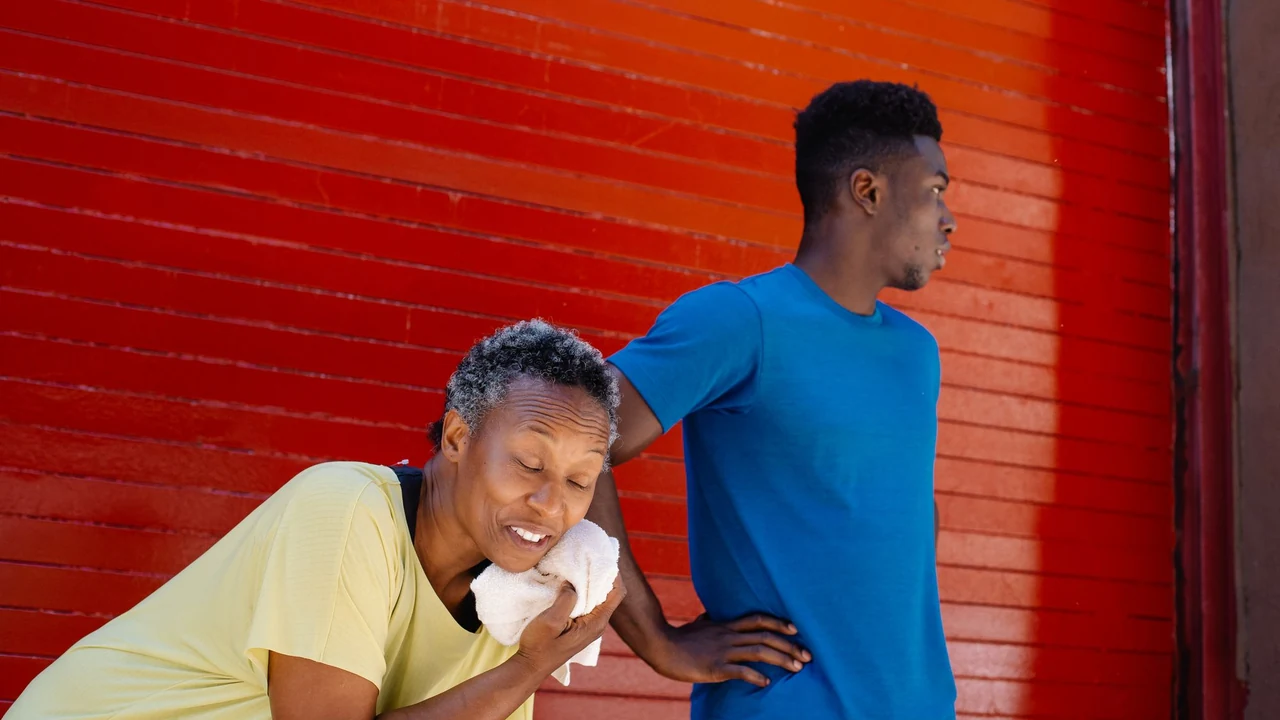
View full size ↗Adding heavy layers or extending a hot session to chase a lower scale number is not a useful fat-loss measurement strategy. It increases the heat burden while the scale is still unable to tell you how much fat changed.
CDC guidance on heat illness identifies symptoms such as weakness, dizziness and nausea in heat exhaustion. Confusion, collapse or other serious neurological symptoms in a hot setting require emergency help and prompt cooling.
Stop exercising if you become unwell in the heat. Do not use the amount of sweat, or the fact that you are still sweating, to rule out a serious heat problem.
What to track for the question you actually have
| Question | A more useful record |
|---|---|
| Was the training session productive? | Planned work completed, quality and progression |
| Is my routine manageable? | Recovery, comfort, consistency and schedule |
| Is my body weight changing over time? | Repeated comparable measurements and the broader trend |
| How many calories did I use? | An estimate with acknowledged uncertainty, not sweat volume |
| Am I becoming unwell in the heat? | Symptoms and prompt action, not a target to push through |
Our consistent weighing guide explains how to make repeated scale readings easier to interpret. It is a different task from checking a post-workout fluid change.
Do you need to sweat for exercise to count?
No. A session can involve useful effort without dramatic sweating. A low-sweat day should not make you add unnecessary heat or extra exercise just to produce visible evidence.
Similarly, an easy activity that makes you sweat in hot weather is still an activity, but the sweat does not establish that it matched a harder session performed in cooler conditions.
Choose the activity for its purpose and your circumstances. The towel is an accessory, not a measuring instrument.
A better question after the workout
Instead of asking how soaked the shirt became, ask what you completed, how the movement felt and whether the session fits a routine you can repeat.
If you monitor weight, return to comparable measurements over time. If you feel unwell, respond to the symptoms. Keeping those questions separate prevents a temporary fluid change from being mistaken for a body-composition result.
Instructions & useful references
- Does sweating burn calories?Cleveland Clinic / clinical education · Sweating, cooling, temporary body-water change; sweat is not a calorie counter.
- Heat-related illnessesCDC NIOSH / public health guidance · Heat warning signs and response; continued sweating cannot rule out heat stroke.
Sources checked on September 28, 2026. This guide provides general information, with practical planning suggestions. It is not an individual treatment plan.