

Creatine Monohydrate vs HCl: What Is Proven and What Is Marketing?
Everyday guidesPublished 5 min readhow to
1:30 · English narration Continue reading the article ↓
Video chapters
Read the video transcript
Does the more soluble form earn its higher price? Compare human evidence, declared ingredients and cost without treating a small scoop as proof of greater effectiveness.
One creatine tub says monohydrate. Another says H C L and promises more from a smaller scoop. Start with the claim you want evidence for: easier mixing, better tolerance and better training results are different questions.
Creatine monohydrate has the larger research base. That does not certify every tub on a shelf, but it makes monohydrate the useful reference when another form claims to work better.
In this invented example, five hundred grams for two hundred and fifty thousand rupiah costs five hundred rupiah per gram. One hundred grams for two hundred thousand costs two thousand per gram. These are powder costs, not equivalent doses.
A small eight-week trial did not find significant differences between its treatment groups. Improvements within a group alone do not establish superiority. The result does not justify a universal claim that H C L works better.
Check the named ingredient, declared amount and other ingredients. A smaller scoop is not evidence of greater potency. Ask the manufacturer when a blend or serving description hides the information you need.
Decide whether you are paying for evidence, a preferred flavour or easier preparation. Keep those reasons separate. The full guide includes a label worksheet and the limitations of the direct comparison.
Download transcript · English captions · Footage and production credits
Illustrative Pexels footage, original explanatory graphics and music, with synthetic English narration. People shown do not endorse products.
Does the more soluble form earn its higher price? Compare human evidence, declared ingredients and cost without treating a small scoop as proof of greater effectiveness.
The short answer
Creatine hydrochloride has not established a clear performance advantage over creatine monohydrate. Monohydrate has the larger evidence base. A small direct trial did not show significant differences between its treatment groups, so claims that HCl reliably works better—or that a much smaller amount is equivalent—need more than a mixing demonstration.
Table of Contents
- The evidence starts unevenly
- What a recent direct comparison found
- Four claims that need four different kinds of evidence
- Read the amount without making a conversion up
- A price comparison that stays honest
- Product quality is another column
- Decide what problem you are solving
- Sources
- Explore this topic
One tub contains creatine monohydrate. Another promises creatine HCl with a smaller scoop, easier mixing and a premium price. Which difference actually matters?
A powder dissolving more readily is not proof that it produces better strength or muscle gains. Those are different outcomes. Compare the human evidence and the finished label before paying for a claim about a “more advanced” form.
The evidence starts unevenly
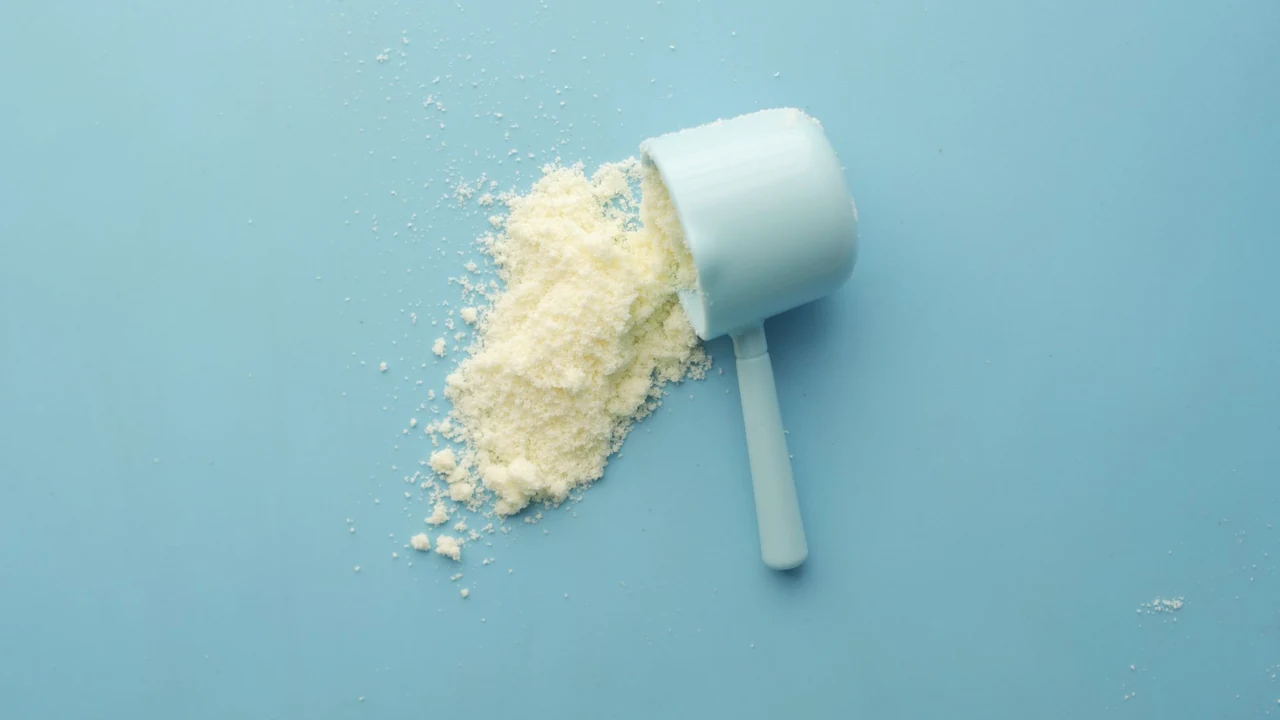
Illustrative licensed stock photograph. · Photo: Towfiqu barbhuiya · pexels.com
View full size ↗The NIH Office of Dietary Supplements identifies creatine monohydrate as the most widely used and studied form. That makes it the relevant reference point when another form claims an advantage.
A larger evidence base does not mean every monohydrate product has been independently tested. The form of the ingredient and the quality of a particular tub remain separate questions. Neither “monohydrate” nor “HCl” is a laboratory certificate for the product you are buying.
What a recent direct comparison found
A 2025 randomized trial compared monohydrate, hydrochloride and placebo in 31 male and female team-sport athletes over eight weeks. The creatine groups received 5 g daily of their assigned form. The researchers found no statistically significant between-group differences in the measured performance and body-composition outcomes.
That result does not establish an HCl advantage. It also does not prove that every creatine form is interchangeable at every amount: this was a small study in a specific sporting population.
Some measures improved within the creatine groups. A within-group improvement cannot, by itself, show that the supplement caused more improvement than placebo. Training and other shared factors can also change an outcome. The paper discloses supplement-industry advisory relationships, another reason to read the methods and comparisons rather than the headline alone.
Four claims that need four different kinds of evidence
| Claim on the sales page | Evidence that would answer it | What is insufficient |
|---|---|---|
| Mixes more easily | A defined mixing comparison | A promise of greater muscle gain |
| Produces better training results | Appropriate human comparisons | A close-up of powder dissolving |
| Needs a much smaller amount | Trials comparing the claimed amounts | A smaller supplied scoop |
| Is easier on your stomach | Suitable tolerability data and your individual context | A universal “no side effects” slogan |
It is possible to like one product's taste or mixing behaviour without accepting an unproven performance claim. Name the reason you are paying extra.
Read the amount without making a conversion up

Illustrative licensed stock photograph. · Photo: Jason Morrison · pexels.com
View full size ↗Photograph the ingredient list and serving information. Record exactly what the label declares: the named form, amount per serving and other ingredients.
Do not assume every scoop holds the same amount. Do not assume a number beside a blend name reveals the amount of each ingredient. If a label distinguishes the mass of a compound from the creatine it provides, keep those fields separate and ask the manufacturer when the wording is unclear.
An online comment that “one gram of this equals five grams of that” is not a conversion you should insert into your plan without supporting evidence. Chemical naming and a marketing equivalence are not the same thing.
A price comparison that stays honest
Here is a fictional example using Indonesian rupiah. It compares the declared powder amount, not proven equivalent doses or actual shop prices.
| Example | Pack amount | Price | Price per gram of declared powder |
|---|---|---|---|
| Monohydrate example | 500 g | IDR 250,000 | IDR 500 |
| HCl example | 100 g | IDR 200,000 | IDR 2,000 |
The second powder costs four times as much per gram in this example. That arithmetic is clear. Whether a different serving makes it better value depends on the evidence for that serving and your reason for selecting it.
Do not turn “cheaper per scoop” into “cheaper for the same result” when the scoops and supporting evidence differ.
Product quality is another column
Keep a separate place in your comparison for the manufacturer, batch, complete label, relevant testing information and seller traceability. A precise ingredient name does not answer those questions.
Athletes subject to anti-doping rules also need to consider their sport's requirements and the actual product's contamination risk. A general article cannot certify a tub for competition.
For an example of how to scrutinise a document rather than trusting a badge, our guide to reading a certificate of analysis explains the distinction between a report and the particular item in your hands. It concerns peptide documents, so do not transplant its details into a claim that a creatine product has passed the same tests.
Decide what problem you are solving
If the issue is an early scale change, switching forms based on an advertisement may not answer it. Read creatine and weight gain and distinguish body weight from a measurement of new muscle.
If the issue is digestive discomfort, record the complete product, amount and other supplements, then seek appropriate advice rather than assuming a different salt will guarantee tolerance.
For an ordinary purchase comparison, monohydrate provides the better-established evidence benchmark. HCl should earn any claimed advantage with relevant human data. You can prefer a product's practical features while remaining precise about what has—and has not—been demonstrated.
Instructions & useful references
- Creatine monohydrate versus creatine hydrochloride on strength and body composition in elite team-sport athletesJournal of the International Society of Sports Nutrition · 31athletes,8weeks,threegroups; no significant between-group differences. Within-group changes do not prove superiority; disclosed industry advisory roles.
- Dietary Supplements for Exercise and Athletic PerformanceNIH Office of Dietary Supplements · Whey and casein; creatine monohydrate mostwidely used/studied; supplement evidence must remain form/outcome-specific.
Sources checked on September 28, 2026. This guide provides general information, with practical planning suggestions. It is not an individual treatment plan.