

Copper Peptides and Vitamin C: Check the Products, Not a Blanket Rule
Everyday guidesPublished 6 min readhow to
1:30 · English narration Continue reading the article ↓
Video chapters
Read the video transcript
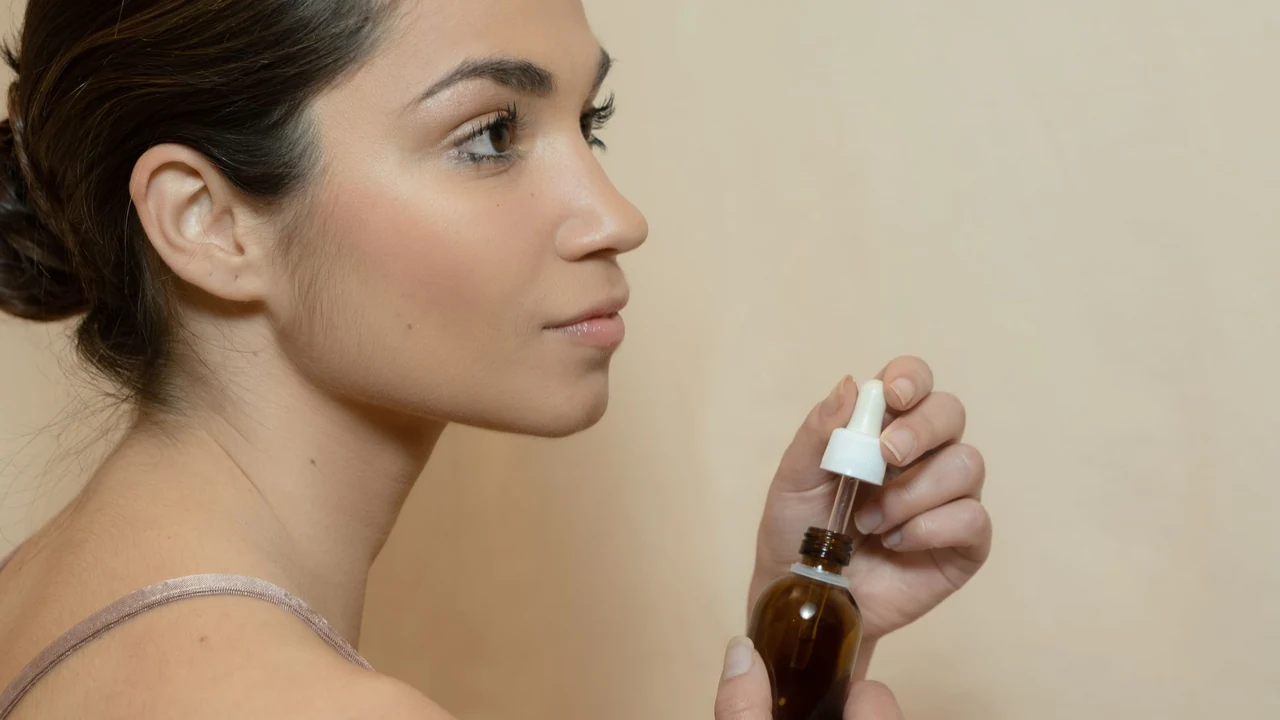
Two bottles, conflicting online advice. Check the exact vitamin C form, the copper serum's instructions and the full routine before deciding how to combine them.
Can copper peptides and vitamin C share a routine? The useful answer begins with the actual products. A broad ingredient name does not tell you whether two finished formulas are intended for the same application.
Look for the manufacturer's directions and do-not-use-with section. The Ordinary's copper-peptide serum, for example, lists direct vitamin C as a conflict. That is an instruction for that product, not a verdict on every serum.
Write the exact copper product in one column and the vitamin C product in the other. Add their directions. If the pairing is discouraged, choose a manufacturer-approved separation or ask for clarification before combining them.
An online suggestion to wait ten or twenty minutes does not change a product's compatibility instructions. Nor does the word derivative automatically guarantee that a vitamin C formula is suitable with every copper serum.
Keep the rest of the routine familiar when trying something new. Follow the product's small-area testing advice. If irritation develops, stop using the offending product and seek help when needed instead of adding another active.
Save the full names and instructions with your morning and evening routine. Recheck when you replace a bottle or the formula changes. The article includes a worksheet for deciding what belongs together and what still needs an answer.
Download transcript · English captions · Footage and production credits
Illustrative Pexels footage, original explanatory graphics and music, with synthetic English narration. People shown do not endorse products.
Two bottles, conflicting online advice. Check the exact vitamin C form, the copper serum's instructions and the full routine before deciding how to combine them.
The short answer
You cannot decide whether copper peptides and vitamin C belong in the same application from the ingredient names alone. Follow the directions for the exact finished products. If a manufacturer advises against the pairing, a guessed waiting time does not override that advice. This guide covers topical cosmetics only.
Table of Contents
- The short answer: check the pairing at product level
- Identify what “vitamin C” means on your bottle
- Make this two-bottle worksheet
- What about using vitamin C in the morning and copper peptides at night?
- Why a waiting-time rule is not enough
- Introduce a product in a way you can evaluate
- Keep the answer attached to the product
- Sources
- Explore this topic
One video says copper peptides and vitamin C cancel each other out. Another says to wait fifteen minutes. A third puts everything in the same routine.
The most useful source is closer than the comment section: the directions for the two finished products you own. “Copper peptides” and “vitamin C” name ingredient groups. They do not describe the complete formulation, concentration or compatibility instructions of a particular bottle.
This guide concerns cosmetics applied to skin. It does not apply to injectable GHK-Cu, peptide pens or oral supplements. Evidence and instructions cannot be transferred between those routes.
The short answer: check the pairing at product level

Illustrative licensed stock photograph. · Photo: SHVETS production · pexels.com
View full size ↗Some instructions explicitly discourage combining particular formulas in the same routine. Other products may come with different guidance. You do not have to settle every theoretical chemistry argument before following a clear instruction on a bottle.
A concrete example is The Ordinary's Multi-Peptide + Copper Peptides 1% Serum. Its page lists direct vitamin C in the “Do not use with” section, and the FAQ advises avoiding other direct acids, retinoids and strong antioxidants such as vitamin C.
That is a reason to follow the directions for that serum. It is not evidence that every copper-peptide product from every manufacturer behaves identically. The same page also notes that formulations can change and that an ingredient list can differ by purchase time and region.
Identify what “vitamin C” means on your bottle
Do not stop at the large words on the front. Find the complete product name and ingredient information. A formula described as L-ascorbic acid is not the same product as one using a vitamin C derivative, and neither name tells you the rest of the ingredients.
The purpose of identifying the form is to ask a precise question. It is not to create a new blanket rule that all derivatives are compatible or that every direct vitamin C product needs the same waiting period.
If the manufacturer offers a compatibility tool, enter the exact products rather than the nearest familiar ingredient name. If the advice is unclear, save the product link and ask the brand whether the two formulas can be used in one application, separate morning/evening sessions, or on alternate days.
Make this two-bottle worksheet
You can copy the following into a note. A photograph of each label is often easier than transcribing a long ingredient list.
| Question | Copper-peptide product | Vitamin C product |
|---|---|---|
| Full name and current formula | Write the exact name | Write the exact name |
| Intended route | Confirm topical use | Confirm topical use |
| Usage frequency and order | Copy the relevant directions | Copy the relevant directions |
| Compatibility restrictions | Note the specific conflicts | Note the specific conflicts |
| Small-area testing instructions | Keep the product's instructions | Keep the product's instructions |
| Unanswered question | State it plainly | State it plainly |
Now look at the pair. If either product's instructions discourage the combination, do not invent a way around it. If one says “alternate days,” a morning/evening gap is not automatically equivalent. If both allow the combination, follow the stated order and introduce it in a way you can assess.
A blank field means information is missing. It does not mean the pairing has been cleared.
What about using vitamin C in the morning and copper peptides at night?
Illustrative licensed stock photograph. · Photo: Olha Ruskykh · pexels.com
View full size ↗Separating sessions can make a routine simpler, but it should still fit the manufacturers' guidance. It is an organisational option, not a universal chemical guarantee.
For example, someone might already use a familiar vitamin C product in the morning. If the copper product's maker confirms evening use is compatible with that overall routine, the person can keep the morning steps stable while assessing the new evening product. If the maker specifies a different separation, follow that instruction.
There is no need to add both ingredients just because a schedule can accommodate them. A routine should solve a concern you actually have and remain manageable. Buying another serum is not a requirement for completing this worksheet.
If retinol is also involved, use the separate peptides and retinol guide to check that third product. Clearing one pair does not clear every ingredient on the bathroom shelf.
Why a waiting-time rule is not enough
A recommendation to wait ten, fifteen or thirty minutes sounds precise. Precision does not make it evidence that a discouraged combination becomes suitable.
Absorption, drying and compatibility are different questions. A product may need time to dry for comfort or application, but that does not establish that every interaction between two formulas has been resolved. Use a waiting period when the product directs one; do not use an invented interval to rewrite “do not use with.”
Similarly, a discussion of how isolated ingredients behave in a solution cannot, by itself, predict the result of every finished cosmetic on skin. The formulation and directions are still relevant.
Introduce a product in a way you can evaluate
Trying several new actives at once makes a reaction difficult to trace. Keep the rest of the routine familiar while assessing a new product, and follow its testing instructions. The American Academy of Dermatology describes small-area testing as a way to look for a negative reaction before wider use.
A comfortable first application is useful information, but it is not a promise that your skin will tolerate every future combination. Note which product you added, when you used it and what else was applied in the same session.
If a product causes a reaction, stop using it and seek appropriate advice for persistent or severe symptoms. Adding more actives to “balance” burning or itching makes the situation harder to evaluate. A dermatologist can help distinguish different causes; this worksheet cannot diagnose an allergy.
Keep the answer attached to the product
Save the final routine with the exact names, not just “blue serum” and “orange serum.” Revisit it if you replace a bottle, change strength or buy a version from another market.
For background on the ingredient and the difference between cosmetic and injectable contexts, see GHK-Cu for skin. For everyday care in a sunny climate, keep sun protection in Bali in view too. A serum does not take the place of that step.
The result you want is a routine you can follow confidently because its instructions are clear—not because an online timetable made an uncertain combination sound exact.
Instructions & useful references
- Multi-Peptide + Copper Peptides 1% SerumThe Ordinary · Current named-product conflicts and directions. No extrapolation to every copper or vitaminCformula.
- How to test skin care productsAmerican Academy of Dermatology · Small-area introduction;7–10days; normal amount; rinse-off instructions; stop for reaction; distinct clinical patchtesting.
Sources checked on September 28, 2026. This guide provides general information, with practical planning suggestions. It is not an individual treatment plan.