

Coconut Water vs Electrolyte Drinks: Read Sodium, Not Just the Front Label
Everyday guidesPublished 4 min readhow to
1:37 · English narration Continue reading the article ↓
Video chapters
Read the video transcript
A coconut, sports drink and oral rehydration sachet are not interchangeable. Match the drink to the situation and compare the actual label.
A coconut with lunch, a drink for prolonged exercise and oral rehydration during diarrhoea serve different purposes. The word electrolytes does not make them interchangeable. Decide what problem the drink is supposed to solve first.
Compare sodium in the amount you will actually drink. One label may describe half a bottle, another the whole bottle. Also check carbohydrate and mixing directions instead of choosing only by a natural or sports label.
Ordinary drinks, sports drinks and oral rehydration solutions are different categories. For significant diarrhoeal fluid loss, follow appropriate oral rehydration guidance. A coconut is not a substitute for correctly prepared rehydration salts simply because it contains minerals.
A small cyclist study found similar outcomes with the tested coconut-water and sports-drink conditions. That does not establish identical composition for every product, and it does not test treatment of diarrhoea or serious dehydration.
A fresh coconut has no standard serving volume or fixed nutrition label. It can be enjoyable, but do not invent exact replacement numbers for it. Consider handling, added ice and safe water as part of the choice.
Match the drink to your actual day, including food and activity. Use individual advice if you have fluid or mineral restrictions. Choose refreshment for enjoyment, and a defined replacement product when that is what the situation needs.
Download transcript · English captions · Footage and production credits
Illustrative Pexels footage, original explanatory graphics and music, with synthetic English narration. People shown do not endorse products.
A coconut, sports drink and oral rehydration sachet are not interchangeable. Match the drink to the situation and compare the actual label.
The short answer
Coconut water can be an enjoyable drink, but “contains electrolytes” does not make it interchangeable with every sports drink or oral rehydration solution. Compare sodium, carbohydrate and the serving volume for the task. For significant diarrhoeal fluid loss, use appropriate oral rehydration advice rather than relying on coconut water.
Table of Contents
- First decide what you are trying to replace
- Read sodium and volume together
- What the coconut-water exercise research shows
- A fresh coconut has no standard serving label
- Use food in the plan
- The useful choice at the shop
- Sources
- Explore this topic
Coconut water can be part of your fluid intake, but it is not automatically the same thing as an electrolyte sports drink or an oral rehydration solution. Those products may contain different amounts of sodium, carbohydrate and other ingredients. The word “electrolytes” on the front does not settle whether the drink suits your situation.
Start with the task. A drink with lunch, a long sweaty training session and fluid replacement during diarrhoea are three different decisions.
First decide what you are trying to replace
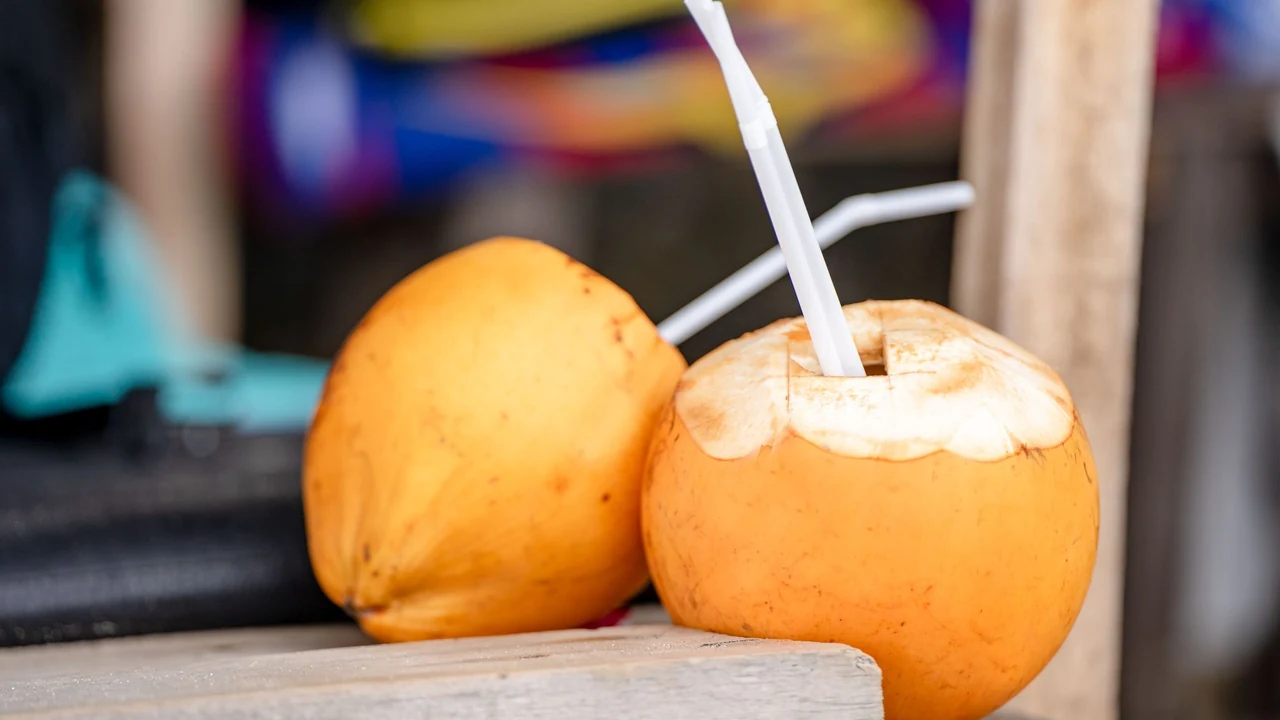
Illustrative licensed stock photograph. · Photo: Atlantic Ambience · pexels.com
View full size ↗For ordinary daily activity, you do not need to turn every glass into a sports-nutrition calculation. Water and normal meals may fit the day well. Longer exertion in heat can require more deliberate planning around fluids and salt.
The CDC's heat guidance distinguishes mild-to-moderate activity from many hours in heat. It also cautions against forcing excessive water. More fluid is not always a better plan.
If you are unwell with substantial diarrhoeal fluid losses, the question changes again. The CDC's travellers' diarrhoea guidance describes oral rehydration solution made from packaged salts and the correct volume of safe water. A refreshing coconut is not a substitute for that defined preparation.
Read sodium and volume together
Compare the amount of sodium in the portion you will actually drink. One label may describe a small serving while another lists the entire bottle. A packet may require mixing with a specified amount of water.
Then look at carbohydrate and ingredients. You might want a drink that contributes carbohydrate during prolonged exercise, or you might simply want a pleasant drink with a meal. Neither requirement is answered by calling a product natural.
| Label detail | Question to ask |
|---|---|
| Serving volume | Is this value for the whole bottle or only part? |
| Sodium | How much is in the amount I will drink? |
| Carbohydrate | Does this match the purpose of the drink? |
| Mixing directions | Am I using the stated volume of water? |
| Product category | Is this an ordinary drink, sports product or ORS? |
Do not copy the mixing instructions from one sachet to another. A stronger-tasting solution is not automatically a better rehydration solution.
What the coconut-water exercise research shows
A study in nineteen experienced cyclists compared coconut water and a commercial sports drink under a specific, calorie-matched protocol. It found no significant difference in the measured performance and physiological outcomes.
That result does not establish that every coconut water has the same composition as every sports drink. It also does not study treatment of diarrhoeal dehydration. A drink can perform similarly in one exercise experiment without becoming a universal replacement for a different product category.
The wider evidence is limited and varied, so avoid turning “no significant difference in this trial” into “coconut water is best”. The practical comparison still needs the actual drink, amount and activity.
A fresh coconut has no standard serving label

Illustrative licensed stock photograph. · Photo: Taryn Elliott · pexels.com
View full size ↗The volume and composition of fresh coconut water are not fixed in the way a labelled packaged serving is presented. If you are following a specific sports plan, an unmeasured coconut makes precise accounting difficult.
That does not make it a bad drink. It means you should not invent exact sodium or carbohydrate totals for the coconut in front of you. Enjoyment and a defined replacement strategy are different reasons to choose a beverage.
Handling matters too: the opening, tools and any added ice or water should be considered. Our guide to ice in Bali covers the water-source question.
Use food in the plan
A bottle does not have to supply everything by itself. Meals and snacks contribute fluid, carbohydrate and salt. Consider what you have already eaten and what will be available after the session.
For a short activity followed by an ordinary meal, buying a specialised drink may solve no clear problem. For a long event, test a suitable plan beforehand rather than improvising from whichever bottle has the strongest marketing.
Our electrolytes-in-Bali guide provides the broader heat context. People with conditions requiring fluid, sodium or potassium restrictions should use their individual clinical advice.
The useful choice at the shop
Put the two labels side by side, match the serving volumes and check the task you wrote down. If you want a coconut drink because you enjoy it, that is a valid preference. If you need a defined rehydration product, choose and prepare that product correctly.
Seek care for concerning illness or dehydration symptoms rather than repeatedly switching drinks. The important distinction is purpose: refreshment, exercise support and medical fluid replacement should not be collapsed into a single “electrolytes” category.
Instructions & useful references
- Coconut Water: A Sports Drink Alternative?International Journal of Sport Nutrition and Exercise Metabolism · 19 cyclists, calorie-matched study drinks, defined protocol; inspect results before claims.
- Oral Rehydration Beverages for Treating Exercise-Associated Dehydration: Part IIJournal of Athletic Training · Limited heterogeneous comparisons; no universal coconut-water superiority.
- Heat and Cold Illness in TravelersCDC · Fluid and electrolyte replacement: ordinary mild/moderate exertion versus many hours in heat; avoid forced excessive water; food can replace salt.
- Travelers' Diarrhea — CDC Yellow BookCDC · Oral rehydration solution for severe fluid losses; prepare packaged salts using the indicated safe-water volume. Food hygiene advice cannot eliminate risk.
Sources checked on October 1, 2026. This guide provides general information, with practical planning suggestions. It is not an individual treatment plan.