

CJC-1295 With DAC vs Without DAC: Why the Name Changes the Comparison
Everyday guidesPublished 4 min readcomparison
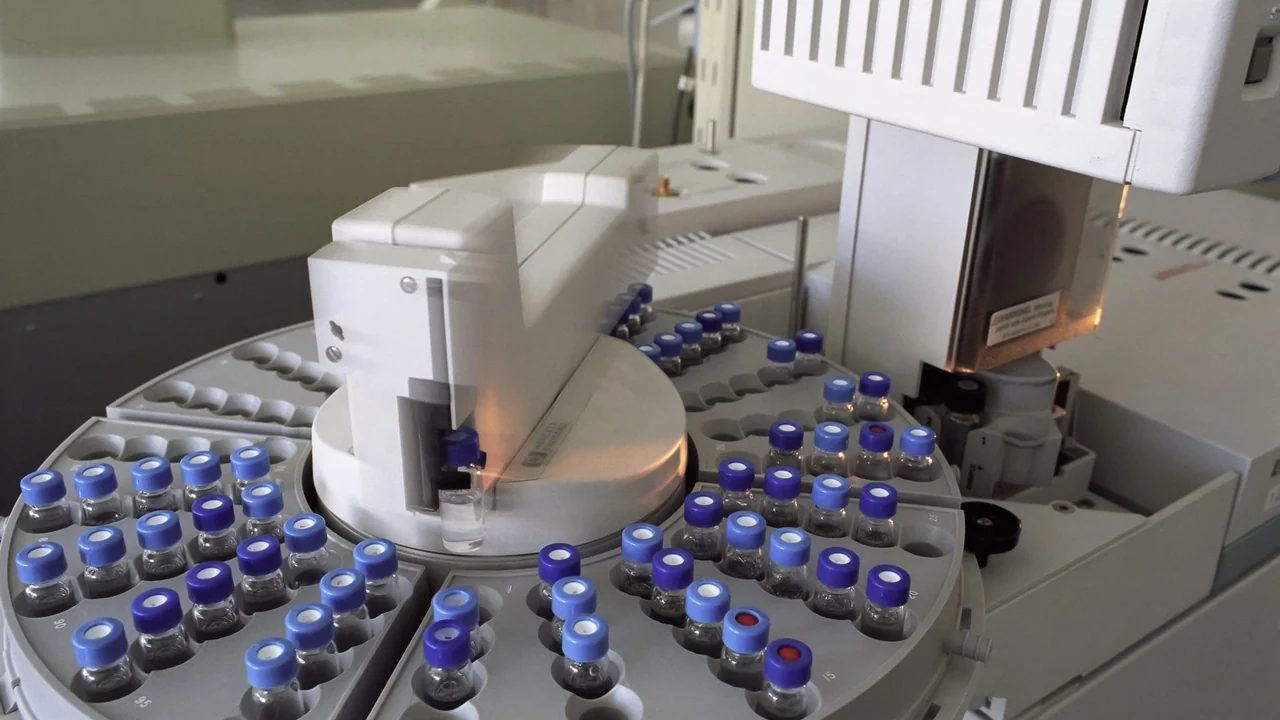
Decode CJC-1295 with DAC and no-DAC labels, then check whether a cited study used the same molecule and format.
Illustrative licensed stock photograph. · Photo: Yuri Shkoda · pexels.com
The short answer
The CJC-1295 name does not make every DAC and no-DAC product equivalent. Match molecular identity, route and measured outcome before comparing claims.
Table of Contents
- Why the DAC detail matters
- What the human CJC-1295 studies showed
- Use a comparison sheet before comparing prices
- A purity percentage does not finish the check
- What to discuss before acting on the comparison
- Sources
- Explore this topic
CJC-1295 “with DAC” and a product described as “without DAC” should not be treated as interchangeable versions of the same tested preparation. Before comparing results, establish the exact molecular identity and whether the evidence being quoted studied that identity. A familiar ingredient name on the front of a label is not enough.
This is especially relevant to combination pens. A listing may show “CJC + IPA,” a total milligram figure and a reference to a growth-hormone study, while leaving the actual CJC form unclear. You cannot repair that missing information with a dosing calculator.
Why the DAC detail matters
The published research describes CJC-1295 as a long-acting growth-hormone-releasing hormone analogue that binds to albumin, a protein in the blood. That binding is part of why its duration differs from a short-acting peptide. The original molecular study and a human hormone-pulsatility study identify the albumin-binding form they investigated.
“DAC” refers to the drug-affinity-complex modification associated with that prolonged exposure. Omitting that detail from a comparison obscures the feature that matters most to the comparison. Conversely, adding the words “no DAC” to a sales name does not, by itself, tell you the complete sequence or verify the contents.
When someone sends you a paper, match the compound in its methods to the product specification. Similar names do not transfer a study's duration, findings or safety observations to another molecule or mixture.
What the human CJC-1295 studies showed
The 2006 placebo-controlled trials in healthy adults examined hormone responses and pharmacokinetics over 28 and 49 days. Their focus was growth hormone and IGF-1 secretion. That is useful evidence about the measured biological response under those study conditions.
It is not the same as a long-term trial showing improved strength, injury recovery, appearance or healthy ageing. If a headline jumps from “IGF-1 increased” to “therefore this pen builds muscle,” a clinical outcome has been inserted that the cited result does not establish.
A second human study found that growth-hormone pulsatility persisted during stimulation with the long-acting compound. A claim about pulses still does not supply a tested administration plan for a differently labelled product.
Use a comparison sheet before comparing prices

Illustrative licensed stock photograph. · Photo: Artem Podrez · pexels.com
View full size ↗Ask for enough information to fill the same fields for each product. If a field is unavailable, write “not supplied.” Treating an unknown as if it were a match makes the comparison look more complete than it is.
| Field | What to record | Why it matters |
|---|---|---|
| Full ingredient identity | Name, stated form and relevant molecular specification | Establishes what is actually being compared |
| DAC status | Explicit specification, not an inference from the brand name | Prevents borrowing duration claims from another form |
| Each ingredient in a blend | Separate amounts for CJC and ipamorelin, if present | A total blend amount does not reveal the ratio |
| Total content and solution volume | Both, with their units | Separates amount in the container from concentration |
| Batch identification | Product batch and the batch named on the report | Connects paperwork to the particular item |
| Evidence cited | Exact molecule, route, participants and measured outcome | Shows where a claim exceeds the research |
For example, two hypothetical labels both say “10 mg blend.” One might declare 5 mg of each component; the other may not disclose the split. They cannot be compared as equal CJC amounts. That is an arithmetic and documentation problem before it becomes a clinical question.
A purity percentage does not finish the check
A report saying “99%” is incomplete without a method, sample identity and explanation of what was measured. It does not automatically establish sterility, correct total content, absence of endotoxin or suitability for human administration.
Read the guide to peptide certificates of analysis with the actual document beside you. Check that the result belongs to the relevant batch and that the report supports the specific claim being made. A certificate for an ingredient is not necessarily a test of the finished combination pen.
Nor should a symptom or a blood result become an improvised identity test. Feeling a particular sensation or obtaining a changed IGF-1 value cannot prove that the stated molecule, ratio or amount was present.
What to discuss before acting on the comparison
If a clinician is assessing a growth-hormone problem, bring the exact product description, your reason for considering it, current medicines and relevant existing results. Ask which diagnosis and clinical outcome are being considered. Hormone replacement for a confirmed condition is a different question from an untested recovery or body-composition claim.
The FDA's compounding safety information identifies safety concerns for CJC-1295. A short trial or a polished specification is not a complete safety assessment.
If the identity or blend split cannot be established, stop the calculation there. The useful result of this comparison may be recognizing that the information is insufficient. You can compare documented ingredients and evidence; you cannot calculate your way around an unknown molecule.
Instructions & useful references
- Long-acting growth hormone-releasing factor analoguepubmed.ncbi.nlm.nih.gov · Preclinical CJC-1295 molecular and albumin-binding research; no transfer to commercial no-DAC labels.
- CJC-1295 and pulsatile GH secretionpubmed.ncbi.nlm.nih.gov · Human hormone-secretion study of long-acting CJC-1295; not evidence for every no-DAC product.
- CJC-1295 in healthy adultspubmed.ncbi.nlm.nih.gov · Short randomized studies evaluated GH and IGF-1 responses in healthy adults, not anti-ageing or injury recovery outcomes.
- FDA peptide compounding safety informationwww.fda.gov · Substance-specific evidence gaps, immunogenicity and impurity concerns; full-length thymosin beta-4 and its LKKTETQ fragment must not be conflated. No blanket local regulatory claim.
Sources checked on October 11, 2026. This guide provides general information, with practical planning suggestions. It is not an individual treatment plan.