

One Side at a Time or Both Together? Unilateral vs Bilateral Training
Everyday guidesPublished 4 min readhow to

Choose one-side or two-side exercises by the skill, equipment and training outcome you want—not by a universal superiority claim.
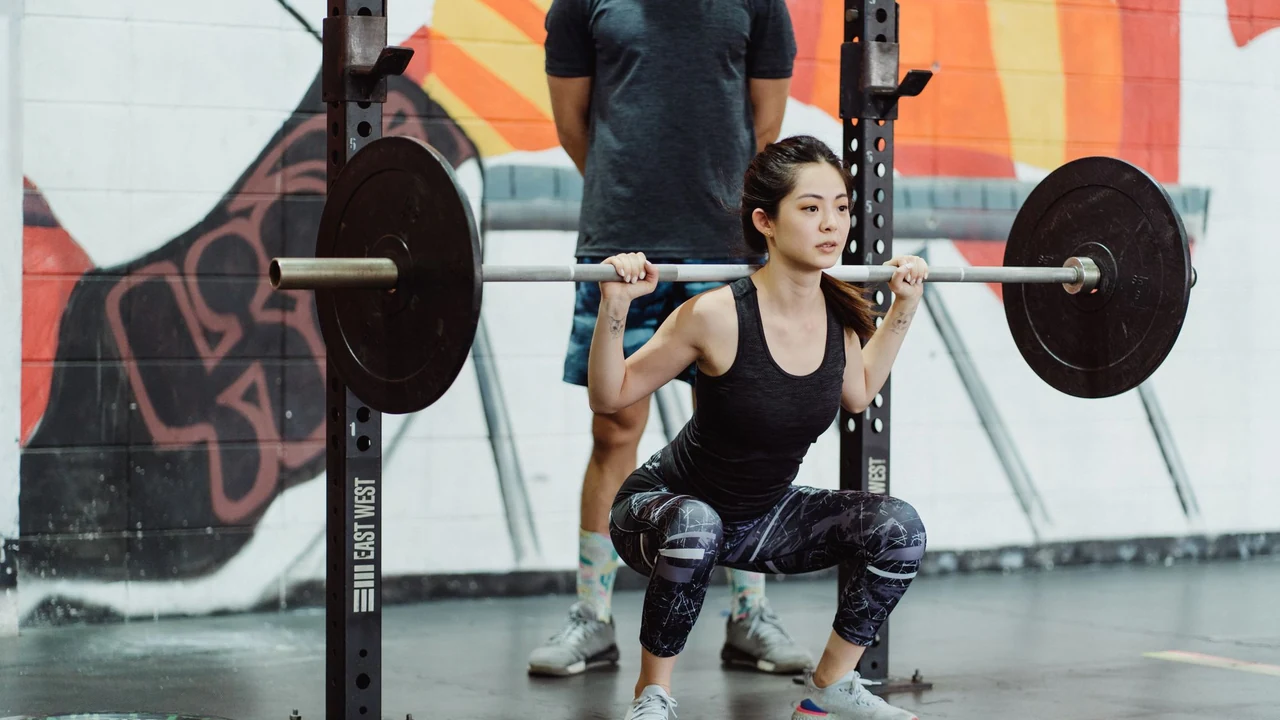
Illustrative licensed stock photograph. · Photo: Connor Scott McManus · pexels.com
The short answer
Both unilateral and bilateral resistance training can be useful. Limited comparative research has not established a clear hypertrophy winner; strength gains tend to favour the type of movement practised.
Table of Contents
- What the comparison research supports
- Match the exercise to the decision
- Keep the comparison honest
- A simple side-by-side log
- You do not need to choose one format forever
- What “fixing imbalances” leaves unexplained
- Choose a measurable next step
- Sources
- Explore this topic
Unilateral exercises train one limb at a time; bilateral exercises use both together. Neither format is automatically superior for every goal. The most useful choice depends on the movement you want to improve, your available equipment and how you can perform the exercise.
A single-leg version is not simply “twice as effective,” and a two-leg version is not proof that one side is doing exactly half the work.
What the comparison research supports
A 2025 systematic review and meta-analysis included nine studies. It did not find a significant difference in muscle hypertrophy between unilateral and bilateral training. Strength results favoured specificity: bilateral practice improved bilateral strength more, while unilateral practice improved unilateral strength more.
The evidence was limited and the studies had moderate risk of bias overall. “No clear hypertrophy difference” therefore does not establish exact equivalence for every exercise, muscle or person.
It does support a useful planning question: what movement will count as success?
Match the exercise to the decision
| Your priority | A reasonable consideration |
|---|---|
| Improve a particular bilateral lift | Include practice of that lift or an appropriate close variation |
| Improve a particular one-side task | Include relevant one-side practice |
| Train with limited available load | A suitable unilateral variation may offer another way to organise the session |
| Work in a short time window | Account for doing both sides and changing setup |
| Understand a repeated side-to-side difference | Record consistent performance and seek coaching where appropriate |
These are planning considerations, not a personalised exercise prescription. The exercise must still fit your ability, comfort and circumstances.
Keep the comparison honest
Suppose you can use one load for a two-leg exercise and a smaller load for a single-leg version. Do not divide the first number by two and conclude that the second proves a deficit.
The movement, support, range of motion and stability demands may all differ. Even two machines with the same displayed number are not necessarily comparable.
A useful exercise log records:
- Exact exercise and equipment.
- Right and left side where relevant.
- Load and repetitions.
- Setup and range of motion.
- What ended the set.
The last item is especially useful. “Target muscles fatigued” is different from “I kept losing balance” or “the grip was uncomfortable.” More weight is not automatically the answer to all three.
A simple side-by-side log
Illustrative licensed stock photograph. · Photo: Ketut Subiyanto · pexels.com
View full size ↗Here is an invented record for one familiar unilateral exercise:
| Session | First side | Second side | Note |
|---|---|---|---|
| Monday | 10 controlled repetitions | 9 controlled repetitions | Same setup; second side performed later |
| Thursday | 10 | 10 | Longer pause between sides |
| Following Monday | 10 | 10 | Setup repeated |
One first-session difference should not become a diagnosis. Order, fatigue, familiarity and measurement conditions deserve consideration.
Likewise, repeatedly adding extra work to one side without understanding the difference is not a universal correction strategy. Pain, sudden weakness or a persistent unexplained change needs assessment rather than an internet symmetry challenge.
You do not need to choose one format forever
A programme can use a bilateral exercise for a particular strength goal and a unilateral movement for another purpose. The useful question is whether each exercise earns its place.
Avoid keeping both merely to double the length of a workout. If two movements serve almost the same role, compare their practical costs: setup time, equipment availability, comfort and how well you can track progress.
When a hotel gym has limited dumbbells, a different variation can be a useful option. It is still a new comparison: start a clear record for that variation instead of treating its numbers as interchangeable with your home-gym lift.
What “fixing imbalances” leaves unexplained
An advertisement may promise that unilateral training fixes every imbalance. Ask what “imbalance” means in that claim:
- A visible size difference?
- A difference on a specific strength test?
- Pain?
- A movement skill?
- A diagnosed rehabilitation need?
These are not the same problem. A general training comparison cannot establish a treatment for an injury or tell you what a visual difference means.
If you are following a rehabilitation programme, its specific goals take priority over a generic gym comparison.
Choose a measurable next step
Pick an exercise you can perform and repeat reliably. Define its purpose, record the relevant conditions and judge progress against the same task.
Our warm-up guide can help organise preparation for the session. The unilateral-versus-bilateral decision belongs inside a workable programme, rather than becoming another rule that forces every exercise into one category.
Instructions & useful references
- Unilateral versus bilateral resistance trainingPubMed / systematic review abstract · Nine studies, moderate risk of bias; no clear hypertrophy winner; test specificity. Indexed primary abstract.
Sources checked on September 28, 2026. This guide provides general information, with practical planning suggestions. It is not an individual treatment plan.