

Tesamorelin and IGF-1 Blood Tests: Understanding the Result
Everyday guidesPublished 3 min readhow to

Understand why IGF-1 is monitored with tesamorelin, what to keep on your lab report and why a higher result is not automatically a better result.
Illustrative licensed stock photograph. · Photo: https://kaboompics.com/ · pexels.com
The short answer
Read IGF-1 with the laboratory units, reference range, age and clinical context attached. Tesamorelin medicine information calls for monitoring; a higher value is not a treatment goal to pursue independently.
Table of Contents
- What IGF-1 tells you about growth hormone
- Keep the laboratory context attached
- Why higher is not automatically better
- Organize the follow-up around three questions
- What to do with an unexpected result
- Sources
- Explore this topic
An IGF-1 result is a monitoring measurement, not a score to maximize. If you use tesamorelin, the important questions are why the test was requested, how the laboratory reports it, and how the clinician will interpret it alongside your treatment and symptoms.
The EGRIFTA WR prescribing information specifically calls for monitoring IGF-1 during therapy. A rise is therefore something to assess, not automatic proof of a better result.
What IGF-1 tells you about growth hormone
Growth hormone helps regulate production of insulin-like growth factor 1, usually shortened to IGF-1. MedlinePlus explains that growth hormone levels vary during the day, while IGF-1 is more stable. That is one reason clinicians use IGF-1 when assessing growth-hormone-related conditions.
The result is not a direct measurement of how much abdominal fat has changed. Nor can it identify the contents of a product by itself. Those questions require different evidence.
Keep the laboratory context attached
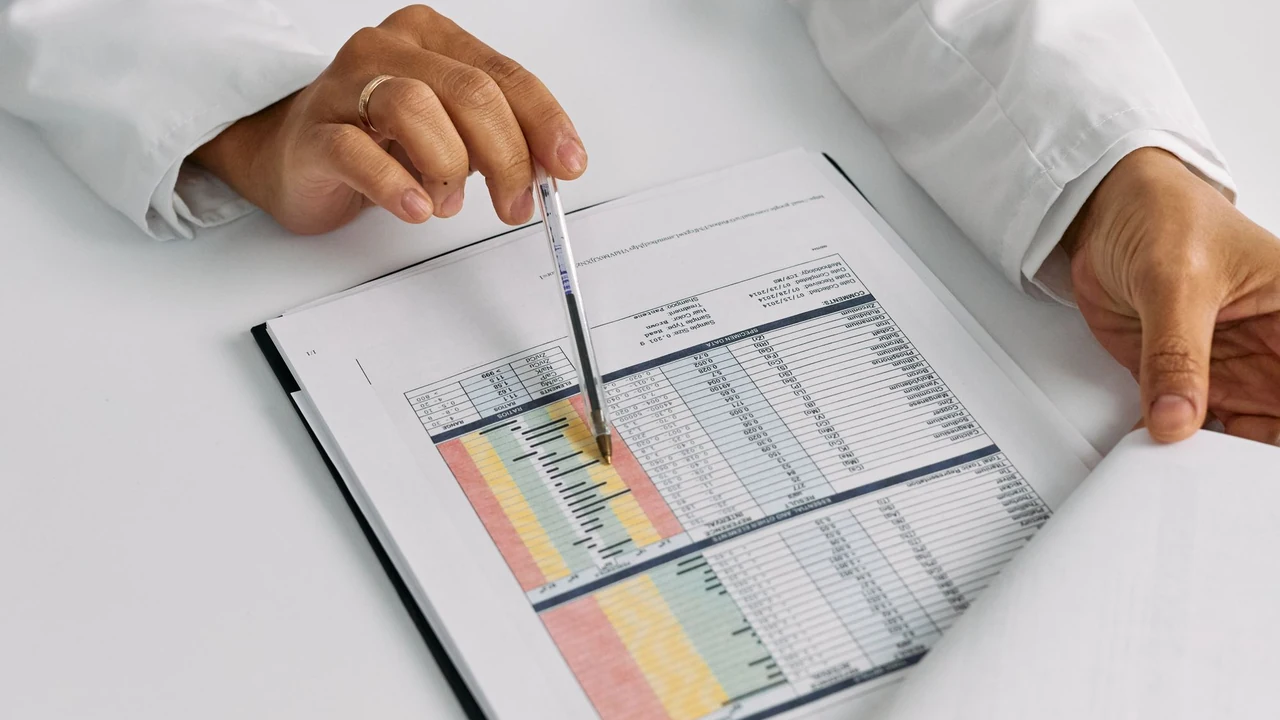
Save the full report rather than copying a single number into a message. Useful details include the collection date, units, reference interval, laboratory and any standard-deviation or Z-score reporting. Also tell the clinician about the exact product and your treatment history.
MedlinePlus’s explanation of laboratory results notes that reference ranges can vary between laboratories and methods. A number copied from someone else’s report may therefore be a poor comparison. Age is particularly relevant to IGF-1 because normal levels change across the lifespan.
If you have moved between countries or laboratories, bring both reports. Let the clinician decide whether the apparent change reflects a meaningful biological trend, a reporting difference or something that needs another test.
Why higher is not automatically better
Illustrative licensed stock photograph. · Photo: cottonbro studio · pexels.com
View full size ↗The EGRIFTA WR label says tesamorelin raises IGF-1 and that the effects of prolonged elevations are unknown. It advises clinicians to consider persistent elevations when deciding whether therapy should continue. That is a safety consideration, not a target range for self-adjustment.
The same label concerns a specific medicine used for excess abdominal fat in adults with HIV-associated lipodystrophy. It is not a general weight-loss indication. Its formulation instructions should not be transferred to a differently presented catalog pen.
Our tesamorelin page identifies the format offered on this site. Medical monitoring must still be based on the actual product and the person using it.
Organize the follow-up around three questions
| Question | What it prevents |
|---|---|
| Is the result appropriate for this laboratory and my clinical context? | Treating a copied internet range as a diagnosis |
| Is there a meaningful change from my previous result? | Reacting to a number without its baseline |
| What action, if any, does the clinician recommend? | Changing the regimen before the result has been interpreted |
Ask when the next review is due and what information should accompany it. If another test is planned at the same appointment, confirm the preparation instructions for the whole set rather than assuming every blood test has identical requirements.
What to do with an unexpected result
Contact the clinician who requested the test and provide the complete report. Include new symptoms and any changes to medicines or supplements. Avoid making a dose change or adding another growth-hormone-related product to “balance” the number.
A useful monitoring plan tells you what is being measured, why it matters and who will interpret it. That is more informative than trying to reproduce an IGF-1 value from a testimonial or a before-and-after post.
Instructions & useful references
- EGRIFTA WR prescribing informationDailyMed / FDA-submitted label · IGF-1 monitoring and persistent elevations; indication HIV-associated lipodystrophy and not weight-loss management. Label formulation not transferred to catalog pen.
- IGF-1 blood testMedlinePlus / National Library of Medicine · IGF-1 is more stable than pulsatile GH; interpretation depends on age and clinical context.
- How to understand laboratory resultsMedlinePlus / National Library of Medicine · Laboratories can use different methods, units and reference ranges; use complete reports and clinical context.
Sources checked on October 8, 2026. This guide provides general information, with practical planning suggestions. It is not an individual treatment plan.