

Shoulder Pain After Surfing: What to Do Before Your Next Session
Everyday guidesPublished 6 min readhow to

Shoulder pain after surfing? Check warning signs, record paddling demands and prepare a sensible assessment and return-to-surf discussion in Bali.
Illustrative licensed stock photograph. · Photo: Jess Loiterton · pexels.com
The short answer
Reduce activity that provokes shoulder pain, check for urgent signs and seek assessment if symptoms persist or worsen. Record paddling demands and function. A return plan should consider the cause, shoulder function and water conditions, not a universal number of days.
Table of Contents
- Check the warning signs first
- Why paddling is worth describing carefully
- Make a useful record of one typical session
- What to change before the next session
- Why a generic shoulder routine may miss the problem
- Plan a return around function and conditions
- Sources
- Explore this topic
If paddling repeatedly brings on shoulder pain, do not use the next surf session as a test of how much you can tolerate. Reduce the activity that provokes it, check for warning signs and arrange assessment if symptoms persist or worsen. A clear account of when the pain occurs is more useful than deciding online that you have a particular tendon injury.
“Surfer's shoulder” describes a problem in a setting, not a single diagnosis. Pain after a fall, discomfort that builds during a long paddle and an arm that suddenly feels weak need different attention.
Check the warning signs first
Seek urgent medical assessment for sudden severe pain, inability to move the arm, a changed shoulder shape, marked swelling, persistent numbness, or a shoulder that becomes unusually hot or cold. Pain after a fall or collision also deserves prompt assessment, particularly with loss of function. Feeling feverish or generally unwell with shoulder pain is another reason to get help. These signs are consistent with NHS shoulder-pain guidance.
Do not try to put a suspected dislocation back into place yourself. If you are in Bali, use an appropriate local medical service; the UK telephone services mentioned in the linked NHS page are not local contacts.
For pain without urgent features, seek assessment if it is worsening, substantially limits movement or is not improving after about two weeks. That time frame is not an instruction to wait when the symptoms already concern you.
Why paddling is worth describing carefully
Paddling is repeated shoulder work, but surfing sessions are not identical workouts. A quiet session with a short paddle can differ from a long session spent repeatedly working through white water. Wave count alone misses much of that effort.
Research on shoulder injuries in professional surfers and surf-specific physical-assessment guidance describe both repetitive paddling demands and traumatic injuries. Findings from selected surfers cannot estimate your own risk or identify the painful structure without assessment.
The American Academy of Orthopaedic Surgeons explains that rotator-cuff-related pain can occur with lifting or lowering the arm and may disturb sleep. Examination considers movement, strength and other possible sources of symptoms. The location of pain alone is not enough to choose a diagnosis.
Make a useful record of one typical session
Write down what happened while it is fresh. You do not need to assign a medical label. A physiotherapist or clinician needs the sequence: what you did, when symptoms began and how they behaved afterwards.
| Record | A useful description |
|---|---|
| Start | Gradual onset, a particular paddle stroke, a fall or another event |
| Session demands | Approximate time in the water and how much was spent paddling |
| Painful actions | Paddling, duck-diving, popping up, carrying the board or reaching |
| Function | What became difficult, weak or unreliable |
| Later that day | Symptoms at rest, during ordinary tasks or at bedtime |
| Next morning | Whether symptoms settled, persisted or increased |
| Other shoulder work | Gym sessions, swimming, work tasks or another sport |
“It hurts after surfing” is a starting point. “It starts after repeated paddles, affects taking my shirt off and wakes me when I lie on that side” gives the consultation more detail. The latter description is still not a diagnosis.
If you have a previous dislocation, surgery or shoulder rehabilitation plan, mention it early. Bring the plan if available. A new symptom should not automatically be managed using an old exercise sheet written for a different problem.
What to change before the next session
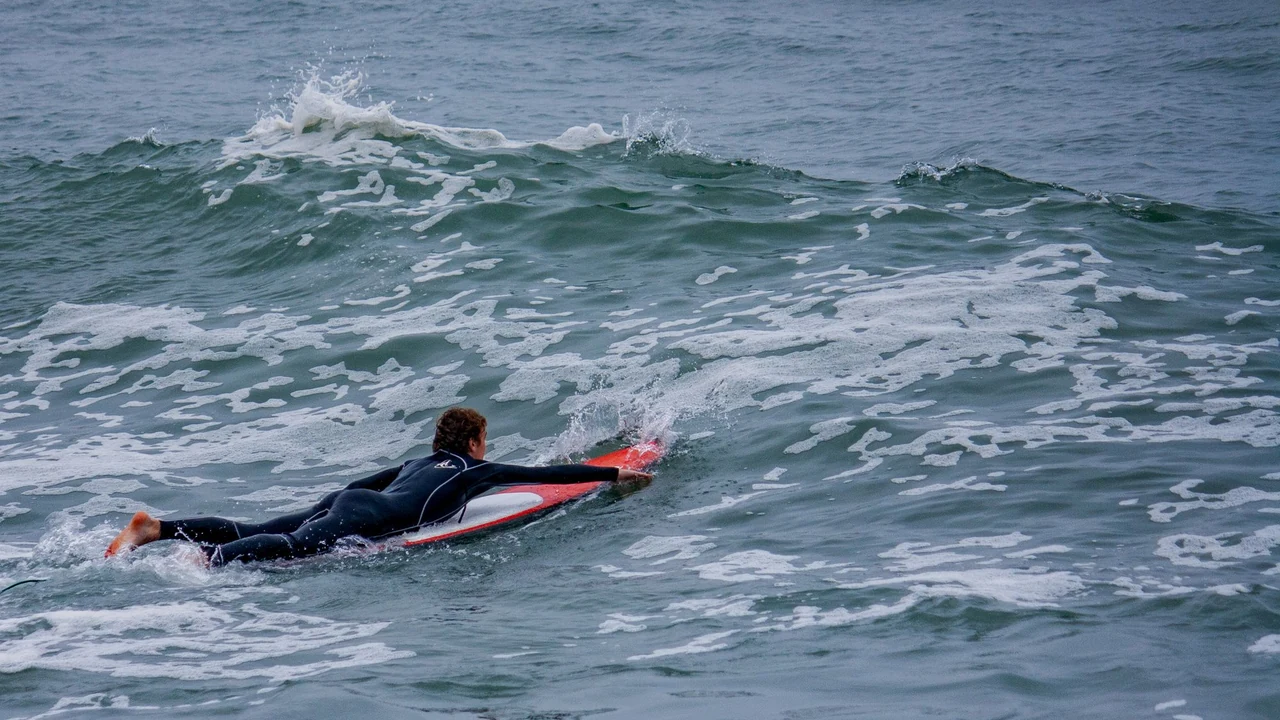
Illustrative licensed stock photograph. · Photo: Cristian Loayza · pexels.com
View full size ↗For an uncomplicated painful shoulder, NHS guidance supports gentle movement while avoiding activities that aggravate symptoms. Complete immobilisation and improvised heavy exercises are not the default answer. Ask a pharmacist or clinician about appropriate pain relief for your circumstances rather than using it to push through a session.
Start by identifying the provoking activity. If paddling hurts, replacing surfing with a long swim may repeat much of the same shoulder demand. If pressing movements in the gym also provoke pain, tell the person assessing you about both activities. This is a way to make the activity history complete, not a prescription to eliminate every form of exercise.
Keep a practical alternative available: an activity that is comfortable, fits any medical advice and does not require using the painful shoulder to compensate. For general planning, the active-recovery guide can help you organise a quieter day. It does not replace a rehabilitation plan for an injury.
Why a generic shoulder routine may miss the problem
One person's helpful band exercise is not a diagnosis or a complete programme for someone else. A useful assessment asks what movements you can perform, which are limited and what the next step should be.
AAOS describes activity modification and physical therapy as common parts of nonsurgical care for rotator-cuff-related shoulder pain. Restoring movement and progressing strengthening are guided by symptoms and assessment; improvement can take time. That does not establish a universal exercise sequence or a fixed number of days until you can surf again.
Ask the professional to explain the purpose of each exercise, what response is acceptable and when it should be changed. If you cannot tell whether a movement is helping or aggravating the problem, clarify before adding more resistance or repetitions.
Plan a return around function and conditions
Discuss the specific tasks you need back: paddling, controlling the board, getting through the break and returning safely to shore. Being comfortable while sitting on the beach does not demonstrate those abilities.
Use these questions to make the return plan concrete:
- Which movements and functional tasks should be comfortable first?
- What would make us stop a session and reassess?
- What conditions would make an initial return unnecessarily demanding?
- How should we judge the response later that day and the next morning?
- Which variable should change first: time, frequency or session demands?
In Bali, a booked lesson, a limited holiday or a forecast can make resting feel expensive. Those pressures belong in the conversation, but they do not establish readiness. Agree on the next step before entering the water rather than negotiating with the pain once you are offshore.
Is this just normal muscle soreness?
It may be difficult to distinguish from the description alone. Recurrent pain with a particular movement, loss of function or symptoms that persist deserve assessment. The muscle-soreness guide covers ordinary post-exercise soreness, not a way to rule out shoulder injury.
Should I stretch harder if it feels tight?
Do not force a painful movement to try to prove that the shoulder is merely tight. Ask which movements are appropriate after assessment.
How many days should I stay out of the water?
There is no universal number. The cause, your function and the demands of the return session matter. Leave the assessment with clear review criteria so that the next decision is based on more than a date on the calendar.
Instructions & useful references
- Shoulder painNHS · Urgent signs, persistent/worsening symptoms, gentle activity and avoiding aggravation; UK phone numbers not presented as Bali contacts.
- Shoulder Impingement / Rotator Cuff TendinitisAmerican Academy of Orthopaedic Surgeons · Symptoms, examination, activity modification and individual physical-therapy progression.
- Shoulder injury in professional surfersPubMed primary study record · Primary abstract/search record: selected professional-surfer population; no prevalence or recovery-time extrapolation.
- Physical Assessment in Surfers: Guidelines for Health Professionals — Part 1 Upper QuarterActa Ortopedica Brasileira · Surf-specific paddling demands, traumatic shoulder injuries and functional assessment; no diagnostic exercise prescription extracted.
Sources checked on October 7, 2026. This guide provides general information, with practical planning suggestions. It is not an individual treatment plan.