

Retatrutide vs Cagrilintide: What Are You Comparing?
Bali & IndonesiaPublished 3 min readcomparison

Compare retatrutide and cagrilintide, distinguish CagriSema from a single ingredient, and understand what an online product offer actually includes.
Illustrative licensed stock photograph; not the product, its testing or a customer testimonial. · Photo: Vitaly Gariev · pexels.com
The short answer
Retatrutide and cagrilintide are different molecules being studied for weight management. Retatrutide acts at three hormone receptors; cagrilintide is an amylin analogue. If you are comparing offers, first establish whether the listing contains one ingredient, a combination, or a complete treatment service. Those are different purchases, even when the advertisements use similar weight-loss language.
Table of Contents
- Retatrutide vs cagrilintide at a glance
- Do not confuse cagrilintide with CagriSema
- Why headline weight-loss percentages can mislead
- Compare the offer in four separate parts
- Does either name identify an approved retail treatment?
- Sources
- Explore this topic
Retatrutide and cagrilintide are different molecules being studied for weight management. Retatrutide acts at three hormone receptors; cagrilintide is an amylin analogue. If you are comparing offers, first establish whether the listing contains one ingredient, a combination, or a complete treatment service. Those are different purchases, even when the advertisements use similar weight-loss language. [3] [1]
Retatrutide vs cagrilintide at a glance
| Question | Retatrutide | Cagrilintide |
|---|---|---|
| What does the name identify? | A single molecule acting at GIP, GLP-1 and glucagon receptors | A long-acting amylin analogue |
| Is it the same as CagriSema? | No | No: CagriSema combines cagrilintide with semaglutide |
| What should a listing specify? | Exact ingredient, presentation and total contents | Whether cagrilintide is supplied alone or with another ingredient |
| Does a larger mg figure show greater effectiveness? | No | No |
The receptor description helps distinguish the compounds. It does not give a conversion rate between them. A larger amount in a container is a quantity, not a clinical score. [3] [1] [2]
Do not confuse cagrilintide with CagriSema
This is the most useful naming check before comparing a price. A result from a cagrilintide–semaglutide study belongs to that combination. It cannot be presented as the result of cagrilintide alone. Similarly, a seller describing a separate combination containing retatrutide has not identified CagriSema.
Write each active ingredient on a separate line. Then note whether the offer is one mixed container or separate containers. If that information is unclear, the product is not yet defined well enough for a meaningful price comparison. The original CagriSema trial record identifies the combination and the individual treatment groups explicitly. [2]
Why headline weight-loss percentages can mislead

Illustrative licensed stock photograph; not the product, its testing or a customer testimonial. · Photo: Artem Podrez · pexels.com
View full size ↗Imagine two advertisements: one quotes a result from a shorter trial and another from a longer trial. Even when both figures were copied correctly, the comparison can leave out the participants, treatment duration, comparator and handling of people who stopped treatment. It is not a direct contest simply because the figures sit next to one another.
The cagrilintide phase 2 study cited here lasted 26 treatment weeks and included placebo and liraglutide comparisons. It did not compare cagrilintide with retatrutide. Use that detail to identify the study, not to invent a prediction for a retail product. [1]
For a purchase decision, a useful evidence question is: “Was this exact ingredient and formulation studied for the outcome being advertised?” A before-and-after image cannot answer it.
Compare the offer in four separate parts
- Identity: the full ingredient name and whether there is a second active ingredient.
- Presentation: complete pen, cartridge, liquid vial or powder, with total contents clearly stated.
- Documentation: manufacturer, batch information and instructions belonging to that specific product.
- Service: what the price includes beyond the product, such as delivery or an independently provided clinical consultation.
Keep a copy of the listing and the confirmed offer. A change of format or ingredient should be resolved before treating two quotations as equivalent. Our pen-versus-vial guide covers the container comparison in more detail.
Does either name identify an approved retail treatment?
Lilly's current information describes retatrutide as investigational and not approved for public use. A commercial listing is not evidence that it is Lilly's trial formulation or an approved medicine. The same discipline applies when reading development news about other compounds: a study announcement and a product authorisation are separate events. [3]
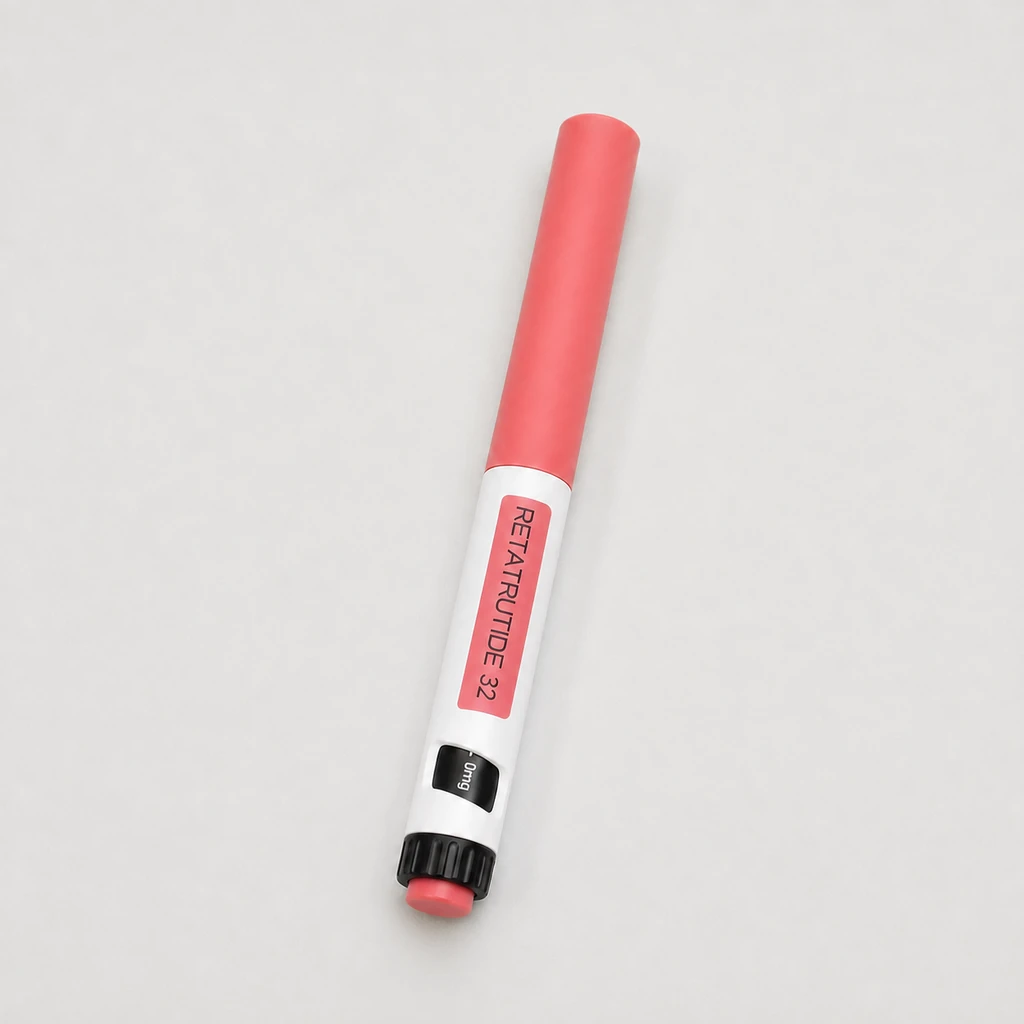
For the specific presentation shown on this site, the Retatrutide product page supplies the catalog details. Keep those details separate from the clinical comparison above. The useful outcome is a clearly identified offer and an informed treatment discussion, rather than choosing the biggest percentage or the most receptors.
Instructions & useful references
- Once-weekly cagrilintide for weight management: phase 2 trialLau et al., The Lancet · Trial population, 26-week duration, amylin analogue and comparator design. Not a retatrutide head-to-head trial.
- Cagrilintide plus semaglutide in type 2 diabetes: phase 2 trialFrias et al., The Lancet · Combination identity and trial population; combination results do not establish cagrilintide monotherapy results.
- What to know about retatrutideEli Lilly and Company · Investigational status, molecular target and distinction between a clinical-trial formulation and an online retail label.
Sources checked on October 14, 2026. This guide provides general information, with practical planning suggestions. It is not an individual treatment plan.