

Retatrutide, Cholesterol and Triglycerides: How to Read a Lipid Panel
Everyday guidesPublished 5 min readhow to
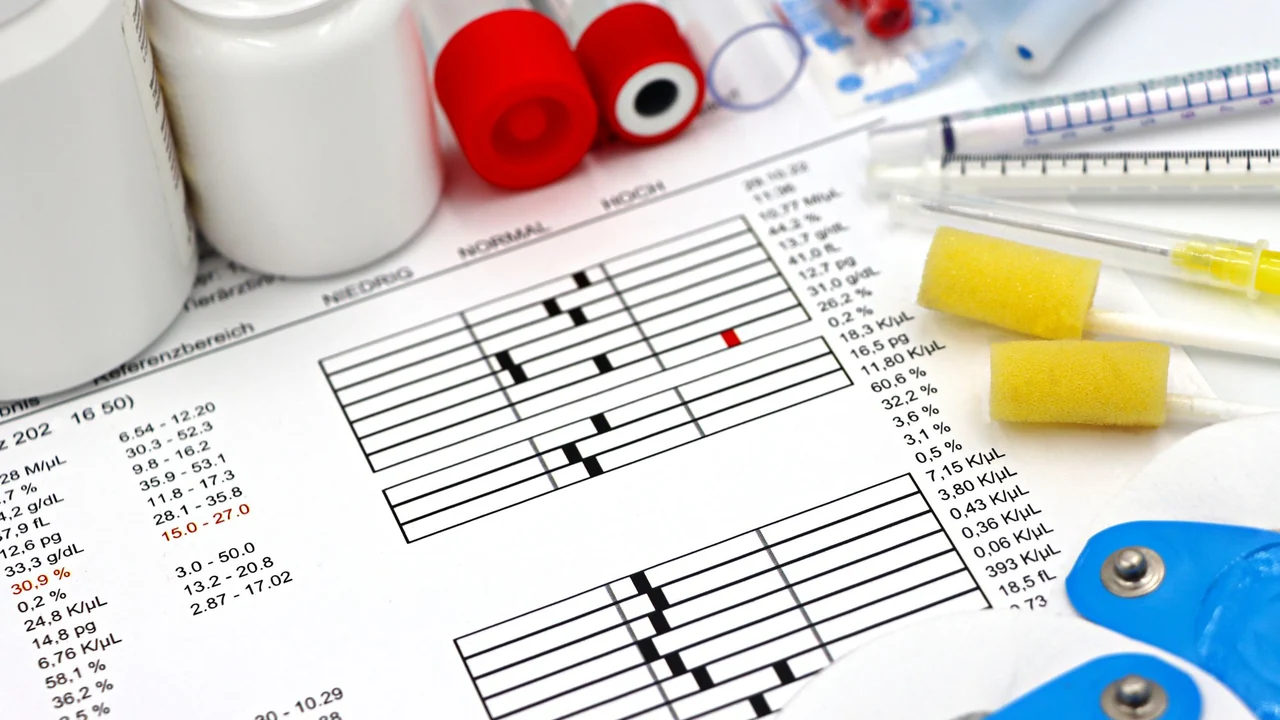
Read a lipid panel alongside retatrutide research: LDL, HDL, non-HDL, triglycerides and meaningful comparisons.
Illustrative licensed stock photograph. · Photo: Marta Branco · pexels.com
The short answer
Keep each lipid component and its units visible. Biomarker changes do not by themselves prove that an intervention prevents cardiovascular events.
Table of Contents
- Separate the lines on the report
- What retatrutide research adds
- Build a comparison that survives a change of clinic
- A better follow-up question than “Is this good?”
- Keep blood fats separate from body measurements
- Sources
- Explore this topic
A retatrutide headline about improved blood fats does not tell you whether your own cholesterol treatment should change. Read the whole lipid panel, keep the units and dates, and compare results against the target agreed for your health history. A lower triglyceride result is useful information; it is not proof that cardiovascular risk has disappeared.
The practical problem often starts with two reports from different clinics. One highlights total cholesterol, another lists LDL and triglycerides, and the units may differ. Before deciding that the numbers have improved or worsened, make sure you are comparing the same measurement.
Separate the lines on the report
The NHS guide to cholesterol results explains that total cholesterol, HDL and non-HDL provide different information. Non-HDL is calculated by subtracting HDL from total cholesterol. Clinicians assess the result alongside factors such as blood pressure, age and existing conditions rather than choosing a treatment from total cholesterol alone.
| Report line | Read it as | Useful question |
|---|---|---|
| Total cholesterol | An overall cholesterol measure | Do I also have the component results? |
| HDL cholesterol | One part of the cholesterol profile | How does it fit into the full assessment? |
| LDL cholesterol | A specific cholesterol result used in assessment and treatment decisions | What target has my clinician set for me? |
| Non-HDL cholesterol | Total cholesterol minus HDL | Are both numbers in the same units and from the same sample? |
| Triglycerides | A separate blood-fat measurement | Were the test conditions appropriate, and is repeat testing needed? |
The Liverpool laboratory description lists these as distinct components of a lipid profile. Do not subtract a triglyceride value from total cholesterol or treat the two labels as synonyms.
What retatrutide research adds
A 2026 exploratory analysis of phase 2 trials examined lipoprotein and inflammatory biomarkers in adults with and without type 2 diabetes. The trials lasted 36 and 48 weeks respectively, and fasting samples were used to assess changes. This helps investigate the pattern behind a broad “improved metabolic health” headline.
It does not turn a blood marker into a counted reduction in heart attacks or strokes. A biomarker analysis and a cardiovascular-outcomes trial ask different questions. Nor does it establish that a product bearing the retatrutide name will reproduce the study result. Retatrutide remains investigational.
When you read a new study, look for the actual outcome: a concentration in blood, a risk estimate, or events experienced by participants. Those outcomes should not be silently exchanged in a sales claim.
Build a comparison that survives a change of clinic

Illustrative licensed stock photograph. · Photo: Kristina Snowasp · pexels.com
View full size ↗Save the full laboratory report. Copy each result into a table with its unit, date and reference range. Add whether the laboratory requested fasting, whether you followed that instruction, and any relevant medicine changes since the previous sample.
Follow the ordering clinician's preparation instructions. Do not fast unnecessarily, skip prescribed medicines or try to “improve” the result by changing your routine just before the test. If you could not follow the instructions, tell the laboratory so the result can be interpreted appropriately.
If one report uses mg/dL and another mmol/L, mark the comparison as unfinished until the units have been reconciled. Cholesterol and triglycerides do not use the same conversion factor. Guessing a conversion from a remembered rule can create a false trend.
Here is a simple arithmetic example using made-up values in the same units. Total cholesterol of 5.4 mmol/L and HDL of 1.3 mmol/L gives non-HDL of 4.1 mmol/L. A later total of 4.9 and HDL of 1.4 gives non-HDL of 3.5. This shows the calculation; it does not assign either result a personal treatment target.
A better follow-up question than “Is this good?”
Take the comparison to the clinician who knows why the tests were ordered. Useful questions include:
- Which part of my lipid profile are we trying to change, and why?
- Has the change been large enough to affect a decision, or should it be confirmed?
- What else changed during the same period, including medicines and illness?
- When should the panel be repeated, and who will review it?
- Should my existing treatment continue while this is being assessed?
If you already take lipid-lowering medicine, an improved result may reflect the treatment you are taking. Do not interpret improvement as an instruction to stop it. Record the medication history so the person reviewing the result can see the sequence.
Keep blood fats separate from body measurements
A smaller waist and a lower triglyceride result can appear in the same period, but neither establishes exactly why the other changed. Our weight-recording guide can help you provide context without pretending that a tape measure is a blood test.
The useful output is a readable before-and-after panel, an agreed target and a follow-up date. It is more valuable than a screenshot with a green arrow and no units, especially when you move between healthcare providers in Bali and elsewhere.
Instructions & useful references
- Understanding cholesterol levelswww.nhs.uk · Lipid components, units and individualized cardiovascular-risk context. Non-HDL equals total cholesterol minus HDL.
- Laboratory lipid profilepathlabs.rlbuht.nhs.uk · Lipid panel components and reporting context; triglycerides and LDL are separate values.
- Retatrutide cardiometabolic secondary analysispubmed.ncbi.nlm.nih.gov · 2026 indexed primary abstract: secondary analysis of biomarkers in phase 2 cohorts. No numeric outcome or cardiovascular event-prevention claim imported.
- Retatrutide development statuswww.lilly.com · Current developer page checked October 11: retatrutide remains investigational; phase 3 results exist. No retail-product equivalence or approved personal regimen is inferred.
Sources checked on October 11, 2026. This guide provides general information, with practical planning suggestions. It is not an individual treatment plan.