

Protein Shake with Water or Milk? Calculate the Drink You Will Actually Make
Everyday guidesPublished 4 min readhow to
1:22 · English narration Continue reading the article ↓
Video chapters
Read the video transcript
The mixer changes the complete drink. Use the actual labels to compare protein, calories, tolerance and practicality instead of treating water or milk as universally better.
Water or milk in a protein shake? Start with what the drink needs to contribute. The mixer changes the total, so compare the finished shake rather than treating one liquid as the universal best choice.
Use the actual powder serving and the amount of liquid you pour. Milk alternatives vary too. The word almond, oat or soy does not tell you the complete drink's protein or calorie content.
In this fictional example, the powder supplies twenty-four grams of protein and one hundred and twenty calories. The example milk adds eight grams and one hundred and twenty-five calories. The finished drink has thirty-two grams and two hundred and forty-five calories.
Water may suit a simple protein addition. Milk may help make a more substantial snack. Neither calculation tells you that a shake is a complete meal or that everyone needs the same amount.
Changing the mixer does not remove ingredients already in the powder. Water cannot make whey milk-protein-free. Read both allergen labels and follow any individual advice relevant to your health.
Taste, price and storage matter because the routine has to work in real life. The article includes a simple calculation and a comparison note you can use for whichever products you actually buy.
Download transcript · English captions · Footage and production credits
Illustrative Pexels footage, original explanatory graphics and music, with synthetic English narration. People shown do not endorse products.
The mixer changes the complete drink. Use the actual labels to compare protein, calories, tolerance and practicality instead of treating water or milk as universally better.
The short answer
Water adds no protein or energy to an ordinary protein powder; milk or a plant-based drink can add both, depending on its label. The better choice depends on what the shake needs to contribute to your day, your tolerances and practical storage. Milk does not make the powder's protein disappear, and water is not automatically the best option for every goal.
Table of Contents
- Do the addition once
- Use the goal to interpret the total
- “Plant-based milk” is not one nutritional product
- Check the powder and mixer for different tolerability issues
- Taste and convenience are legitimate criteria
- A comparison you can save
- Sources
- Explore this topic
You have chosen a protein powder. Now the shaker instructions offer water, milk or a milk alternative. Does one build more muscle? Does another “ruin” the shake?
Start with the complete drink, not the mixer in isolation. Water leaves the powder's declared contribution essentially unchanged. A nutritious mixer adds its own contribution. That can be useful, unnecessary or unsuitable depending on your purpose and tolerances.
There is no need to turn the choice into a rule for everyone at the gym.
Do the addition once

Illustrative licensed stock photograph. · Photo: Felicity Tai · pexels.com
View full size ↗Here is a fictional label example, not a description of a particular brand.
| Component | Protein | Energy |
|---|---|---|
| One specified powder serving | 24 g | 120 kcal |
| 250 mL plain water | 0 g | 0 kcal |
| 250 mL example milk, according to its invented label | 8 g | 125 kcal |
The water version contains 24 g protein and 120 kcal from these components. The example milk version contains 32 g protein and 245 kcal. Add any fruit, oats or nut butter separately if you use them.
Neither total is inherently the winning one. The calculation tells you what you are choosing.
When your powder label lists a serving in grams, do not automatically equate that with a loosely filled scoop. Use the manufacturer's stated serving information and an appropriate way of measuring it.
Use the goal to interpret the total
If you want a convenient protein addition with little extra energy from the mixer, water may fit the job. If you also need a more substantial snack and enjoy milk, its contribution may be useful.
If the shake is replacing a meal, the comparison is broader than protein. Consider what else that meal would have contained and whether the drink actually fits your eating pattern. Adding milk does not automatically make every powder a nutritionally complete meal.
Our daily-protein guide deals with overall intake. Choosing a mixer cannot rescue an unrealistic target or an eating pattern you cannot sustain.
“Plant-based milk” is not one nutritional product
The FDA's guide to milk alternatives explains that products differ in protein, energy and fortification. Their composition depends on the plant source, processing and added ingredients.
Do not assume an almond, oat or soy drink has the same protein as dairy milk—or as another brand using the same plant name. Read the product in front of you. “Unsweetened” also does not mean every other nutrition value is identical.
For any mixer, multiply the per-100-mL value by the actual volume divided by 100. A drink with 3 g protein per 100 mL contributes 7.5 g in 250 mL. That is an arithmetic example, not a typical value assigned to every plant drink.
Check the powder and mixer for different tolerability issues
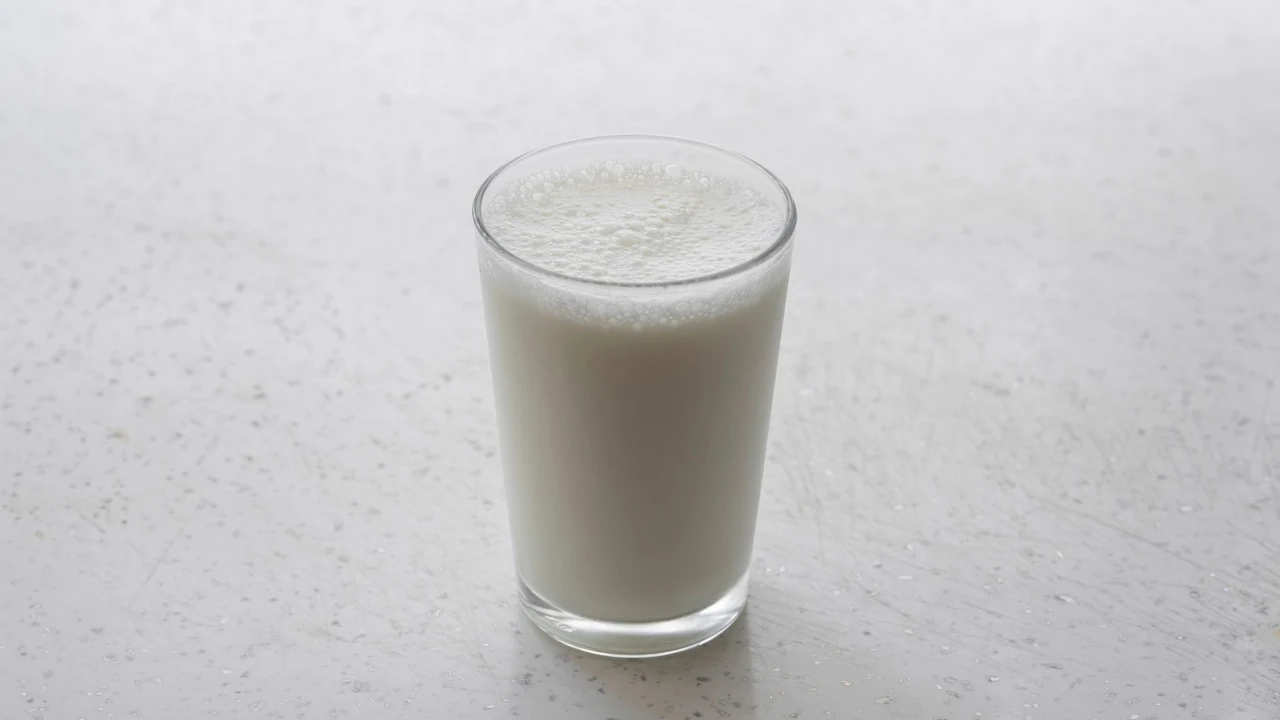
Illustrative licensed stock photograph. · Photo: Engin Akyurt · pexels.com
View full size ↗The NIDDK distinguishes lactose intolerance from milk-protein allergy. That matters when choosing both components.
Changing to water does not remove milk protein already present in a whey powder. Lactose-free dairy milk is also not the same as a milk-protein-free product. Follow individual allergy advice rather than using a mixer change as a home challenge.
If your concern is digestive discomfort rather than a known allergy, record the exact powder, mixer, amount and other ingredients. Changing three things at once makes it harder to identify what you tolerated differently.
Taste and convenience are legitimate criteria
You may prefer a thinner drink with water or a different texture with milk. You do not need to dress that preference up as a claim about superior muscle growth.
For travel, ask what you can store appropriately and mix reliably. Follow the storage instructions for the powder and the liquid, including after opening. A drink that sits in a warm bag for hours is a different practical problem from one mixed shortly before use.
When refrigeration is uncertain, consider the alternatives in protein snacks without a fridge. A shake is only one way to make a convenient snack.
A comparison you can save
Record the powder serving, liquid volume, total protein, total energy, any relevant allergens and the storage plan. Then add your own practical note: taste, cost and whether you would actually repeat it.
For example: “Water version after the gym because dinner is soon,” or “Milk version as an afternoon snack because that fits today's meals.” These are examples of reasoning, not rules about timing.
The useful answer is the complete drink that fits your needs. Water and milk change the calculation; neither label alone decides the result.
Instructions & useful references
- Milk and Plant-Based Milk Alternatives: Know the Nutrient DifferenceUS FDA · Protein,energy and fortification vary by product; actuallabelcomparison, no transfer of olddraftregulationascurrentlaw.
- Symptoms and Causes of Lactose IntoleranceNIDDK / NIH · Lactose malabsorption; intolerance distinct from immune milk-protein allergy.
Sources checked on September 28, 2026. This guide provides general information, with practical planning suggestions. It is not an individual treatment plan.