

Niacinamide and Retinol: Build a Routine Around the Formulas You Own
Everyday guidesPublished 4 min readhow to
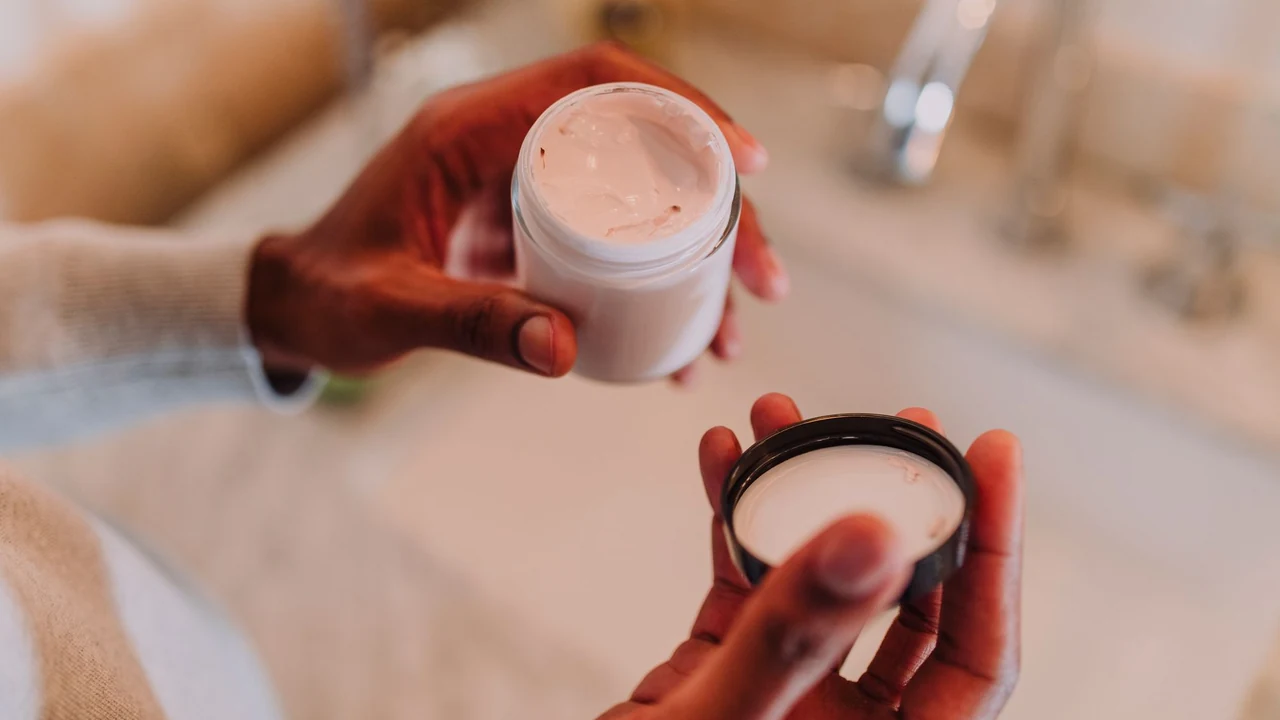
Check the finished formulas, choose a manageable sequence and avoid adding more products to an irritated routine.
Illustrative licensed stock photograph. · Photo: RDNE Stock project · pexels.com
The short answer
Niacinamide and retinol can be used in the same skincare routine, but tolerance depends on the finished formulas and how they are introduced. Follow product directions and do not treat niacinamide as protection against every reaction.
Table of Contents
- Start with what you already own
- Does niacinamide make retinol irritation impossible?
- Three workable ways to organise the products
- Introduce a change you can interpret
- Common questions that deserve a precise answer
- A routine you can maintain
- Sources
- Explore this topic
Niacinamide and retinol can appear in the same skincare routine, and some finished products contain both. That does not guarantee that any two bottles will feel comfortable together. The full formulas, their instructions and your skin's response matter more than an ingredient-pairing chart.
This guide concerns topical skincare. It does not provide instructions for oral retinoids or replace a prescribed treatment plan.
Start with what you already own
Put the actual products beside one another. A niacinamide moisturiser is not the same product as a concentrated serum that also contains exfoliating acids. Similarly, “retinol” on a front label does not tell you how the entire formula should be introduced.
Write down:
| Product detail | Why it helps |
|---|---|
| Exact name | Similar-looking products may have different directions |
| Serum, cream or cleanser | The application step can differ |
| Other active ingredients | You may already be combining more than two actives |
| Manufacturer's directions | Frequency and order are product-specific |
| Current tolerance | A familiar product and a brand-new product are different starting points |
L'Oréal Paris's own guidance describes using the ingredients together or at separate times and includes a product formulated with both. This is manufacturer guidance, not independent proof that every separate combination prevents irritation.
Does niacinamide make retinol irritation impossible?
No. A soothing ingredient is not insurance against an irritating routine. Adding another serum also adds the rest of that serum's formula.
The American Academy of Dermatology advises introducing retinoids gradually and using moisturiser to help manage irritation. It also states that retinoids should not be used during pregnancy. If you are pregnant, trying to conceive or using a prescribed treatment, obtain individual guidance rather than copying a cosmetic routine.
Do not respond to burning or a new rash by adding more niacinamide and assuming the problem has been neutralised.
Three workable ways to organise the products
One combined formula. Follow that product's directions. The presence of both ingredients does not justify increasing the recommended amount or adding a second retinoid.
Separate times. If both products are suitable for you, using niacinamide in one part of your routine and retinol at another can make the sequence easier to follow. This is an organisational option, not proof that a chemical conflict has been solved.
The same routine. Follow the finished products' instructions for order and frequency. Do not replace explicit label directions with a universal rule about which ingredient must always go first.
There is no requirement to buy a separate niacinamide serum if a moisturiser you already use contains it. Ingredient duplication is worth checking before expanding the routine.
Introduce a change you can interpret

Illustrative licensed stock photograph. · Photo: ROMAN ODINTSOV · pexels.com
View full size ↗A common mistake is to start a niacinamide serum, retinol and an exfoliating toner together. If the face becomes uncomfortable, you cannot readily tell which change contributed.
A clearer record might read:
- Existing cleanser and moisturiser: unchanged.
- New product: exact name and date first used.
- Other changes: sun exposure, shaving or a different cleanser.
- Response: location, sensation and timing.
This record does not diagnose a reaction. It makes a conversation with the manufacturer, pharmacist or dermatologist more useful.
For an already irritated face, the next useful step is not a more elaborate layering schedule. Stop the suspected new cosmetic and seek advice if symptoms persist, worsen or concern you.
Common questions that deserve a precise answer
Should niacinamide go before retinol? There is no universal order for every product type. A serum, a moisturiser and a prescription preparation are not interchangeable steps. Read both sets of directions.
Must I wait twenty minutes? Do not invent a waiting-time rule unless the relevant product instructions or your clinician specify it. Waiting is not a guarantee of tolerance.
Can I add copper peptides too? That is another formula-specific compatibility question. Do not infer a three-product routine from the answer for two ingredients. Our existing peptides and retinol guide addresses that separate pairing.
Is stronger always better? A higher number on one bottle does not establish that the complete routine is more useful for your concern or more tolerable.
A routine you can maintain
Keep the products whose purpose you can explain. Introduce changes clearly, follow their actual instructions and maintain sun protection appropriate to the products and your circumstances. If the only reason for another serum is that a pairing chart says the combination is fashionable, there may be no problem that the extra bottle needs to solve.
Instructions & useful references
- Can You Use Niacinamide and Retinol Together?L’Oréal Paris · Formula-specific combination, introduction and sequencing; commercial source identified; not independent proof for all products.
- Retinoid or retinol?American Academy of Dermatology · Gradual introduction, moisturiser, irritation and pregnancy restriction.
Sources checked on September 28, 2026. This guide provides general information, with practical planning suggestions. It is not an individual treatment plan.