

MOTS-C vs Creatine: Which Exercise Question Are You Trying to Answer?
Everyday guidesPublished 4 min readcomparison

Compare MOTS-C and creatine for exercise goals, human evidence and product identity without treating all energy claims alike.
Illustrative licensed stock photograph. · Photo: Arturo EG · pexels.com
The short answer
Creatine has human evidence for specific exercise uses. The key MOTS-c performance study administered the peptide to mice and measured the endogenous response in humans.
Table of Contents
- Two different roles behind one familiar word
- What the human creatine evidence supports
- What the MOTS-c study actually did
- Choose a question that can be answered
- Compare format and evidence separately
- A useful decision summary
- Sources
- Explore this topic
MOTS-C and creatine both appear in conversations about cellular energy, but they are different substances with very different evidence. Creatine has human sports-performance research behind particular uses. MOTS-c research includes molecular work, animal interventions and measurements of the body's own peptide in humans. These are not equivalent forms of evidence.
Start with the outcome you want to understand: repeated high-intensity exercise, everyday fatigue, endurance or a product's identity. “More energy” is too broad to make a useful comparison.
Two different roles behind one familiar word
Creatine supports the phosphocreatine system involved in rapidly regenerating ATP during demanding muscular effort. This is why its sports use is often discussed around repeated short bursts of work rather than a stimulant-like feeling.
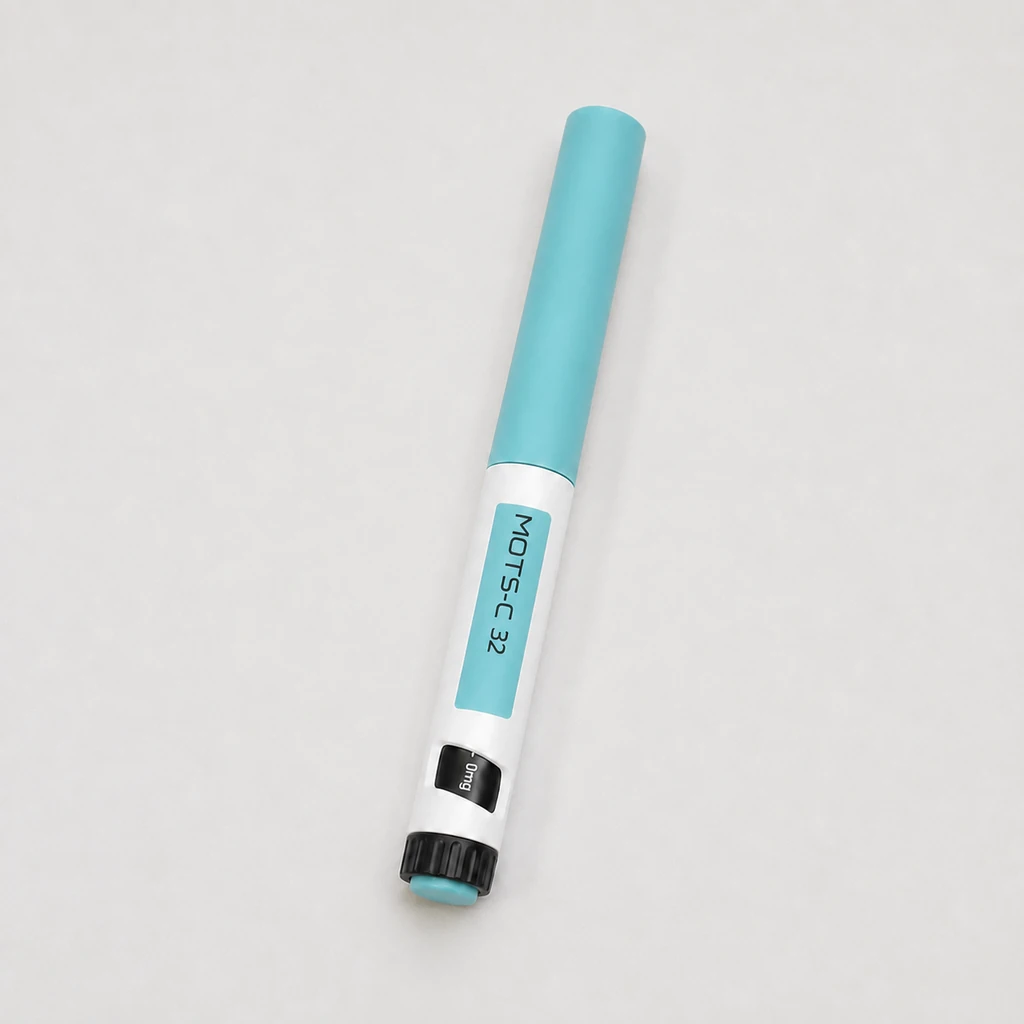
MOTS-c is a mitochondrial-derived peptide studied in metabolic signalling. Its name does not mean it is a container of ATP or a direct replacement for creatine. The MOTS-C product listing identifies the catalog format; the molecular rationale comes from separate research.
An analogy can help organize the comparison: one question concerns a rapidly available energy-buffering system, while the other concerns a biological signal being investigated. The analogy explains categories, not a prediction of performance.
What the human creatine evidence supports
The US National Institutes of Health summarizes evidence that creatine can improve performance in repeated short periods of high-intensity activity. Results are less straightforward for endurance exercise, and weight gain can occur partly through water retention. NIH exercise-supplement fact sheet.
That still does not mean every gym session improves or that every person needs a supplement. A useful comparison asks whether the activity resembles the studied task and whether the outcome matters to you. A heavier scale reading can be relevant to a weight-class athlete even when it does not represent fat gain.
For more context, see creatine and scale weight. Keep ordinary food intake, training and recovery visible in the decision rather than assuming the supplement replaces them.
What the MOTS‑c study actually did
A 2021 Nature Communications paper reported improved physical performance after MOTS-c treatment in mice. Its human component measured changes in endogenous MOTS-c associated with exercise. Measuring a naturally occurring peptide after exercise is different from demonstrating that administering a retail MOTS-C product improves human performance. Original MOTS-c research.
This distinction is easy to miss in a headline. “MOTS-c rises with exercise” and “a MOTS-C pen reproduces the benefits of exercise” are separate claims. The first does not prove the second.
Choose a question that can be answered

Illustrative licensed stock photograph. · Photo: Jason Morrison · pexels.com
View full size ↗If the concern is repeated effort in a familiar gym program, record the exercise, repetitions, load and recovery between sets. If the concern is unexplained everyday fatigue, that is a different issue and may need a clinical assessment rather than another performance product.
If your aim is endurance, record a repeatable route and conditions. Heat, sleep, food and recent training make casual before-and-after comparisons difficult. An unusually good run after several simultaneous changes cannot identify which change caused the result.
These records are useful even if you decide against adding anything. They turn a vague hope into a question you can revisit.
Compare format and evidence separately
An oral creatine powder and a peptide pen are not interchangeable delivery systems. A gram amount for one cannot be converted into a milligram amount for the other. Do not borrow an administration routine from a different molecule or infer compatibility from shared references to ATP.
When reviewing the MOTS-C pen, check the declared ingredient, total content, pack information and supplied instructions. When reading a study, check species, route, duration and measured outcome. Keeping those two records separate makes the comparison clearer.
A useful decision summary
Write one sentence for each option: “The evidence relevant to my question is this; the product details are these; the uncertainty that remains is this.” For creatine, the relevant human performance evidence may be reasonably specific. For MOTS-c, avoid turning promising biology into a guaranteed personal outcome.
You can then discuss the unresolved questions with a qualified professional while keeping the foundation of the routine intact: appropriate training, enough food and a realistic recovery schedule.
Instructions & useful references
- Dietary Supplements for Exercise and Athletic PerformanceNIH Office of Dietary Supplements · Creatine evidence for repeated high-intensity exercise, water-related weight change, and individualized protein context; not a MOTS-c or retatrutide combination trial.
- MOTS-c regulates physical capacity and muscle homeostasisNature Communications · Administered MOTS-c performance findings were in mice; human component examined endogenous peptide response to exercise, not injected retail pens.
Sources checked on October 9, 2026. This guide provides general information, with practical planning suggestions. It is not an individual treatment plan.