

GHK-Cu vs Matrixyl: Comparing Two Actual Serums
Bali & IndonesiaPublished 3 min readcomparison
Compare GHK-Cu and Matrixyl skincare by exact peptide, finished formula and wrinkle evidence. A familiar ingredient name does not make two products equivalent.
Illustrative stock photograph; not a customer, clinical result or product-testing record. · Photo: alleksana / Pexels
The short answer
GHK-Cu and Matrixyl-style peptide serums should be compared by their exact ingredients and finished formulations. “Peptide serum” is too broad to identify what is being tested, while a higher advertised percentage may refer to a blend rather than the amount of a single active peptide.
Table of Contents
- Read beyond the front-label name
- What the cited wrinkle study actually tested
- A useful two-product comparison
- A GHK-Cu pen is another comparison
- Sources
- Explore this topic
GHK-Cu and Matrixyl-style peptide serums should be compared by their exact ingredients and finished formulations. “Peptide serum” is too broad to identify what is being tested, while a higher advertised percentage may refer to a blend rather than the amount of a single active peptide.
Start with the ingredient list and the result you want: finer-looking lines, hydration and a change in skin texture are related shopping interests, but they are not identical measurements.
Read beyond the front-label name
GHK-Cu is a copper complex involving the GHK tripeptide. A frequently cited Matrixyl-related clinical paper tested palmitoyl pentapeptide, also called pal-KTTKS. These are different materials, and a brand family name should not be used to imply that every later peptide mixture has the same composition. [1] [3]
Copy the full peptide names from the two products being compared. Also note whether the stated percentage refers to the ingredient itself or a supplier mixture. If the basis is unclear, that is a useful question for the manufacturer; it is not a number to rank automatically.
What the cited wrinkle study actually tested
The 2005 pal-KTTKS study compared a moisturizer containing the peptide with its moisturizer control in a randomized, double-blind split-face study. It involved 93 women aged 35–55 over 12 weeks and found improvements in fine-line and wrinkle assessments. [3]
That supports the tested topical formula under those conditions. It does not establish that all products carrying a similar front-label name work equally, or that the ingredient beats GHK-Cu directly.
The older GHK-Cu collagen experiment measured fibroblast cultures. A cellular effect explains scientific interest but is not a head-to-head facial-serum trial. [1]
A useful two-product comparison
Illustrative stock photograph; not a customer, clinical result or product-testing record. · Photo: Cup of Couple / Pexels
View full size ↗| Compare | Write down for each serum |
|---|---|
| Ingredient identity | Full peptide names, not only the marketing family |
| Formula | Other ingredients, texture and the manufacturer's intended use |
| Evidence | Whether the finished product or only an ingredient was tested |
| Outcome | Wrinkles, skin feel, hydration or another named measure |
| Practical fit | Price for the container and how it fits an existing routine |
For example, if one serum is comfortable under sunscreen and another repeatedly pills in your current routine, that difference affects everyday use even though it does not settle their biological activity. Treat the observation as a formulation question rather than proof that one peptide is stronger.
A GHK-Cu pen is another comparison
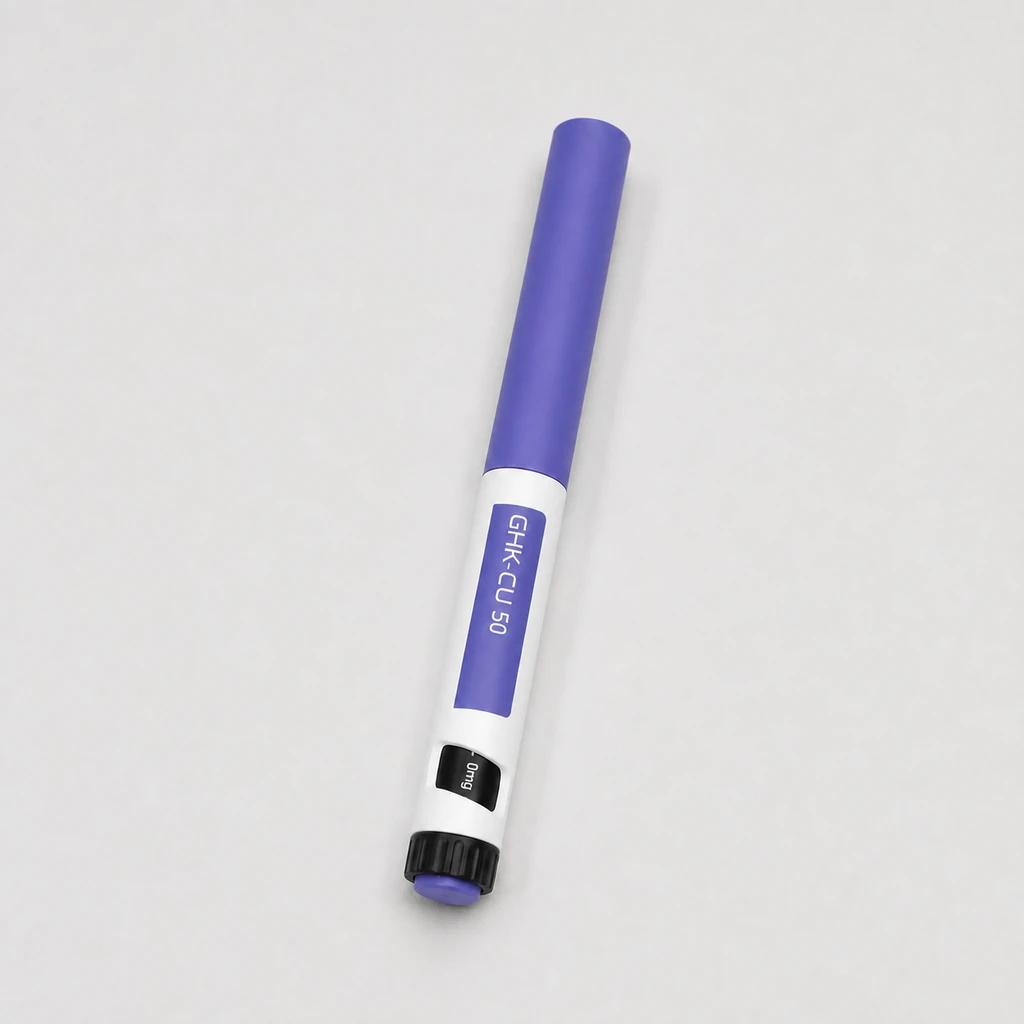
The store's GHK-Cu 50 mg pen is not a topical serum. Its labelled amount cannot be compared with a serum percentage as though the two formats were interchangeable. [2]
For skincare shopping, choose the pair of actual topical products first and compare the claims they can support. A catalog pen, a cell experiment and a moisturizer trial answer different questions even when the same broad word “peptide” appears in all three.
Instructions & useful references
- Stimulation of collagen synthesis in fibroblast cultures by the tripeptide-copper complex glycyl-L-histidyl-L-lysine-Cu2+.Original study or consensus indexed by NCBI · Study population, formulation, design and endpoints read in the official NCBI abstract; limitations retained in the article.
- ghk-cu product presentationPeptides in Bali · Actual labelled contents and presentation, not evidence of a clinical outcome.
- Topical palmitoyl pentapeptide provides improvement in photoaged human facial skin.Original study or consensus indexed by NCBI · Study population, formulation, design and endpoints read in the official NCBI abstract; limitations retained in the article.
Sources checked on October 16, 2026. This guide provides general information, with practical planning suggestions. It is not an individual treatment plan.