

Foam Rolling vs Stretching: Match the Tool to the Job
Everyday guidesPublished 4 min readhow to
1:25 · English narration Continue reading the article ↓
Video chapters
Read the video transcript
Choose a warm-up tool for a defined job, use a repeatable movement check and keep modest research effects in perspective.
Foam rolling or stretching? Start with the job: prepare for a lift, work on a comfortable range, or seek short-term relief from soreness. Those are different questions, and one tool does not answer all of them.
Reviews comparing rolling and stretching do not establish one universal winner. Results depend on the technique and the task. A short-term change in a test is not proof of a permanent tissue change.
Try a simple sequence: observe a familiar comfortable movement, use one appropriate preparation method, then repeat the same movement. Keep the setup consistent. This helps you judge usefulness; it does not diagnose an injury.
Rolling may help the feeling of soreness for some people, but modest comfort effects do not prove complete recovery. More pain is not the target. Stop if a technique worsens your symptoms.
A roller cannot replace practising the movement you are about to train. Keep useful preparation short enough to leave time for the session. If an extra step makes no difference, it may be unnecessary.
Use a repeatable routine and record what helps. Persistent or concerning pain needs assessment. The full article compares the research and gives a small decision log you can adapt to your own session.
Download transcript · English captions · Footage and production credits
Illustrative Pexels footage, original explanatory graphics and music, with synthetic English narration. People shown do not endorse products.
Choose a warm-up tool for a defined job, use a repeatable movement check and keep modest research effects in perspective.
The short answer
Foam rolling and stretching serve different practical roles, and neither is universally superior. Match the method to the task: preparing to move, working on range of motion or seeking short-term comfort. Neither replaces exercise-specific preparation or assessment of an injury.
Table of Contents
- Start with the task
- What direct research says
- What about post-workout soreness?
- Use a simple test–prepare–retest sequence
- An invented decision log
- Keep a five-minute problem from consuming the session
- Questions that prevent overpromising
- Sources
- Explore this topic
Choose foam rolling or stretching by the job you want it to do. Preparing for a lift, developing range of motion and easing the sensation of soreness are different aims. One “best mobility tool” cannot answer all three.
A foam roller is optional equipment. Stretching is a broad category that includes holding a position and moving through a range. Treating all of those methods as identical makes comparisons less useful.
Start with the task

Illustrative licensed stock photograph. · Photo: Li Sun · pexels.com
View full size ↗| Your immediate aim | What to consider |
|---|---|
| Prepare for a training movement | General preparation and progressively appropriate practice of the movement |
| Explore a comfortable range | A suitable controlled movement or stretch, assessed consistently |
| Feel less sore after a session | A tolerable comfort strategy, without treating relief as proof of recovery |
| Manage pain after an injury | Individual assessment rather than forceful self-treatment |
The correct choice can also be “neither is necessary for this session.” A routine does not become better simply because it contains more preparation steps.
What direct research says
A 2021 meta-analysis compared acute foam rolling with stretching before performance tests. It found no significant overall difference when stretching techniques were pooled, although results varied in subgroups. Static and dynamic stretching should not be collapsed into one claim.
A 2024 review compared foam rolling and stretching with other warm-up approaches for acute flexibility and stiffness outcomes. Its findings did not establish that those two tools were uniquely superior to other preparation.
These are short-term comparisons. They do not mean all methods are identical, and they do not tell every person exactly what to do before every lift.
What about post-workout soreness?
A 2019 meta-analysis found generally small or negligible effects on performance and recovery measures, with some benefit for perceived muscle pain and flexibility.
Feeling less sore can be useful. It is not the same measurement as tissue healing, complete recovery or readiness for another demanding session. A temporary improvement should not be used to push through an unexplained injury.
The studies do not establish that you must find a painful spot and press harder until it releases. They also do not demonstrate that a home roller is “breaking up scar tissue.”
Use a simple test–prepare–retest sequence
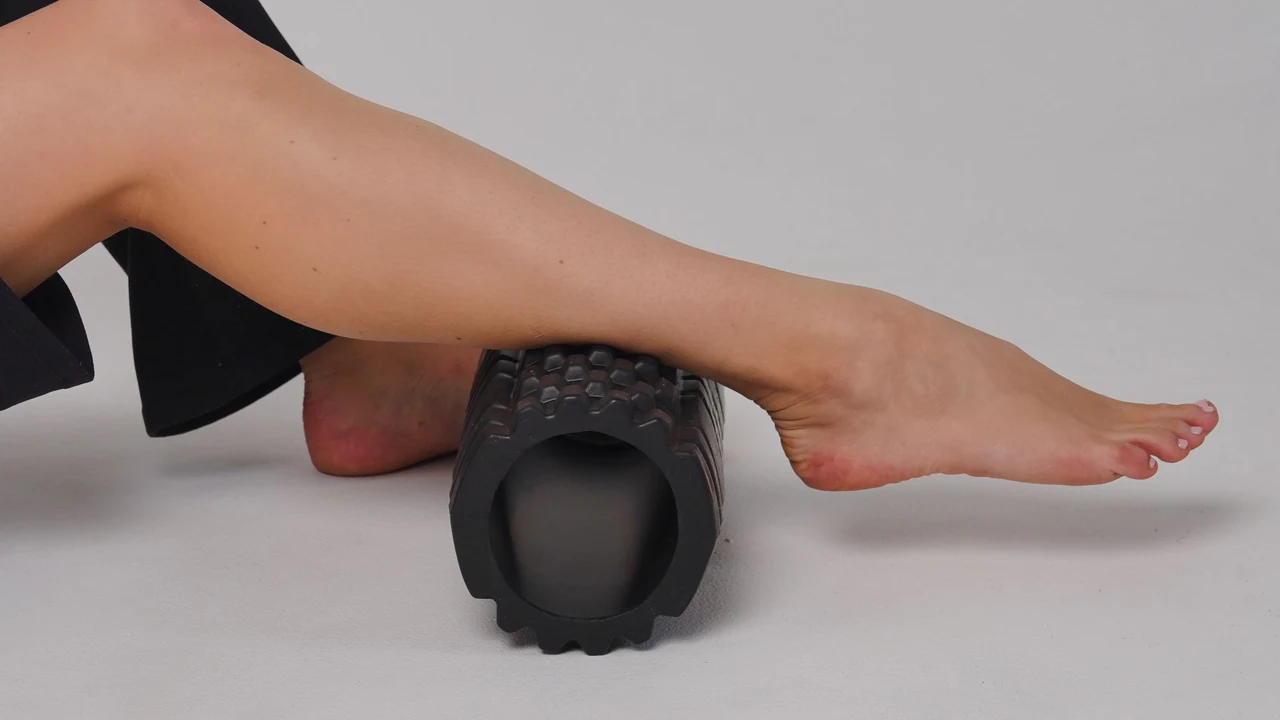
Illustrative licensed stock photograph. · Photo: Nadin Sh · pexels.com
View full size ↗Choose one relevant, familiar movement that you can perform comfortably and observe consistently. The aim is to compare your preparation, not to diagnose a restriction.
For example, before a familiar lower-body exercise:
- Notice how the unloaded movement feels.
- Use one suitable preparation method already appropriate for you.
- Repeat the same unloaded movement.
- Continue with the exercise-specific warm-up.
- Record whether the preparation was useful.
Keep the movement, shoes and measurement conditions similar. If you change the stance and depth on the retest, you may be comparing two different tasks.
A better-looking second attempt can also reflect familiarity or ordinary warming up. It does not prove that the roller permanently changed a tissue.
An invented decision log
| Day | Preparation tried | Observation | Next decision |
|---|---|---|---|
| Monday | Familiar dynamic movements | Comfortable movement; normal warm-up | Keep the short sequence |
| Thursday | Same sequence plus optional rolling | No clear additional benefit | Extra step may be unnecessary |
| Following Monday | Repeated short sequence | Comfortable again | Use the simpler routine |
This is an organisational example, not a controlled experiment or a prescribed warm-up. It shows how to avoid keeping a long ritual only because it feels sophisticated.
If the preparation worsens symptoms, that is a reason to stop and reassess, not to add more pressure.
Keep a five-minute problem from consuming the session
A common trap is spending most of the available gym time searching for a perfect feeling before starting. Give each preparation step a purpose.
Ask: what movement am I preparing for, what change am I looking for, and how will I know when to move on?
For a broader sequence, see our warm-up before strength training guide. Foam rolling or stretching, when useful, fits within preparation; it does not replace practising the exercise.
Questions that prevent overpromising
Will rolling prevent every injury? The reviews above do not establish that promise.
Does a sore spot prove that something is stuck? No such diagnosis follows from pressure sensitivity alone.
Do I need a vibrating roller? A subgroup result is not a reason everyone must buy a device. Consider whether the existing routine already serves the task.
Is more discomfort more effective? Pain is not a progress metric. Persistent or concerning symptoms need assessment.
The useful outcome is a manageable routine that prepares you for the intended activity. Keep the method because it serves that purpose, not because it has the most persuasive name.
Instructions & useful references
- Foam rolling versus stretching: performance comparisonPubMed / systematic review · No universal performance winner; methods and outcomes matter.
- A meta-analysis of the effects of foam rolling on performance and recoveryPubMed / meta-analysis · Small or negligible performance effects and some perceived soreness effects; not proof of scar-tissue removal.
- Foam rolling compared with other warm-up interventionsPubMed / meta-analysis · No unique advantage over all alternative warm-up methods; short-term outcomes.
Sources checked on September 28, 2026. This guide provides general information, with practical planning suggestions. It is not an individual treatment plan.