

Fish Oil Labels: How to Compare EPA and DHA per Serving
Everyday guidesPublished 5 min readhow to
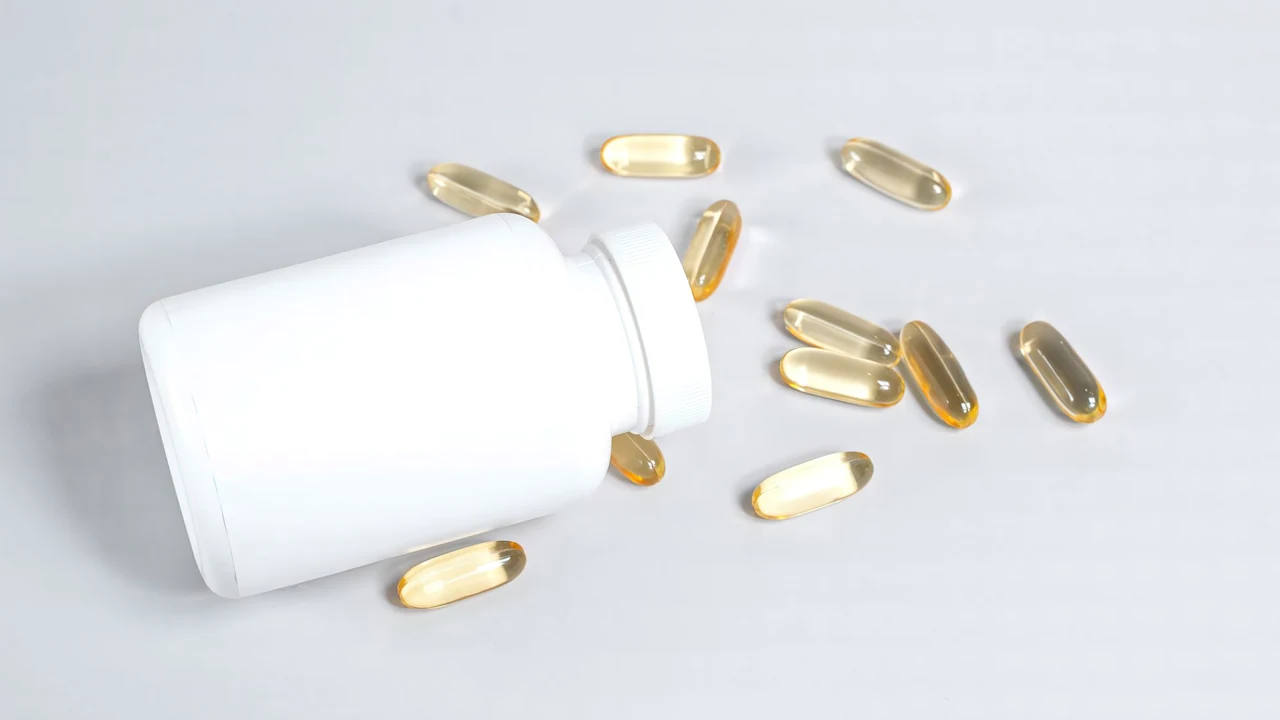
Read fish-oil labels beyond the front number. Calculate EPA plus DHA per capsule, compare serving sizes and check other ingredients before buying a bottle.
Illustrative licensed stock photograph. · Photo: Supplements On Demand · pexels.com
The short answer
Find the serving size, add EPA and DHA per serving, then divide by capsules per serving. Total fish oil is not the same as EPA plus DHA. Label calculations help compare products; they do not determine whether you need a supplement or establish a personal intake.
Table of Contents
- Find the serving size first
- Add EPA and DHA, then divide when needed
- Keep ALA separate from EPA and DHA
- Compare cost only after the contents are clear
- Read the rest of the panel
- Use a four-line comparison note
- Sources
- Explore this topic
A bottle marked “1,000 mg fish oil” does not necessarily provide 1,000 mg of EPA plus DHA. Find those two components on the nutrition or supplement panel, check the serving size, and compare the same number of capsules or servings. The front label's largest number may describe the oil mixture rather than the components you intended to buy.
The NIH Office of Dietary Supplements explains that formulations vary widely. Fish oil, algal oil, krill oil and cod liver oil also differ in ingredients. Start by identifying the product, not by assuming every omega-3 bottle is the same.
Find the serving size first
Look for “serving size” above the amounts. It might say one capsule, two softgels or a measured volume of liquid. Amounts listed per serving need to be divided by the number of capsules in that serving before you can compare them with a one-capsule label.
Our serving-size versus per-100g guide uses the same principle for food. Here, the relevant units are often milligrams per capsule and milligrams per labelled serving. Write the unit beside every number; a bare “600” is easy to misread later.
Do not confuse the serving size with advice to take that amount. Label arithmetic tells you what is supplied. Whether you need a supplement, and an appropriate amount if you do, are separate questions.
Add EPA and DHA, then divide when needed
The following two labels are invented examples for demonstrating the calculation. They are not tested products, recommendations or treatment doses.
| Example label | Bottle A | Bottle B |
|---|---|---|
| Labelled serving | 2 softgels | 1 softgel |
| Fish oil per serving | 2,000 mg | 1,000 mg |
| EPA per serving | 360 mg | 300 mg |
| DHA per serving | 240 mg | 200 mg |
| EPA plus DHA per serving | 600 mg | 500 mg |
| EPA plus DHA per softgel | 300 mg | 500 mg |
Bottle A's front number is larger, but Bottle B supplies more EPA plus DHA per softgel in this example. Neither fact proves that Bottle B is better for you. The calculation simply removes the serving-size mismatch.
If a label provides only a total omega-3 amount without breaking out EPA and DHA, do not invent the missing values. Ask the manufacturer or choose a product whose information lets you make the comparison you need.
Keep ALA separate from EPA and DHA
Alpha-linolenic acid, or ALA, is another omega-3 fatty acid. Plant foods such as flaxseed contain ALA, while fish and seafood provide EPA and DHA. The body can convert some ALA into the longer-chain forms, but conversion is limited. The NIH consumer factsheet explains these distinctions and notes that established recommended intake amounts concern ALA, rather than a universal EPA/DHA supplement target.
That means an ALA number should not be copied into an EPA-plus-DHA calculation as though the terms were synonyms. Likewise, “total omega-3” may include more than the two components you are adding. Preserve the label's categories rather than forcing them into one number.
If you prefer a non-fish product, read an algal-oil label just as carefully. The presence and amounts of EPA and DHA still need checking; the word “algae” alone does not answer the question.
Compare cost only after the contents are clear

Illustrative licensed stock photograph. · Photo: Cristian Mihaila · pexels.com
View full size ↗For a simple cost comparison, divide the bottle price by the number of labelled servings. If you also compare the price per amount of EPA plus DHA, clearly label that as a shopping calculation rather than a suggested intake.
For example, a fictional 60-softgel bottle with a two-softgel serving has 30 labelled servings. At a hypothetical price of Rp 180,000, the price per labelled serving is Rp 6,000. A bottle containing 60 softgels is not automatically a 60-serving bottle.
This still leaves other questions: capsule size, other ingredients, product authenticity, storage instructions and the reason for considering a supplement. A lower calculated price does not resolve those issues. Check the expiry date and the manufacturer's storage directions, especially in a warm room.
Read the rest of the panel
Cod liver oil can also provide vitamins A and D, so it is not simply another name for an EPA/DHA-only product. Check additional vitamins and other ingredients against supplements you already take. The NIH professional factsheet describes these formulation differences.
Ask a clinician or pharmacist before using a supplement to manage a medical condition, particularly if you take medicines such as anticoagulants. Do not turn a label's maximum amount or a research-study dose into a personal target. The consumer factsheet discusses interactions and the limits of supplement evidence.
Ordinary food choices remain relevant. If you are reviewing your diet more broadly, daily protein planning and vegetarian protein in Indonesian meals address different nutritional questions; neither replaces an omega-3 label check.
Use a four-line comparison note
Record the serving size, EPA per serving, DHA per serving and the resulting total per capsule. Then add price per labelled serving if cost matters. Keep a photograph of the full panel so you can verify the calculation later.
You now have a fairer comparison without assuming that the biggest front-label number is the useful one. The remaining decision is whether that product belongs in your own food and healthcare plan.
Instructions & useful references
- Omega-3 Fatty Acids: Health Professional Fact SheetNIH Office of Dietary Supplements · Oil versus EPA/DHA amounts; varied formulations and cod liver oil vitamins.
- Omega-3 Fatty Acids: Fact Sheet for ConsumersNIH Office of Dietary Supplements · ALA, EPA and DHA differences, established recommended intakes, interactions and evidence limits.
Sources checked on October 4, 2026. This guide provides general information, with practical planning suggestions. It is not an individual treatment plan.