

Do You Really Need 10,000 Steps a Day?
Everyday guidesPublished 4 min readhow to
1:32 · English narration Continue reading the article ↓
Video chapters
Read the video transcript
The latest dose-response research supports movement below 10,000 steps too. Use your current baseline instead of replacing one magic number with another.
You do not have to reach ten thousand steps before a day of walking becomes useful. A tracker target can motivate you, but it is not a universal health pass mark. Start with the activity you normally do.
A recent dose-response review associated benefits with step totals below ten thousand. Much of the evidence is observational. It does not prove one perfect personal target or justify replacing ten thousand with another compulsory number.
Look at a normal week and find one repeatable walking opportunity. A short break or walk after a meal may fit better than an ambitious target you rarely reach. Build the habit before making the number harder.
Swimming, cycling and strength training may add few steps while still being useful activity. Do not abandon an exercise you enjoy because a tracker rewards walking more visibly. Consider the whole activity pattern across the week.
In Bali's heat, choose comfortable times and suitable routes. Do not force a long exposed walk to rescue a streak. Adjust for illness, recovery and symptoms; the device cannot decide whether continuing is sensible for you.
Ask whether movement became easier to fit into your day. Keep a target if it helps, change it if it creates unrealistic catch-up sessions. Walking below ten thousand is worthwhile, and every day need not look identical.
Download transcript · English captions · Footage and production credits
Illustrative Pexels footage, original explanatory graphics and music, with synthetic English narration. People shown do not endorse products.
The latest dose-response research supports movement below 10,000 steps too. Use your current baseline instead of replacing one magic number with another.
The short answer
You do not need to reach 10,000 steps before walking counts. Research associates benefits with lower daily totals too, but it does not identify one perfect target for everyone. Start from your normal activity, increase gradually where appropriate and remember that step counts do not cover every kind of exercise.
Table of Contents
- What newer research adds
- Measure your ordinary week first
- Add a repeatable opportunity
- A step total misses useful exercise
- Conditions matter in Bali
- Review the habit, not only the number
- Sources
- Explore this topic
No: a day does not become healthy only when a tracker reaches 10,000 steps. Walking below that total can still be worthwhile. The more useful question is how your current activity can become a little more regular and manageable.
Ten thousand can be a motivating personal target for some people. It is not a universal pass mark, and failing to reach it does not erase the walking you did.
What newer research adds
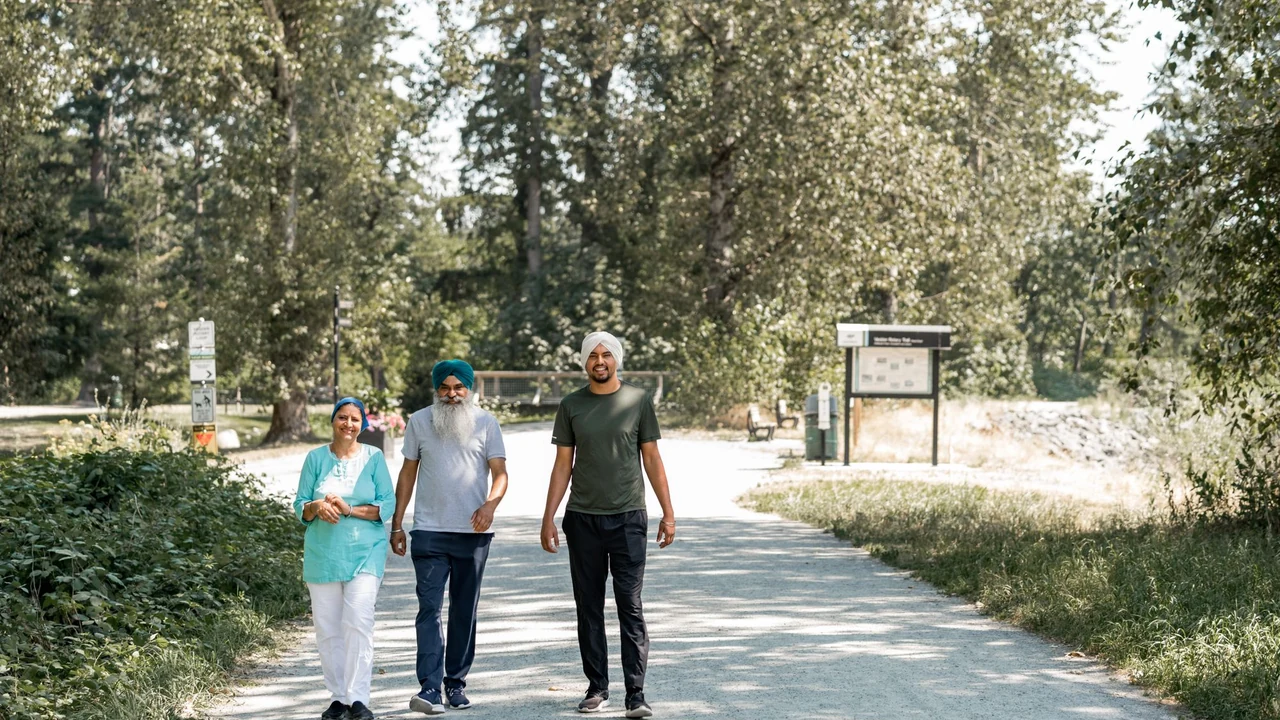
Illustrative licensed stock photograph. · Photo: World Sikh Organization of Canada · pexels.com
View full size ↗A 2025 systematic review and dose-response meta-analysis examined daily steps and several health outcomes. It found associations with benefits at totals below 10,000, including comparisons around 7,000 steps with much lower totals.
These are population-level associations, not a guarantee that adding an exact number of steps will produce a particular outcome for you. Much of the evidence is observational, so differences between people and other behaviours can influence the results.
The practical message is that movement below 10,000 is not wasted. Replacing the old slogan with “everyone must do exactly 7,000” would miss that point.
Measure your ordinary week first
If you use a tracker, look at several normal days before setting a new goal. Include busy days, quiet days and weekends. One unusually long sightseeing day is not your baseline.
Check that the device is used consistently. A phone left on the desk cannot record every walk around the room. A different watch or wearing pattern may change the count without your life changing in the same way.
You do not need to establish a laboratory-quality measurement. You need a rough, consistent picture that helps you choose a realistic next step.
| Current situation | A useful first change |
|---|---|
| Most of the day is spent seated | Add a short regular movement break |
| Walking happens only on weekends | Create a small weekday opportunity |
| The count is already high | Consider recovery and other types of activity |
| A target encourages late-night catch-up laps | Choose a more flexible goal |
| Pain or limited mobility affects walking | Seek an appropriate individual activity plan |
Add a repeatable opportunity
Choose a part of the day where walking already almost fits. A short walk after a meal, a brief errand on foot or a break between work blocks may be easier to maintain than a separate ambitious walking session.
Our guide to walking after meals explores one option. Movement breaks during desk work offers another. Neither requires you to wait until you have a full hour available.
Start with a change that feels manageable and see whether it survives an ordinary week. Increase gradually if it remains comfortable. The goal is to make movement more available, not to turn the counter into another source of daily failure.
A step total misses useful exercise

Illustrative licensed stock photograph. · Photo: Maksim Goncharenok · pexels.com
View full size ↗Cycling, swimming and many forms of strength training may contribute little to a step count. That does not make them unproductive. A low-step day with a suitable swim is not identical to a completely inactive day.
The CDC's adult activity guidance includes aerobic activity and muscle strengthening. Steps can help describe walking, but they cannot replace the entire activity picture.
Avoid abandoning an activity you enjoy because it does not fill a ring on the tracker. Use the measurement for what it measures rather than letting it define all useful movement.
Conditions matter in Bali
A familiar number can require a different effort in heat, humidity or on uneven routes. Choose safe, comfortable walking opportunities and adjust the plan to conditions.
Do not add a long exposed walk simply to rescue the day's count. Indoor walking, a shaded route or a shorter outing at a more comfortable time may fit better. Shoes, traffic and access to drinking water matter more than keeping a perfect streak.
If you feel unwell, stop and respond to the symptoms. The device cannot assess whether continuing is a sensible choice.
Review the habit, not only the number
At the end of a week, ask whether movement became easier to fit in. Did you take the planned breaks? Did the route feel comfortable? Did the target support your routine or make you compensate late at night?
Averages can provide context, but they should not pressure you to double activity after a rest day. Illness, travel and recovery all change what is reasonable.
Choose a target that helps you move and remains flexible enough for real life. Ten thousand steps may be a useful personal preference; it is not a requirement for walking to count, and the evidence does not demand a new magic number in its place.
Instructions & useful references
- Daily steps and health outcomes in adults: a systematic review and dose-response meta-analysisThe Lancet Public Health · Observational associations, 7000 vs2000 comparator, no causal individual promise or requiredthreshold.
- Adult Activity: An OverviewCDC · Aerobic activity and muscle strengthening; activities and relative intensity.
Sources checked on October 1, 2026. This guide provides general information, with practical planning suggestions. It is not an individual treatment plan.